 Pin it
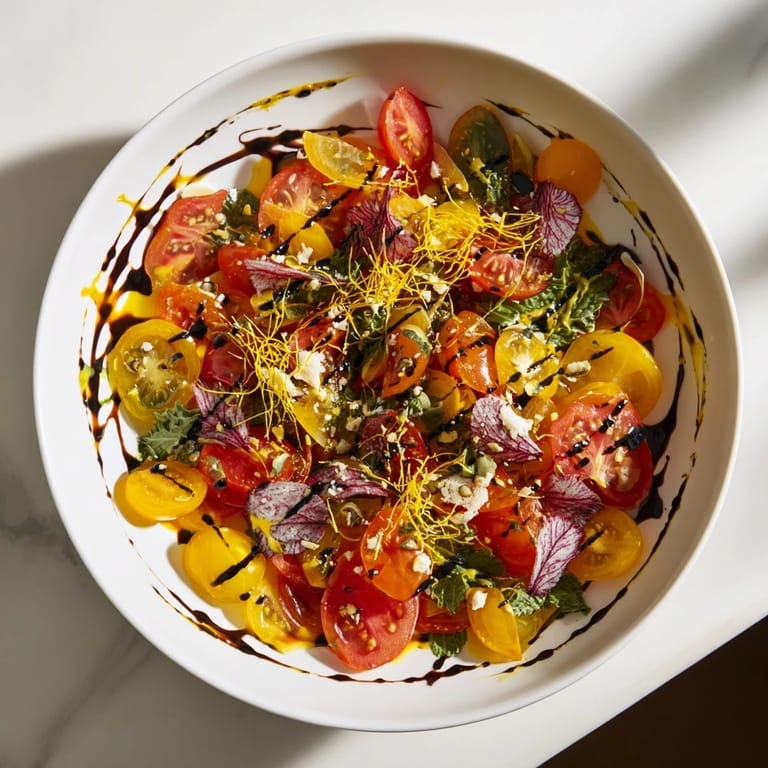
 I still remember the afternoon I walked into a small modern art gallery, completely mesmerized by a Jackson Pollock painting—all wild splashes and unexpected color collisions. Hours later, sitting at a café, I found myself sketching vegetable combinations on a napkin, imagining how I could translate that chaotic energy onto a plate. That evening, I created this salad, and it became my favorite way to celebrate how food and art speak the same language of freedom and expression.
I made this for my sister's birthday dinner, and watching everyone pause before eating because they couldn't bear to disturb the arrangement was worth every minute of prep work. She called it 'edible art,' and I knew right then it would become a signature dish in my kitchen.
Ingredients
- Cherry tomatoes (red and yellow), 1 cup halved: These are your primary color story—they should be ripe and at peak season if possible, as they carry the sweetness that balances the earthier elements
- Small golden beet, peeled and shaved, 1: The beet adds an elegant earthiness and striking golden hue; use a mandoline or vegetable peeler for thin, delicate shavings that look deliberately artistic
- Cucumber, 1 small, sliced into ribbons: A vegetable peeler creates those ribbon-like strands that catch light beautifully and add a refreshing, crisp element
- Red radishes, 1/2 cup thinly sliced: Their peppery bite and jewel-like color are essential—don't skip them, as they provide both visual contrast and a flavor spark
- Watermelon, 1 cup cut into irregular cubes: The surprise ingredient that brings sweetness and juiciness; cut the cubes intentionally uneven for that abstract expressionist feel
- Ripe avocado, 1, cubed: This adds creaminess and richness; add it just before serving so it doesn't oxidize and lose its vibrant green
- Mixed baby greens (arugula, baby spinach, frisée), 1 cup: The neutral foundation that lets all the bold ingredients shine; choose a mix for complexity
- Fresh mint leaves, 2 tbsp, torn: Don't chop these—tearing them releases their aromatic oils and keeps the presentation loose and organic
- Toasted pumpkin seeds, 1/4 cup: They provide crunch and earthiness; toasting them yourself intensifies their nutty flavor dramatically
- Pomegranate seeds, 1/4 cup: Jewel-like and tart, these add pops of color and a burst of flavor that feels luxurious
- Crumbled feta cheese, 1/4 cup: The salty, tangy accent that brings all the colors and flavors into focus
- Extra-virgin olive oil, 3 tbsp: Quality matters here—this is the brush that ties everything together visually and flavored-wise
- White balsamic vinegar, 1 tbsp: Its subtle sweetness and lighter color let it drizzle like paint without overpowering
- Honey, 1 tsp: This tiny amount balances the acidity and adds a gentle sweetness that completes the dressing
- Dijon mustard, 1/2 tsp: An emulsifier and flavor anchor that keeps everything cohesive
- Salt and freshly ground black pepper, to taste: Season generously—this is your final brushstroke
Tired of Takeout? 🥡
Get 10 meals you can make faster than delivery arrives. Seriously.
One email. No spam. Unsubscribe anytime.
Instructions
- Gather your palette:
- Prepare each vegetable and fruit in its own bowl before you start building. This moment of preparation is where the magic begins—having everything ready lets you work with intention and confidence, just like an artist laying out paints before creating
- Build your canvas:
- Scatter the mixed baby greens and torn mint loosely across a large platter or shallow bowl. Don't be precious about this—let them fall naturally with gaps and overlaps. This foundation is your white canvas
- Paint with vegetables:
- Now comes the fun part: artistically scatter the tomatoes, beet shavings, cucumber ribbons, radish slices, watermelon cubes, and avocado across the greens. Overlap them intentionally, let colors dance together, and resist the urge to make it orderly. Think splashes and gestures, not rows
- Add texture and sparkle:
- Sprinkle the toasted pumpkin seeds, pomegranate seeds, and crumbled feta across the top in an intentionally irregular pattern. These elements catch light and create visual rhythm
- Emulsify your dressing:
- In a small bowl, whisk together the olive oil, white balsamic vinegar, honey, and Dijon mustard until it becomes pale and unified. Taste it, adjust seasoning with salt and pepper, and let it sit for just a moment while the mustard works its emulsifying magic
- Paint with dressing:
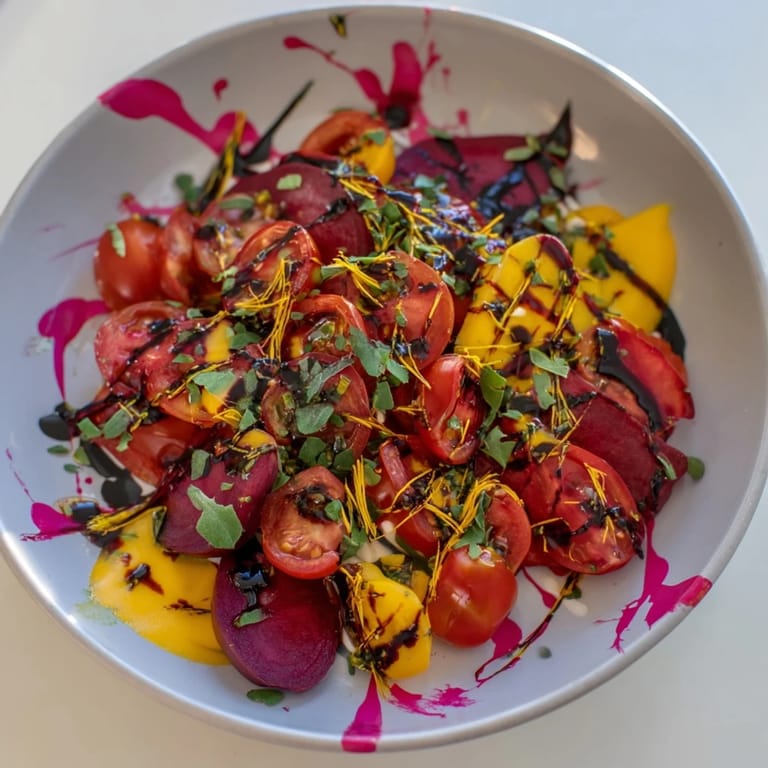
- Drizzle the dressing generously across the salad in zigzags, splatters, and gestures that mimic brushstrokes. This is where your salad truly becomes art—let the dressing pool in some places, streak across others, and don't worry about perfection
- Serve with ceremony:
- Present the salad immediately while all the colors are at their most vibrant and nothing has wilted or separated. Let everyone admire the artistic arrangement for a moment before mixing it all together
 Pin it
 My favorite memory with this salad is watching my six-year-old nephew go completely silent when I set it on the table. He stared at it for what felt like forever, and then looked up and said, 'This is too pretty to eat.' Of course, he devoured it seconds later, but that moment of wonder reminded me why cooking matters—it's about creating experiences, not just filling plates.
The Art of Color Theory on a Plate
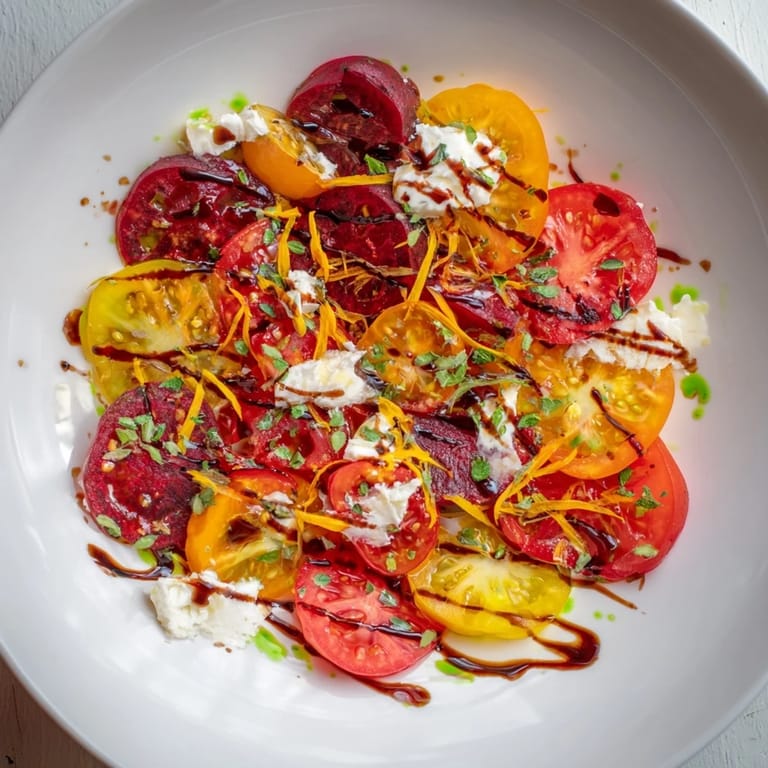
There's real science behind why this salad feels so stunning. The red tomatoes and radishes create energy, the golden beet and watermelon add warmth, the greens provide visual rest, and the white feta acts like highlights in a painting. When you arrange them with intention—not in neat rows, but in that intentionally wild pattern—your eye travels across the plate with genuine pleasure. I learned this by spending time looking at actual abstract expressionist paintings and asking myself, 'What makes this composition work?' It taught me that chaos still needs a bit of structure beneath it.
Why Texture Is Just As Important As Taste
This salad teaches you something profound about eating: texture is flavor's closest friend. The crispy crunch of toasted pumpkin seeds, the tender give of the avocado, the snap of the cucumber, the earthiness of the beet—each one feels completely different in your mouth, and that journey of sensations is what makes every bite interesting. I remember being bored by salads for years until I realized I was treating them all the same. Once I started thinking about how each element *feels*, everything changed.
Making It Your Own
The most important lesson I've learned about this recipe is that it's genuinely just a starting point. If you love edible flowers, scatter them wildly across the top. If you want earthiness, roast some purple sweet potatoes and add them. If dairy isn't in your world, excellent quality vegan cheese works beautifully and honestly tastes better than some feta I've used. The rule is: use colors that excite you and ingredients that make you happy. There's no wrong version of this salad as long as you're thinking about how the colors and textures play together.
- For a heartier version, add toasted chickpeas or nuts for extra protein and crunch
- In cooler months, roasted vegetables work beautifully alongside fresh elements for a more grounded salad
- The dressing recipe makes extra—keep it for drizzling over grains or roasted vegetables throughout the week
 Pin it
 This salad has taught me that the most memorable meals aren't always the most complicated ones—they're the ones made with genuine intention and a willingness to play. Serve it with confidence, and watch people fall in love.
Recipe FAQ
- → What ingredients add crunch to this salad?
Toasted pumpkin seeds and pomegranate seeds provide a satisfying crunch, complementing the tender vegetables.
- → Which greens are featured in this dish?
The salad uses a mix of baby greens including arugula, baby spinach, and frisée for a fresh, peppery base.
- → How is the dressing prepared?
The dressing is an emulsification of extra-virgin olive oil, white balsamic vinegar, honey, Dijon mustard, salt, and pepper whisked until smooth.
- → Can the feta cheese be substituted?
Yes, vegan cheese can be used as a dairy-free alternative to maintain the creamy texture.
- → What techniques create the salad's artistic presentation?
Ingredients are scattered loosely and layered with varied shapes, colors, and textures, with dressing drizzled in zigzags mimicking brushstrokes.
- → Is this dish suitable for gluten-free diets?
Yes, all ingredients are naturally gluten-free, but always verify processed items like seeds for cross-contamination.