 Pin it
 My neighbor brought over a jar of homemade black currant jam one autumn afternoon, and I had no idea what to do with it—until I spread a spoonful on toast and tasted something between tart berry and subtle floral notes. That's when it hit me: this needed to become frosting. The first batch was hesitant, almost nervous, but once I understood how the jam's tanginess would play against buttery sweetness, everything clicked into place.
I'll never forget piping this onto a batch of lemon cupcakes for a dinner party where I barely knew the hosts. One guest closed her eyes after the first bite and said, 'Where did you learn to make this?'—and I realized that sometimes the best dishes are the ones you discover by accident, just trying to use up a neighbor's gift.
Ingredients
- Black currant jam or preserves: Seedless works best because you won't have tiny bits catching between your teeth, but if all you have is seeded, straining it through a fine sieve takes just a minute and makes all the difference in texture.
- Water: Just enough to loosen the jam so it incorporates smoothly into the butter—too much and your frosting becomes grainy.
- Unsalted butter, softened: Room temperature butter whips into the frosting base like a dream; if it's cold or melted, you'll end up with something lumpy and dense instead of clouds.
- Powdered sugar, sifted: Sifting removes the clumps and takes maybe ninety seconds, but it prevents gritty frosting that never feels quite right on your tongue.
- Vanilla extract: A teaspoon is barely enough to taste, but it anchors the whole frosting, keeping the black currant from feeling one-dimensional.
- Salt: A tiny pinch brings out the berry flavor and cuts through the sweetness in ways you can't quite name.
- Lemon juice, optional: If your black currant jam leans sweet, a squeeze of lemon brightens everything without making it taste citrusy.
- Fresh black currants, for garnish: They're optional, but a handful scattered on top looks like you spent hours on presentation when you really just finished in twenty minutes.
Tired of Takeout? 🥡
Get 10 meals you can make faster than delivery arrives. Seriously.
One email. No spam. Unsubscribe anytime.
Instructions
- Warm and cool your jam base:
- In a small saucepan over low heat, stir the black currant jam with water until it loosens into a pourable consistency, about two to three minutes. The smell will be incredible—dark, fruity, slightly jammy. Let it cool completely before moving forward, or your frosting will break and separate.
- Whip the butter until cloud-like:
- In a large bowl, beat softened butter with an electric mixer on medium speed for two to three minutes until it's pale, creamy, and noticeably lighter in color. This incorporates air, which is what gives frosting its delicate texture.
- Slowly work in the powdered sugar:
- Add the sifted powdered sugar gradually, beating on low speed after each addition. Rushing this step creates clouds of sugar dust everywhere and makes the frosting grainy.
- Season and flavor the base:
- Mix in vanilla extract and a pinch of salt, beating until everything is evenly distributed. Taste it if you like—it should smell like buttery vanilla at this point.
- Fold in the black currant magic:
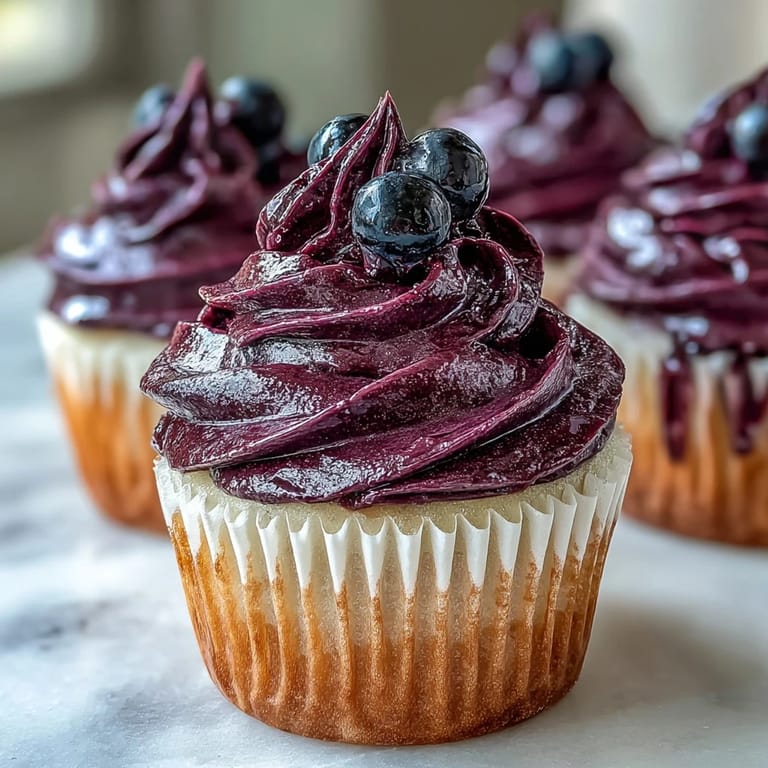
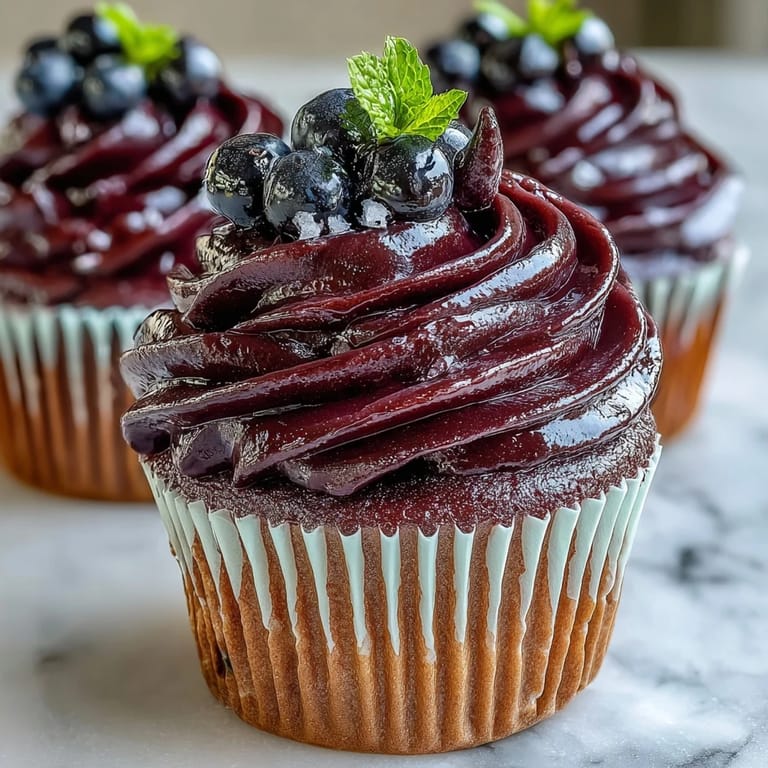
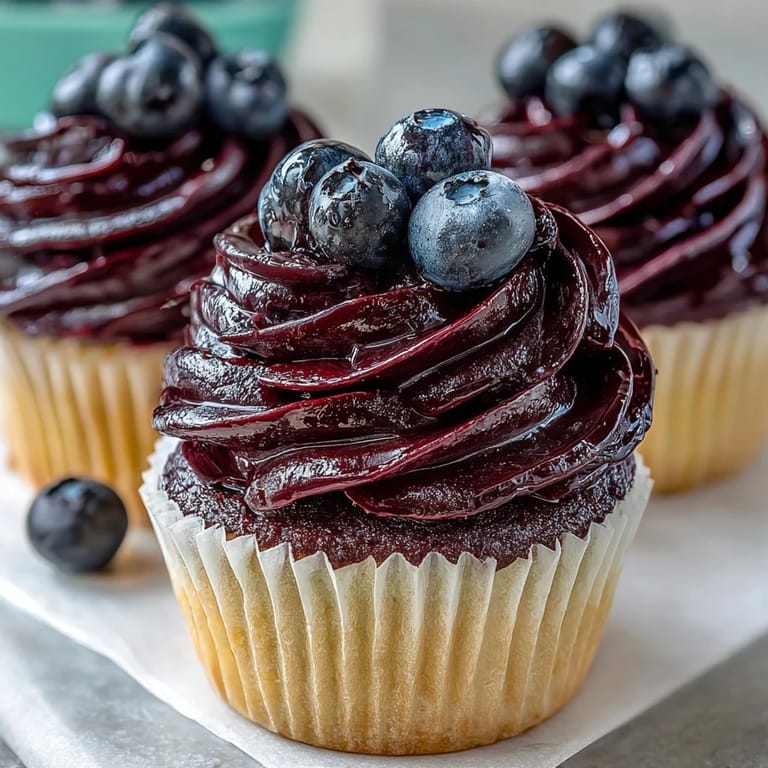
- Add the cooled jam mixture and beat on medium until the frosting is completely smooth and uniformly colored, scraping down the bowl's sides as needed. The color will deepen into a lovely mauve or dusty purple.
- Fine-tune the brightness:
- Add lemon juice one teaspoon at a time if you want extra tang, beating to blend. You can always add more, but you can't take it back.
- Chill if necessary:
- If the frosting feels too soft to work with, refrigerate it for ten to fifteen minutes until it firms up enough to hold peaks but still spreads beautifully.
- Frost and garnish:
- Spread or pipe the frosting onto cooled cupcakes, layer cakes, or petit fours. Top with fresh black currants if you have them and want that extra moment of 'how did you do this?'
 Pin it
 There's something almost magical about the moment when a pot of dark jam transforms into clouds of purple frosting. I watched my daughter dip her finger into the bowl and taste it without asking, eyes widening at the taste—and I realized that this simple combination had become one of those recipe moments that lingers in memory longer than it takes to make.
Consistency and Texture Mastery
Frosting consistency is about balance: too soft and it slides off warm cakes, too stiff and it tears the delicate crumb. The beauty of this recipe is how forgiving it is once you understand the adjustments. More powdered sugar creates a stiffer frosting that holds decorative peaks, while a splash of milk or cream (added a teaspoon at a time) makes it more spreadable for naked-style cakes.
Pairing This Frosting with Cake
Black currant frosting is wonderfully versatile because its tartness plays well with almost any cake base. Vanilla cake lets the frosting shine without competition, lemon cake creates a sophisticated berry-citrus combination, and chocolate cake transforms into something almost Scandinavian in its understated elegance. The key is tasting small bites of each combination in your head before you commit to frosting an entire cake.
Storage and Make-Ahead Strategy
This frosting keeps beautifully because of the butter's preservative qualities, making it perfect for baking ahead of events. At room temperature it stays fresh for a day, refrigerated it lasts five days, and it can even be frozen in an airtight container for up to a month—just thaw it overnight and re-whip with a mixer to restore the fluffy texture.
- Make the frosting the day before and store it covered in the refrigerator, bringing it back to room temperature and re-whipping for five minutes before use.
- If your kitchen runs warm, keep the frosted cake in a cool spot or the refrigerator until serving, especially if you've piped decorative details that need to hold their shape.
- Fresh black currants for garnish should go on just before serving so they stay glossy and don't dry out.
 Pin it
 Black currant frosting sits somewhere between practical and precious, like those recipes you make dozens of times and somehow never tire of. It's the kind of frosting that makes people ask for the recipe, and when you tell them how simple it is, they seem almost disappointed—until they taste it.
Recipe FAQ
- → Can I use fresh black currants instead of jam?
Fresh black currants are quite tart and contain seeds that affect texture. For smooth results, cook fresh currants with sugar until broken down, then strain before adding to the frosting base.
- → How do I store leftover frosting?
Keep covered at room temperature for up to one day. For longer storage, refrigerate for up to five days. Bring to room temperature and re-whip with an electric mixer before using again.
- → Why is my frosting too soft or runny?
This often happens if the black currant mixture was warm when added. Chill the frosting for 10-15 minutes to firm it up, or add more sifted powdered sugar until you reach the desired consistency.
- → Can I make this dairy-free?
Yes! Substitute the butter with a high-quality vegan butter alternative. Look for one that behaves similarly to dairy butter in baking, as some margarines may separate or affect texture.
- → What cakes pair best with black currant frosting?
The tangy profile complements vanilla bean, lemon, almond, or chocolate cakes beautifully. It also works well with spiced cakes like carrot or ginger for a sophisticated flavor contrast.
- → Should I strain the jam before using?
Straining removes seeds and skins for a smoother finish. If using preserves with seeds, press through a fine-mesh sieve after heating with water for the silkiest texture.