 Pin it
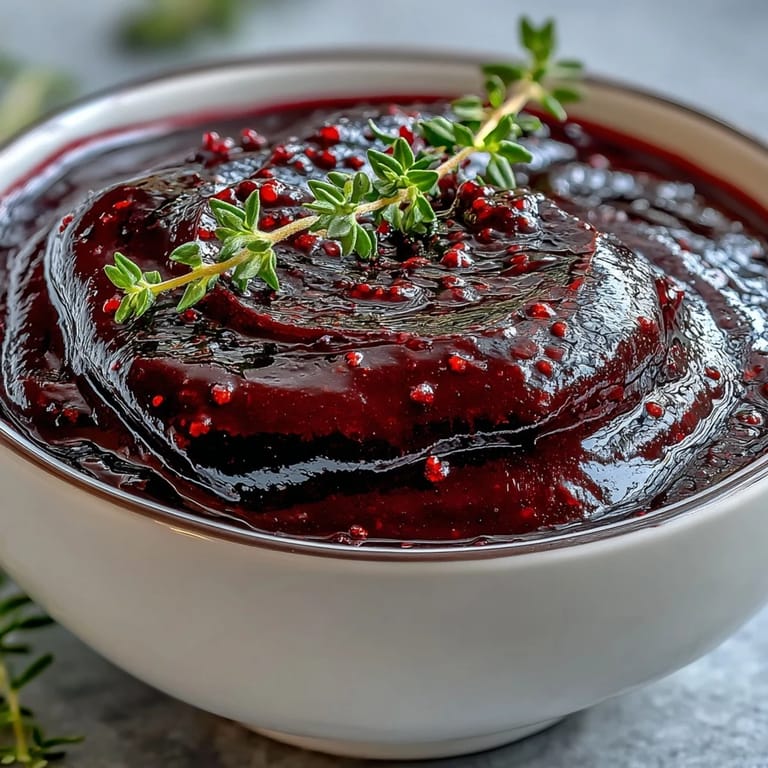
 Elevate your next meal with this luxurious Black Currant Reduction. This deeply flavorful, concentrated sauce combines the natural tartness of black currants with dry red wine and aromatic herbs to create a sophisticated, French-inspired finish for your favorite dishes.
Pin it The secret to this sauce lies in the slow simmering process, which allows the flavors to meld into a syrupy, glossy reduction that tastes just as good as it looks.
Ingredients
Tired of Takeout? 🥡
Get 10 meals you can make faster than delivery arrives. Seriously.
One email. No spam. Unsubscribe anytime.
- Fruit: 1 cup (150 g) fresh or frozen black currants
- Liquids: 1 cup (240 ml) dry red wine, 1/2 cup (120 ml) good-quality chicken or vegetable stock, 2 tbsp (30 ml) balsamic vinegar
- Aromatics: 1 small shallot (finely chopped), 1 sprig fresh thyme, 1 bay leaf
- Sweetener & Seasoning: 2 tbsp (25 g) granulated sugar, 1/4 tsp freshly ground black pepper, 1/4 tsp fine sea salt
- Finish: 2 tbsp (30 g) cold unsalted butter (cut into cubes)
Instructions
- Step 1
- In a medium saucepan over medium heat, melt 1 tablespoon of the butter. Add the chopped shallot and sauté for 2–3 minutes until softened and translucent.
- Step 2
- Add the black currants, red wine, stock, balsamic vinegar, thyme, bay leaf, sugar, salt, and pepper. Stir to combine.
- Step 3
- Bring to a gentle boil, then reduce heat to low. Simmer uncovered for 15–20 minutes, stirring occasionally, until the liquid is reduced by about half and slightly syrupy.
- Step 4
- Remove the thyme sprig and bay leaf.
- Step 5
- Using a fine mesh strainer, strain the sauce into a clean saucepan, pressing down to extract all liquid; discard the solids.
- Step 6
- Return the strained sauce to low heat and whisk in the remaining cold butter cubes, one at a time, until the sauce is glossy and smooth.
- Step 7
- Taste and adjust seasoning as needed. Serve warm.
Zusatztipps für die Zubereitung
Using a fine mesh strainer is key to achieving a professional, smooth texture. Ensure the butter used for the finish is very cold, as this helps create the signature glossy sheen of a classic reduction.
Varianten und Anpassungen
For a sharper flavor, you can add a splash more balsamic vinegar at the end of cooking. Alternatively, use crème de cassis in place of some of the red wine to provide even more depth and sweetness.
Serviervorschläge
This reduction is perfect for elevating roasted duck, pork, or venison. It also makes a wonderful addition to a charcuterie board when served alongside aged cheeses and cured meats.
 Pin it
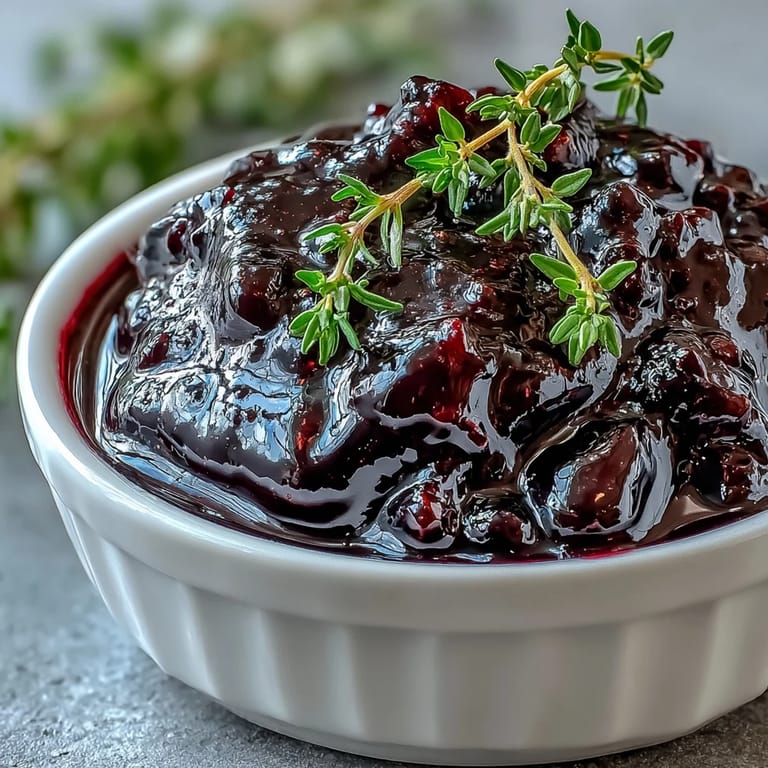
 Rich, tangy, and beautifully vibrant, this Black Currant Reduction is a must-have recipe for any home cook looking to bring a touch of restaurant-quality flair to their table.
Recipe FAQ
- → What meats pair best with black currant reduction?
Duck, venison, pork, and lamb work exceptionally well with this tangy-sweet sauce. The tartness cuts through rich meats while the subtle sweetness enhances their natural flavors.
- → Can I use frozen black currants instead of fresh?
Yes, frozen currants work perfectly in this reduction. Thaw them slightly before adding to the pan, and expect similar results to fresh fruit in both flavor and texture.
- → How long will the sauce keep in the refrigerator?
The sauce will keep for 4-5 days when stored in an airtight container in the refrigerator. Gently reheat over low heat, whisking to restore the glossy texture before serving.
- → Why strain the sauce before adding butter?
Straining removes the skins, seeds, and cooked aromatics, creating a smooth, velvety finish. This ensures the final texture is refined and elegant, perfect for drizzling over plated dishes.
- → Can I make this sauce ahead for a dinner party?
Absolutely. Make the reduction up to a day ahead, stopping before adding the butter. Refrigerate, then reheat gently and finish with cold butter just before serving for the freshest texture.
- → What's the purpose of adding cold butter at the end?
Cold butter creates an emulsion that thickens the sauce slightly and adds a luxurious, glossy finish. It should be added off the heat or over very low heat to prevent separating.