 Pin it
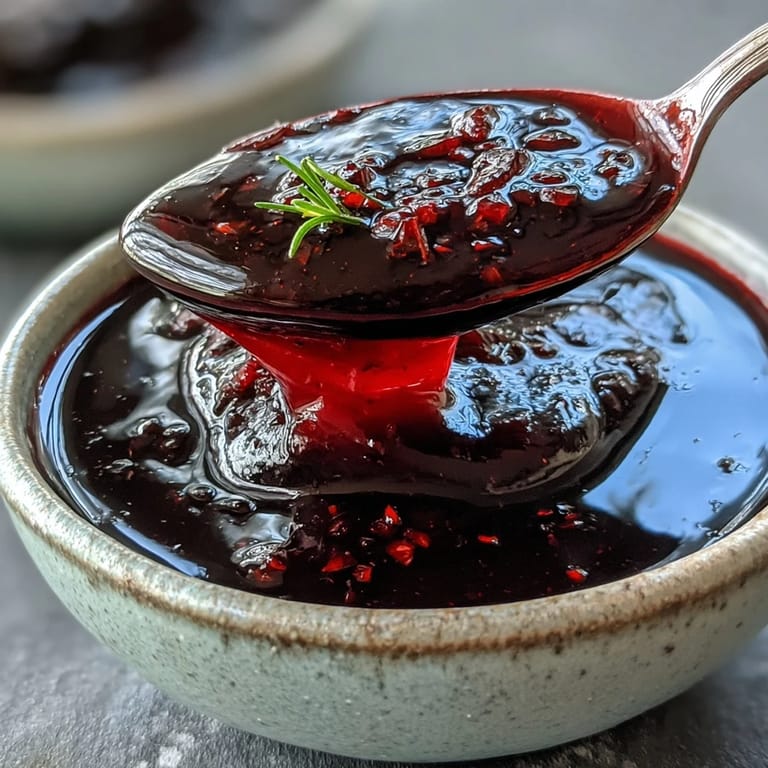
 There's something almost magical about watching black currants transform into something entirely new—I discovered this reduction on a gray November afternoon when I had a bottle of unsweetened black currant juice sitting forgotten in my pantry. My partner had brought home a duck breast that needed something special, and I found myself reaching for that juice, a splash of wine, and the rosemary growing on the windowsill. Twenty minutes later, the kitchen smelled like autumn itself, and I realized I'd stumbled onto something I'd be making for years.
I made this for a dinner party last winter when my friend mentioned she'd gone vegetarian, and I worried about getting her excited about the menu. When she tried this reduction drizzled over roasted cauliflower, she actually closed her eyes, and I knew I'd cracked something important—that good food isn't about the protein, it's about the care you put into the flavors around it.
Ingredients
- Black currant juice (1 cup): This is your foundation—unsweetened is essential because you're building layers of flavor, not chasing sweetness.
- Dry red wine (1/2 cup): Pick something you'd actually drink; it matters more than people think because the flavor concentrates as it reduces.
- Balsamic vinegar (2 tablespoons): The secret weapon that adds depth and keeps the sauce from feeling one-dimensional.
- Black currant jam (2 tablespoons): This thickens the sauce naturally and adds a subtle jam-like richness that balances the tartness.
- Fresh rosemary (2 sprigs): Use the tender top sprigs if you can—they're more delicate and less aggressive than woody stems.
- Shallot (1 small, finely chopped): Shallots bring sweetness and sophistication that regular onion can't quite match.
- Garlic (1 clove, minced): Just one clove keeps things subtle; you want to taste the currants, not feel like you're eating a garlic sauce.
- Sea salt and black pepper: Finish with these at the end when you can actually taste what you're seasoning.
Tired of Takeout? 🥡
Get 10 meals you can make faster than delivery arrives. Seriously.
One email. No spam. Unsubscribe anytime.
Instructions
- Build Your Base:
- Pour the black currant juice, wine, vinegar, and jam into a medium saucepan and place it over medium heat. Stir gently until the jam dissolves into the liquid—you're looking for a glossy, unified mixture with no jam clumps floating around.
- Add the Aromatics:
- Toss in the rosemary sprigs, shallot, and garlic, then give everything a stir. You'll start to smell rosemary almost immediately, which is your cue that things are happening.
- Gentle Simmer:
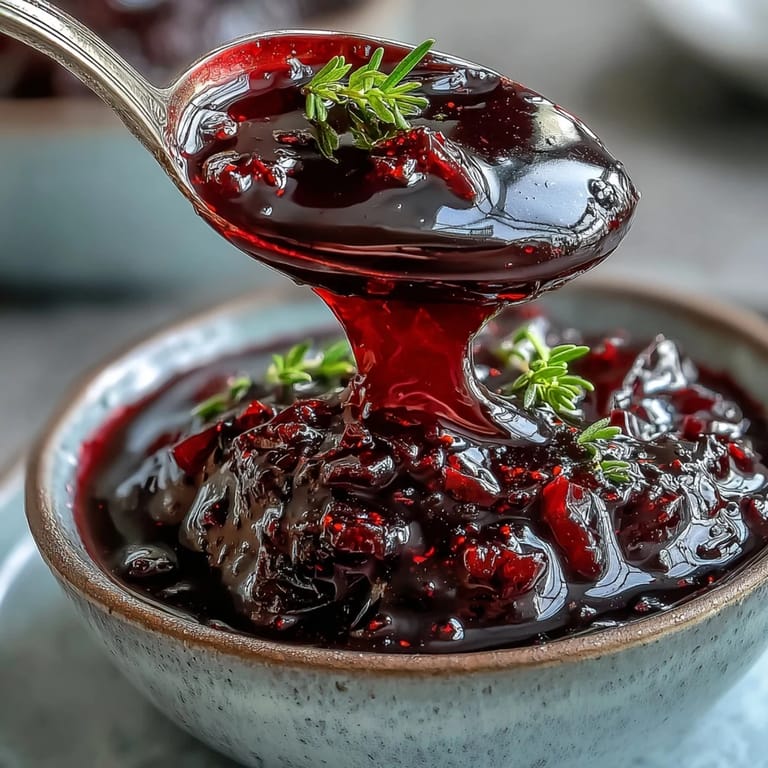
- Bring the mixture to a gentle boil—not a rolling boil, just a soft bubbling around the edges—then turn the heat down to low. Let it simmer uncovered for 15 to 18 minutes, stirring occasionally, until the liquid has reduced by about half and coats the back of a spoon lightly.
- Finish and Strain:
- Remove from heat and fish out the rosemary sprigs with a fork. If you want a completely smooth sauce, pour it through a fine-mesh sieve; if you prefer texture, leave the shallot and garlic in.
- Season to Taste:
- Add salt and black pepper gradually, tasting as you go. The sauce should taste bright and balanced—not too sharp, not too sweet.
 Pin it
 This sauce taught me something I should have known earlier: that the simplest things often hold the most power. A woman at a farmers market tasted it on a sample cracker and told me it reminded her of a restaurant in Lyon where she'd spent her honeymoon, and suddenly this wasn't just a reduction anymore—it was a doorway to somewhere else.
What This Sauce Does Best
The beauty of this reduction is that it doesn't demand a specific protein to shine. I've watched it transform a simple roasted chicken into something that tastes almost luxurious, and I've seen it make root vegetables the star of the plate. The black currant brings tartness and depth, the rosemary adds an herbal whisper, and everything together creates a sauce that feels European and somehow both bold and delicate at once.
Variations That Surprised Me
One evening, I ran out of red wine and grabbed port instead, and the sauce became something sweeter and richer—almost like a gastrique. Another time, I added a pinch of ground cardamom at the very end, inspired by a spice tin a friend had brought back from Copenhagen. Both experiments taught me that this reduction is flexible enough to bend to your instincts.
Storage and Serving Ideas
This sauce keeps beautifully in the refrigerator for up to a week in a sealed container, and it actually tastes better the next day once the flavors have settled. You can warm it gently on the stove or in the microwave, and it freezes well for up to two months if you want to make a double batch.
- Drizzle it over duck breast, lamb chops, or venison for an instant restaurant-quality presentation.
- Use it as a glaze for grilled tofu or roasted cauliflower to prove that this sauce belongs on every table.
- Swirl it into plain yogurt or crème fraîche for a stunning quick appetizer.
 Pin it
 This reduction has become my answer to the question of what to serve alongside something special, because it does what good cooking should do—it brings people together and makes them feel cared for. Make it once and you'll understand why I keep coming back to it.
Recipe FAQ
- → What dishes pair best with black currant reduction?
This reduction complements roasted meats like lamb, duck, and venison exceptionally well. It also works beautifully with grilled vegetables or as a glaze for tofu, adding a sweet and tangy element to savory dishes.
- → How long will this reduction keep in the refrigerator?
Store in an airtight container in the refrigerator for up to two weeks. The high acidity and sugar content act as natural preservatives. Reheat gently before serving.
- → Can I make this reduction alcohol-free?
Yes, substitute the red wine with additional black currant juice or pomegranate juice. The flavor profile will change slightly but still deliver a delicious tangy finish.
- → Why strain the reduction after cooking?
Straining removes the rosemary sprigs, shallot, and garlic pieces, creating a smooth, elegant sauce. However, leaving it unstrained adds texture and more intense flavor if preferred.
- → How do I know when the reduction is ready?
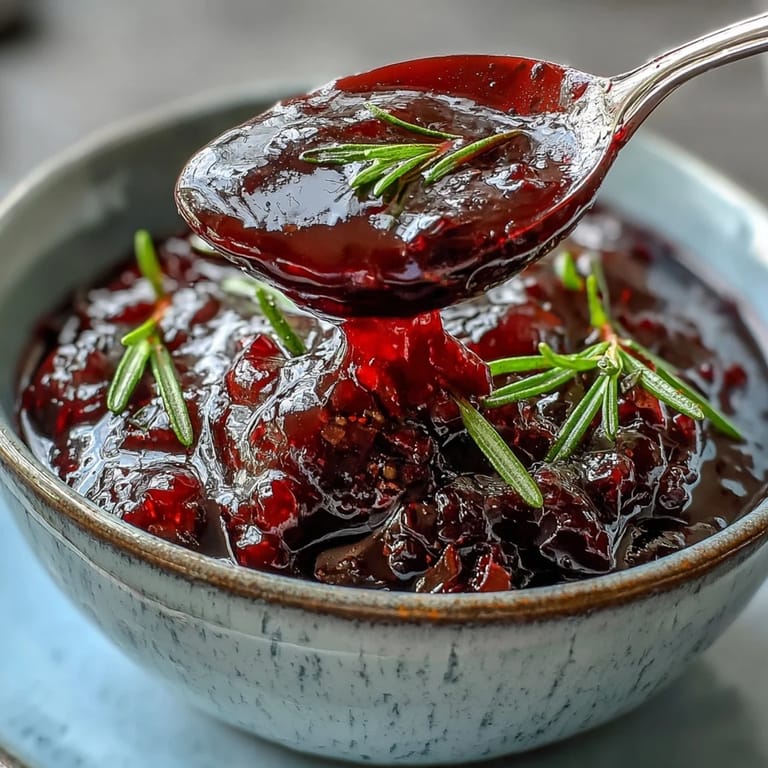
The reduction is ready when it has reduced by half and coats the back of a spoon. It should have a syrup-like consistency that slowly drips off the spoon rather than running off quickly.
- → Can I use dried rosemary instead of fresh?
Fresh rosemary is recommended for its bright, aromatic flavor. If using dried, reduce the amount to 1 teaspoon and add it earlier in the cooking process to allow the flavors to bloom.