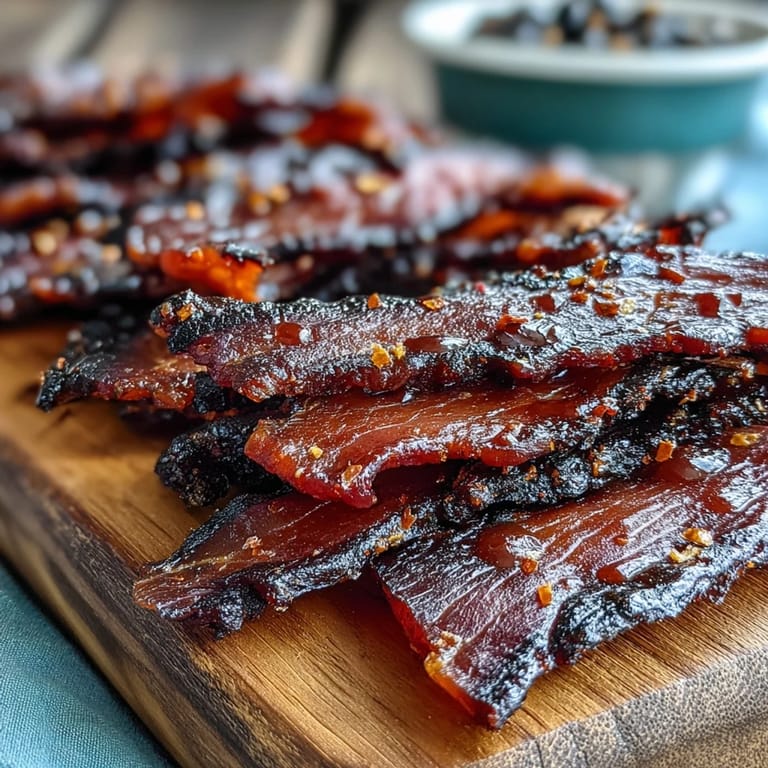
 Pin it
 My friend handed me a strip of homemade jerky at a campfire, and I expected the usual salty, smoky chew. Instead, my teeth hit something unexpected—a dark, fruity sweetness that melted into savory smoke. Black currant, she said with a grin, watching my eyebrows shoot up. That moment sparked an obsession, and after months of tinkering in my kitchen, I landed on this version: beef so tender it barely needs teeth, wrapped in a marinade that tastes like a conversation between a BBQ sauce and a gourmet jam jar.
I made a batch for my neighbor's poker night last winter, and the guys who usually ignore appetizers were fighting over the last pieces. One of them kept asking if I'd added bourbon, which made me laugh—nope, just currants and patience. That's when I realized this jerky had crossed over from kitchen experiment to actual party star.
Ingredients
- Lean beef (top round, flank, or sirloin): Slice it thin against the grain, which means your knife should cut perpendicular to the muscle fibers—this keeps each bite tender instead of stringy, and it's worth the extra attention when prepping.
- Black currant jam or preserves: This is your secret weapon; use the real stuff, not the thin syrup, because you need body and actual fruit suspended in there to get the deep flavor and slight texture.
- Soy sauce or tamari: The umami backbone that ties everything together; if you're gluten-free, don't skip the swap to tamari or you'll lose that savory anchor.
- Worcestershire sauce: Just two tablespoons, but it adds a tangy depth that prevents the jerky from feeling one-note sweet.
- Apple cider vinegar: Two tablespoons cuts through the richness and brightens everything up, keeping the marinade from becoming cloying.
- Brown sugar, smoked paprika, garlic powder, onion powder: These build layers—the paprika gives you that smoky whisper even before the wood chips, while the garlic and onion add savory complexity.
- Black pepper, kosher salt, cayenne: Season to your taste; I use the full amounts, but cayenne is optional if heat isn't your thing.
- Cherry wood chips: Milder than oak or hickory, cherry adds a slightly fruity smoke that complements the currant instead of overpowering it.
Tired of Takeout? 🥡
Get 10 meals you can make faster than delivery arrives. Seriously.
One email. No spam. Unsubscribe anytime.
Instructions
- Whisk your marinade into submission:
- Combine the black currant jam with soy sauce, Worcestershire, vinegar, brown sugar, and all the spices in a large bowl, whisking until the jam breaks down and everything mingles into a smooth, glossy sauce. You want no lumps, just pure, cohesive flavor ready to embrace your beef.
- Coat and chill the beef:
- Toss your thinly sliced beef into the marinade, making sure every strip gets fully submerged; use your hands if you need to, pressing gently to coat all surfaces. Cover and refrigerate for at least 8 hours—overnight is better if you can swing it, giving the beef time to really absorb all that dark, complex flavor.
- Drain and dry with intention:
- Pull the beef from the marinade and lay each strip on paper towels, patting them dry before arranging on your racks or dehydrator trays. This step matters more than you'd think; excess moisture means longer drying time and a less effective smoke penetration.
- Arrange in a single layer:
- Lay your beef strips out so they don't touch or overlap, because hot air and smoke need to reach every side. Think of it like giving each piece its own little personal space to dry and catch smoke flavor.
- Smoke low and slow:
- Set your smoker or oven to 160°F (71°C), add cherry wood chips if smoking, and let the beef cook gently for 4 to 6 hours, flipping halfway through. You're aiming for a strip that bends slightly but doesn't snap—still with a tiny bit of give, not brittle.
- Cool completely before storing:
- Let the jerky rest at room temperature until it's no longer warm, then pack it into an airtight container. This cooling period helps it finish setting and prevents condensation from making it chewy or moldy.
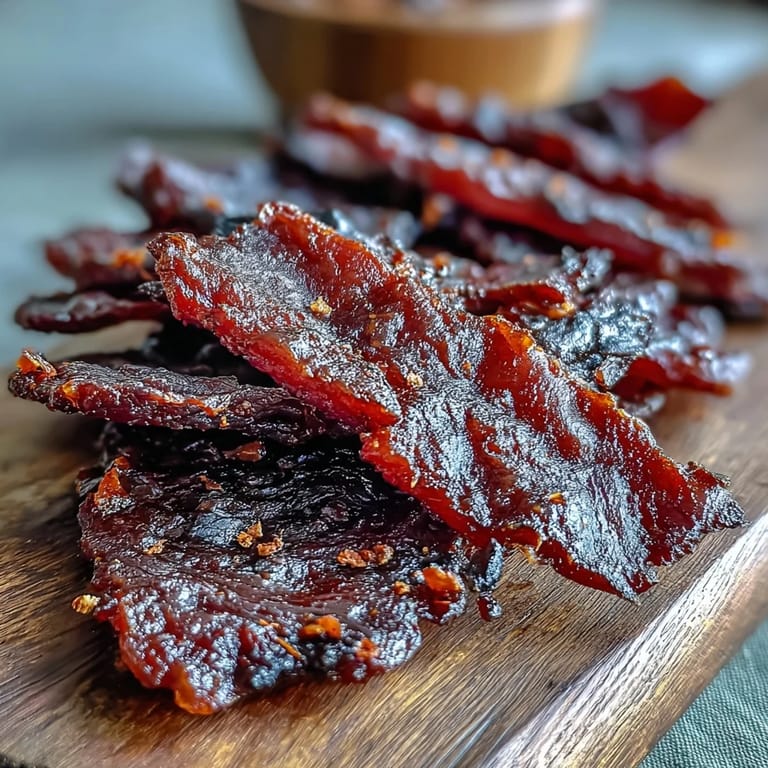 Pin it
 My mom tried this jerky and asked if I'd sell it, which was maybe the sweetest compliment she could give—not just that it tasted good, but that it felt made with intention. That's when I knew this recipe had become something worth keeping around.
The Smoke Matters More Than You Think
Cherry wood is gentler than hickory or oak, so it won't overpower the black currant notes you've been building all along. I've used apple wood before and got confused results—too floral, fighting with the fruit instead of dancing with it. If you only have access to other woods, start with a shorter smoke and taste as you go, because wood flavor is personal and adjustable.
Customizing Your Sweetness and Heat
If your batch turned out too sweet, you can always reduce the jam next time or add an extra tablespoon of vinegar—balance is everything in jerky. Heat is easier: start with no cayenne, taste a finished strip, and add more next round if you want to wake it up. I've made versions for friends who don't do spice at all and others who wanted serious kick, and the recipe bends without breaking.
Storage, Longevity, and Why It Never Lasts
Stored properly in an airtight container, this jerky will keep for two weeks in the fridge and up to a month if you vacuum-seal it. My experience, though, is that it disappears much faster than any of that timeline—it's the kind of snack people keep reaching for, so you might want to make double.
- An airtight container is essential; jerky exposed to air gets stale and loses that subtle chew you worked to achieve.
- Vacuum-sealing is your secret weapon if you're making batches ahead or gifting; it locks in freshness for weeks.
- If you notice any moisture or odd smell after a few days, toss it—better safe than sorry with meat.
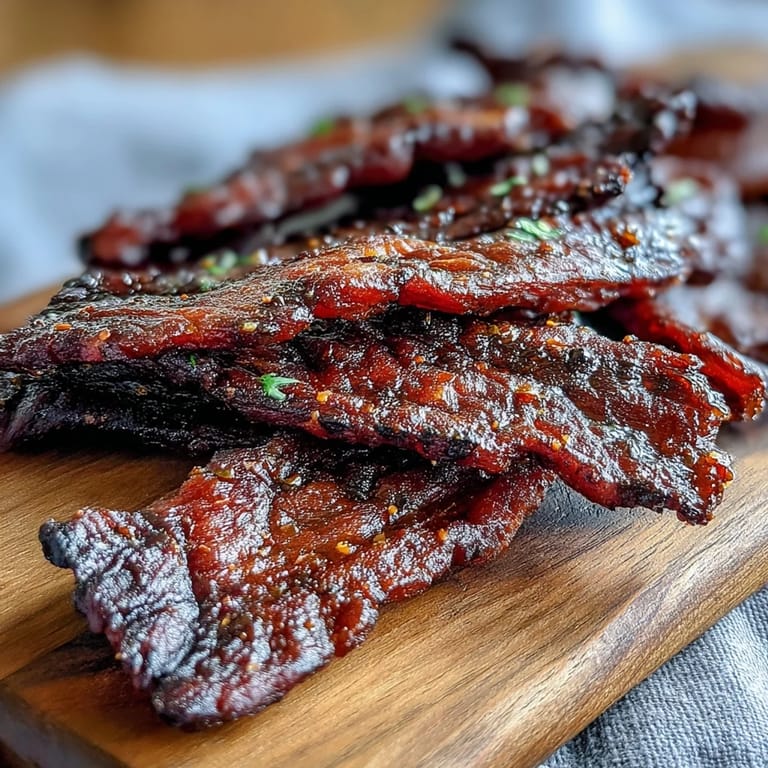 Pin it
 This jerky is the kind of recipe that rewards patience—the waiting, the slow smoke, the careful slicing. Make it once and you'll understand why it disappeared from that poker night so fast.
Recipe FAQ
- → What cut of beef works best for jerky?
Lean cuts like top round, flank steak, or sirloin work best because they have minimal fat. Fat doesn't dehydrate well and can make jerky spoil faster. Slice the beef thinly against the grain for the most tender texture.
- → How long should I marinate the beef?
Marinate for at least 8 hours, though overnight (12-24 hours) yields the best flavor penetration. The black currant jam and spices need time to fully infuse into the meat fibers.
- → Can I make this without a smoker?
Yes, you can use a dehydrator or oven set to 160°F (71°C). For oven preparation, prop the door open slightly with a wooden spoon to allow moisture to escape. You'll miss some smoke flavor, but can add extra smoked paprika to compensate.
- → How do I know when jerky is done?
Properly dried jerky should be dry to the touch but still slightly pliable when bent. It shouldn't crack or break. A good test is bending a piece - it should bend without breaking but not feel moist or sticky.
- → How long will this jerky stay fresh?
Stored in an airtight container in the refrigerator, this jerky keeps up to 2 weeks. For longer storage (up to 1 month), vacuum seal and freeze. Always ensure jerky is completely cooled before storing to prevent condensation.