 Pin it
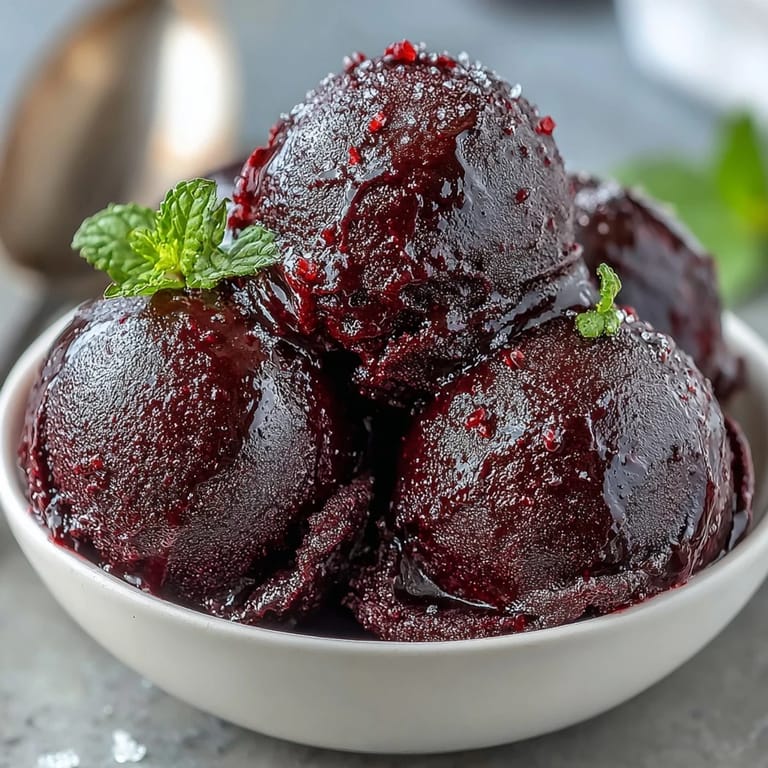
 There's something almost rebellious about black currant sorbet—it arrived in my kitchen on a sweltering afternoon when I'd given up on anything chocolate or heavy, and I needed something that tasted like summer distilled into a spoon. My neighbor had left a bag of frozen black currants on the doorstep with a note, and instead of making jam like a sensible person, I decided to chase that tart, almost winey flavor into something frozen. It turned out to be the kind of happy accident that becomes a ritual.
I made this for my partner on a June evening when we were too tired to cook anything real, and watching their face light up after that first spoonful reminded me that sometimes the simplest things—berries, sugar, patience—can feel genuinely luxurious. We sat on the back step with our bowls, talking about nothing in particular, and the sorbet just kept getting better as it melted slightly on our tongues.
Ingredients
- Fresh or frozen black currants (500 g): Frozen works beautifully and honestly tastes just as good as fresh since you're cooking them anyway—I learned this the hard way by overpaying for fresh berries in winter.
- Granulated sugar (200 g): This amount feels generous until you taste the finished sorbet and realize it's barely sweetening the berries' natural tartness.
- Water (250 ml): Use filtered if yours tastes heavily chlorinated, since you'll really taste it once everything is frozen and concentrated.
- Freshly squeezed lemon juice (2 tbsp): Don't skip this or use bottled—the brightness it adds is non-negotiable, cutting through the berry richness and preventing the sorbet from tasting one-dimensional.
Tired of Takeout? 🥡
Get 10 meals you can make faster than delivery arrives. Seriously.
One email. No spam. Unsubscribe anytime.
Instructions
- Prepare the berries:
- Rinse the black currants under cold water and pick through them gently, removing any stems or shriveled ones. If you're using frozen berries, no need to thaw them first.
- Make the simple syrup:
- Combine the sugar and water in a medium saucepan and set it over medium heat, stirring occasionally until the sugar dissolves completely (about 3-4 minutes). You want a crystal-clear syrup before you add the berries.
- Cook the berries:
- Add the black currants to the syrup and let them simmer gently for about 5 minutes, just until they start to soften and burst open. You'll notice the mixture darkening and the kitchen filling with a tart, almost winey smell.
- Blend until smooth:
- Remove the pan from heat and let it cool for a few minutes (this prevents burns and keeps the blender from overheating), then blend the mixture until completely smooth using a stick blender or regular blender, working in batches if needed.
- Strain out the seeds:
- Press the purée through a fine-mesh sieve into a clean bowl, using the back of a spoon to push the liquid through while leaving the seeds and skins behind. This step takes patience but makes the texture silky rather than gritty.
- Add brightness:
- Stir in the freshly squeezed lemon juice and taste the mixture—adjust the sweetness if needed, though most people find it perfectly balanced as is.
- Chill thoroughly:
- Cover and refrigerate for at least 2 hours, until the mixture is completely cold. This matters more than you might think for a smooth final texture.
- Churn:
- Pour the chilled mixture into your ice cream maker and churn according to the manufacturer's instructions, usually 20-30 minutes, until it reaches a thick, slushy consistency like soft-serve.
- Freeze solid:
- Transfer to a freezer-safe container and freeze for at least 2 hours, or until firm enough to scoop. You can make this up to a week ahead.
- Serve with softness:
- Let the sorbet sit at room temperature for 3-5 minutes before scooping to make serving easier and the spoonful more luxurious.
 Pin it
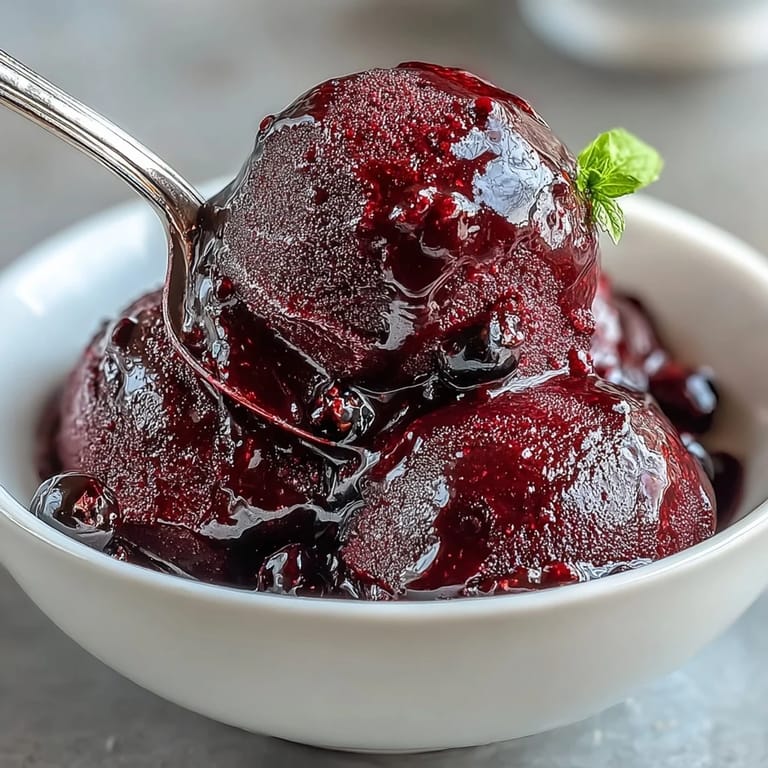
 There was a morning last July when I pulled this sorbet out to serve unexpected guests, and somehow that one small bowl of something homemade and thoughtful made the entire afternoon feel intentional. It's funny how a dessert this simple carries so much weight in moments like that.
The No-Equipment Workaround
If an ice cream maker feels like an unnecessary kitchen gadget (and I respect that position), the freezer method genuinely works, though it requires more hands-on time. The key is stirring every 30 minutes rather than just leaving it alone—each stir breaks up the ice crystals before they can form, which is essentially what the ice cream maker does automatically. It takes longer and your arm gets tired, but the result is virtually identical.
Flavor Variations Worth Trying
The base recipe is perfect as is, but once you've made it once, you might want to experiment with what you can add without losing that clean berry flavor. A tablespoon of crème de cassis (black currant liqueur) added just before churning deepens everything and makes it taste almost decadent, though save this for adult gatherings. Some people add a tiny pinch of fresh thyme or even a whisper of vanilla, but honestly I find these distracting from what makes black currants special in the first place.
Serving Suggestions and Storage
This sorbet is magnificent on its own, but it transforms into something almost elegant when paired with something buttery and delicate like lemon shortbread, or served alongside fresh raspberries and mint. Store it in an airtight freezer container for up to two weeks, though it rarely lasts that long in my house. The texture will remain scoopable as long as you let it sit out for a few minutes before serving, which feels like a small kindness to future-you.
- Serve it in chilled bowls or small glasses for maximum elegance and to slow melting.
- Pair it with shortbread, fresh berries, or even a simple vanilla cake for contrast.
- If it freezes too hard, run the container under warm water for 30 seconds to soften the edges.
 Pin it
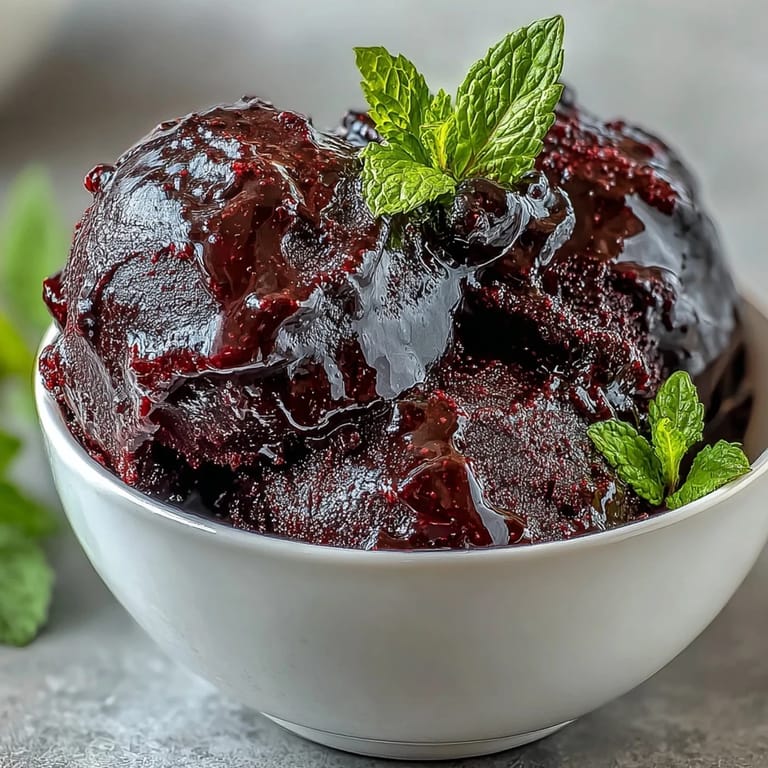
 Black currant sorbet has become my answer to those moments when you need something refreshing but don't want to fuss, something that tastes special without pretending to be anything other than what it is. Make this once and you'll find yourself returning to it again and again.
Recipe FAQ
- → Can I use frozen black currants instead of fresh?
Absolutely. Frozen black currants work beautifully and are often more readily available. Simply use them straight from the freezer without thawing first. The cooking process will break them down perfectly, resulting in the same vibrant flavor and smooth texture as fresh berries.
- → How long can I store this in the freezer?
Properly stored in an airtight container, this sorbet maintains its quality for up to 2-3 months. For the best texture and flavor, consume within the first month. Always let it soften at room temperature for 5-10 minutes before scooping for perfect serving consistency.
- → What can I use if I don't have an ice cream maker?
You can still achieve wonderful results without specialized equipment. Pour the chilled mixture into a shallow freezer-safe container and place in the freezer. Every 30 minutes for the first 3 hours, remove and stir vigorously with a fork or whisk to break up ice crystals. This manual churning method creates a smooth, scoopable texture.
- → Is this suitable for special dietary requirements?
This sorbet naturally accommodates multiple dietary needs. It's completely vegan, dairy-free, gluten-free, and nut-free. The ingredient list is straightforward with no hidden allergens. Always verify your sugar source if you have severe allergies due to potential cross-contamination in processing facilities.
- → Can I reduce the amount of sugar?
Sugar serves a crucial role beyond sweetness—it affects texture and freezing point. Reducing sugar significantly may result in icy, hard sorbet that's difficult to scoop. You can decrease by about 10-15% if needed, but the balance provided ensures both optimal flavor and the perfect creamy consistency.
- → What other berries can I use for this method?
This versatile technique works wonderfully with raspberries, blackberries, blueberries, or even a mix of berries. Adjust sugar quantities based on natural sweetness—berries like blueberries may need slightly more, while raspberries might need less. Each variation offers a unique flavor profile while maintaining the same refreshing quality.