 Pin it
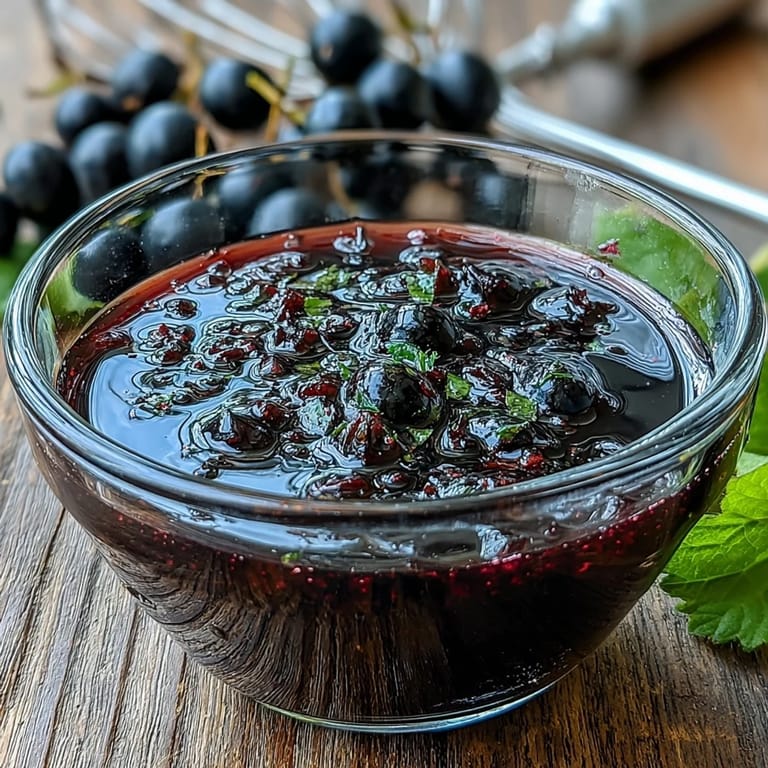
 I discovered black currant vinaigrette entirely by accident while rummaging through a specialty market's juice section, drawn to a bottle's deep purple hue. The clerk mentioned it was from a small European producer, and something about that color made me want to build a dressing around it instead of just drinking it straight. That evening, I whisked together what felt right—tart, bright, a little bold—and poured it over some wilted greens I had lying around. One taste and I understood why this little bottle had called to me.
Last summer, I brought this vinaigrette to a potluck where someone had made the most beautiful roasted beet salad, and watching people's faces light up when they tasted these two together felt like I'd unlocked something special. A friend asked for the recipe before she even finished her plate, and now she makes it every week for her family. Moments like that remind me why homemade dressings matter so much more than we usually think they do.
Ingredients
- Black currant juice, unsweetened: The star of the show—look for it in health food stores or online, and make sure it's truly unsweetened or the dressing becomes cloying.
- Red wine vinegar or apple cider vinegar: Red wine vinegar keeps things sophisticated, but apple cider works beautifully if that's what you have and brings a softer tang.
- Fresh lemon juice: Never skip this; it brightens everything and keeps the tartness from becoming one-dimensional.
- Extra virgin olive oil: Use something you actually enjoy eating because this is where quality makes an honest difference in every bite.
- Dijon mustard: A teaspoon might seem small, but it's the secret that helps everything hold together and adds a sophisticated edge.
- Honey or maple syrup: Optional, but I learned the hard way that black currant's natural tartness sometimes needs just a whisper of sweetness to balance.
- Shallot, finely minced: The texture matters here—mince it fine so it distributes evenly and doesn't feel like you're biting into chunks.
- Sea salt and freshly ground black pepper: Always grind your pepper fresh; pre-ground tastes dusty and tired by comparison.
Tired of Takeout? 🥡
Get 10 meals you can make faster than delivery arrives. Seriously.
One email. No spam. Unsubscribe anytime.
Instructions
- Gather and whisk your flavor base:
- Pour the black currant juice, vinegar, and lemon juice into a medium bowl, then add the mustard, honey if using it, minced shallot, salt, and pepper. Whisk everything together until the shallot is evenly distributed and you can't see any streaks of mustard—this takes about a minute and sets up your foundation perfectly.
- Emulsify slowly with the olive oil:
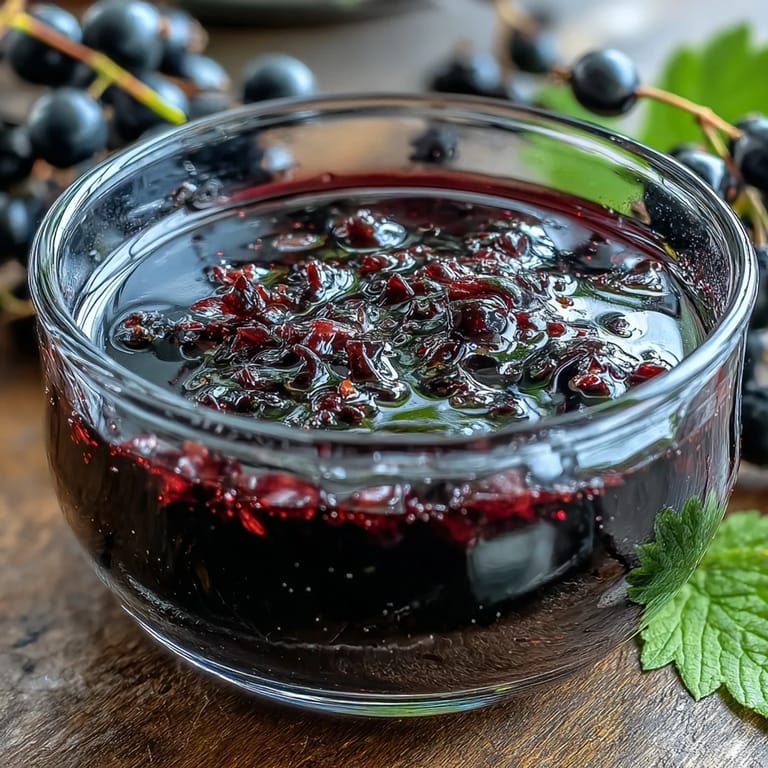
- Start with the thinnest stream of olive oil you can manage while whisking continuously; this is what transforms separate ingredients into something silky and unified. It should come together gradually, getting thicker and more luxurious as you whisk, which takes about two more minutes of patient work.
- Taste and adjust:
- This step is where you make it yours—add more salt if it tastes flat, more pepper if it feels one-dimensional, or a touch more sweetener if the tartness is too aggressive. Trust your palate because what tastes perfect to you is the only version that matters.
- Store or use immediately:
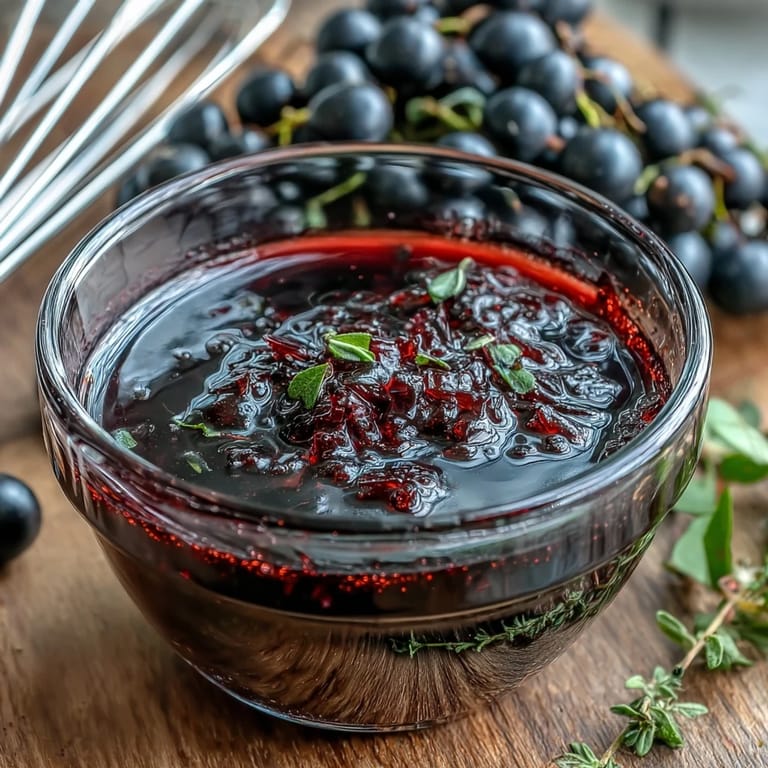
- You can use it right away on whatever salad is waiting, or pour it into a jar with a tight lid and keep it in the refrigerator for up to a week. Before using stored vinaigrette, shake it well because the oil and other liquids will naturally separate, which is completely normal and easy to fix.
 Pin it
 I remember serving this at a dinner party where my grandmother tasted it and said, 'This is what I've been looking for my whole life and didn't know it,' which might be the highest compliment anyone has ever paid to something I've made. That moment made me realize vinaigrette isn't just about coating lettuce—it's about transforming how people experience food.
When to Reach for Black Currant Vinaigrette
This dressing sings on delicate salads with goat cheese and walnuts, but it's equally stunning on sturdy greens like spinach or kale that can stand up to its boldness. Roasted vegetables are another perfect match—I've drizzled it over beets, carrots, and Brussels sprouts, and each time it makes them taste both lighter and more interesting. The tartness cuts through richness beautifully, so it works wonderfully alongside grilled chicken or salmon if you're building something more substantial than a salad.
If You Can't Find Black Currant Juice
Pomegranate juice brings similar tartness and a gorgeous color, though it's slightly less earthy. Cranberry juice works too, and it's usually easier to find unsweetened in most grocery stores. I've made versions with both and never felt like I was compromising—each one just tastes like a different story, which is the beauty of understanding the principle behind a recipe rather than treating it like a rigid rule.
Small Details That Actually Matter
Temperature doesn't affect this dressing much, but I've noticed it tastes brighter when used at room temperature rather than straight from the cold refrigerator. The shallot's flavor intensity varies depending on how fresh it is, so taste as you go rather than assuming the measurements are perfect for your particular shallot. The way you whisk—whether aggressively or gently—affects how thick and luxurious the final texture becomes, so faster whisking gives you a thicker emulsion if you prefer that.
- Store in a glass jar rather than plastic if you can, because it won't absorb the berry stain and your container stays beautiful.
- Make a double batch if you love it, because it keeps reliably and you'll find yourself reaching for it constantly.
- Taste the dressing on the actual salad you're making, not straight from the bowl, because the greens change how it feels in your mouth.
 Pin it
 This vinaigrette taught me that the simplest recipes are often the ones that matter most, and that five minutes of thoughtful cooking can create something people remember. Make it, love it, and don't be afraid to make it again and again.
Recipe FAQ
- → How long does this vinaigrette keep?
This vinaigrette stays fresh in the refrigerator for up to 1 week when stored in a jar with a tight-fitting lid. The olive oil may solidify slightly when chilled—simply let it sit at room temperature for a few minutes and shake well before using.
- → Can I make this without honey or maple syrup?
Absolutely. The sweetener is optional and primarily serves to balance the tartness of the black currant juice. If you prefer a sharper, more acidic dressing, feel free to omit it entirely.
- → What can I substitute for black currant juice?
Pomegranate juice, cranberry juice, or even tart cherry juice work well as alternatives. Each will slightly alter the flavor profile while maintaining that characteristic tart, fruity note that makes this dressing special.
- → Why use Dijon mustard in a vinaigrette?
Dijon mustard serves two purposes: it adds a subtle tangy flavor and acts as an emulsifier, helping the oil and vinegar blend together smoothly. This prevents separation and creates a creamy, cohesive texture.
- → Should I strain out the shallot pieces?
That's entirely up to your preference. Straining through a fine mesh sieve creates a perfectly smooth dressing, while leaving the shallot pieces in adds texture and bursts of flavor. Both methods work beautifully.
- → What salads pair best with this vinaigrette?
The tart, fruity flavor complements bitter greens like arugula, earthy roasted vegetables, and grain salads with quinoa or farro. It's especially delicious over spinach with goat cheese or roasted beets with walnuts.