 Pin it
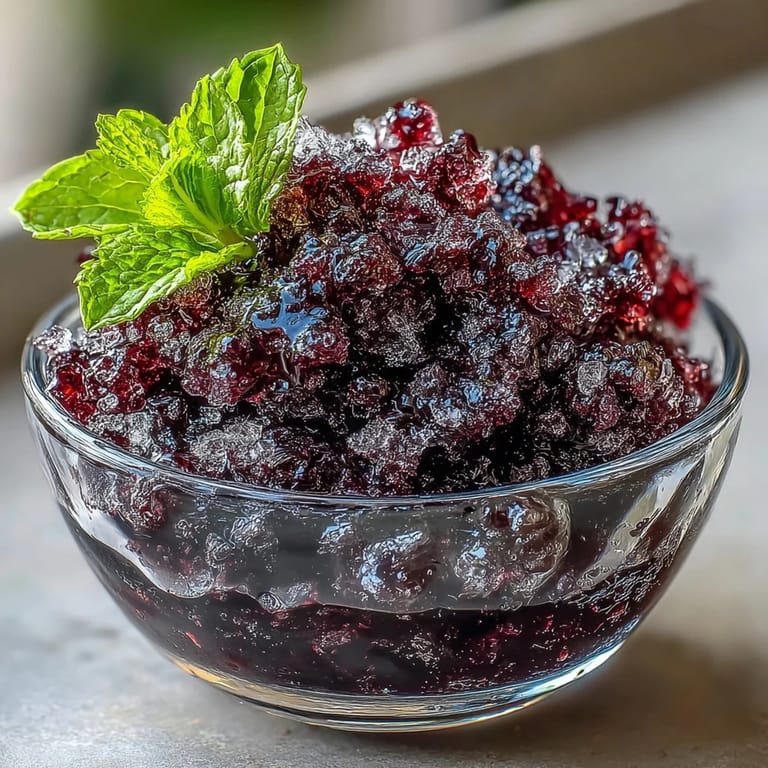
 There's something almost magical about watching black currants transform from a tart, deep purple fruit into something crystalline and delicate. My friend Sofia brought a bag of them from a farmer's market one sweltering July afternoon, and I had no idea what to do with them until she casually mentioned granita as if it were the simplest thing in the world. That first spoonful—sharp, refreshing, with tiny ice crystals that melted on my tongue—made me understand why Italians have perfected this art. Now whenever summer heat makes the kitchen unbearable, this is what I reach for.
I made this for a dinner party once when my oven decided to quit mid-dessert, and it became the star of the evening. Everyone expected something fussy and complicated, but instead I served them these gorgeous dark purple scoops in chilled glasses while we sat outside in the evening air. Someone asked for the recipe before they'd even finished their first bite, and I realized right then that the best desserts are often the ones that look elegant but don't demand much from you.
Ingredients
- Fresh or frozen black currants (500 g): These little berries pack an intense, slightly tart flavor that's the whole soul of this dessert—frozen works just as well as fresh, and honestly makes your life easier since there's no stem removal.
- Granulated sugar (150 g): The amount might seem modest, but trust it; you want the tartness of the currants to shine through rather than bury it.
- Water (400 ml): This dilutes the mixture to the right consistency for that perfect granita texture, neither too thick nor too watery.
- Freshly squeezed lemon juice (1 tablespoon): A squeeze of lemon brightens everything and keeps the flavor from feeling one-dimensional.
Tired of Takeout? 🥡
Get 10 meals you can make faster than delivery arrives. Seriously.
One email. No spam. Unsubscribe anytime.
Instructions
- Start with clean fruit:
- Give your black currants a quick rinse and remove any stems if you're using fresh ones. This takes two minutes but saves you from gritty surprises later.
- Build your syrup base:
- Combine the currants, sugar, and water in a medium saucepan and bring everything to a gentle simmer over medium heat. You'll notice the kitchen suddenly smells incredible—fruity, a little wild, almost floral—and the currants will begin bursting open after about 10 minutes, releasing their deep color into the liquid.
- Blend until silky:
- Once cooled slightly, pour the whole mixture into a blender and puree until completely smooth. An immersion blender works beautifully too if you prefer to skip the transfer.
- Strain for elegance:
- Push the puree through a fine-mesh sieve into a large bowl, pressing gently with the back of a spoon to extract every drop of juice while leaving the seeds and skins behind. This step is what gives granita its refined texture rather than a seedy, rough one.
- Add brightness:
- Stir in the lemon juice, which should make you taste it immediately to confirm how much sharper and more alive everything becomes.
- Freeze with intention:
- Pour the mixture into a shallow metal baking dish—the shallower the pan, the faster it freezes and the easier it is to scrape. Metal conducts cold better than glass, which genuinely matters here.
- Scrape and fluff:
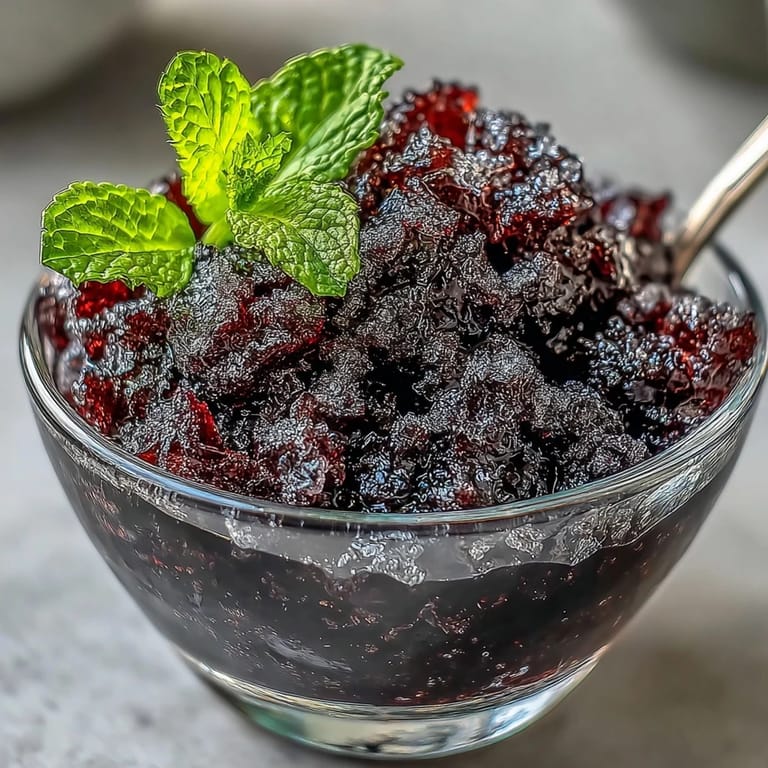
- After 45 minutes in the freezer, use a fork to scrape the icy edges toward the center, breaking up any large crystals and incorporating them back into the liquid. This is the meditative part—you'll repeat it every 30 to 45 minutes for about 4 hours total until the whole mixture looks fluffy and crystalline rather than solid and chunky.
- Serve immediately:
- Scoop into chilled glasses or bowls straight from the freezer and eat it right away while those crystals are still perfect.
 Pin it
 My neighbor tasted this once and immediately asked if I'd buy her a batch every week, as if I'd somehow become a professional gelato maker. I think what moved her most was that it felt like an indulgence without any heaviness—you eat something beautiful and refined and then feel lighter afterward, which is rare for dessert. That's the quiet power of a perfect granita.
How Granita Differs from Sorbet
Granita is Italian simplicity at its best; it's technically just frozen fruit juice with sugar, stirred occasionally rather than churned constantly in a machine. The crystals that form are supposed to be there, visible and slightly coarse, giving you that specific textural satisfaction that sorbet—which is smoother and denser—can never quite match. It's the difference between something rustic and something refined, and honestly, granita wins on ease alone.
Flavor Variations Worth Exploring
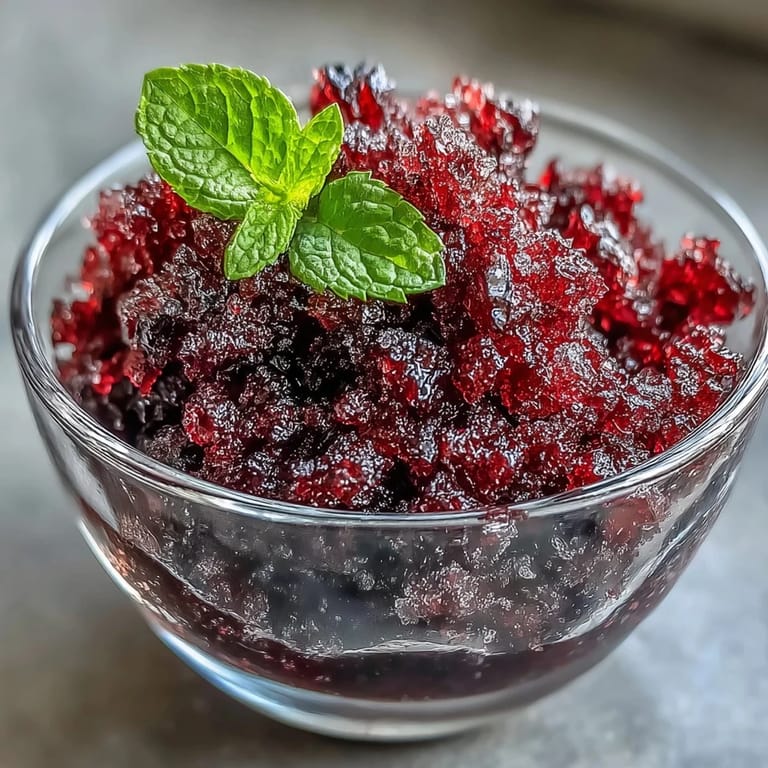
Black currants pair beautifully with cassis liqueur if you're making this for adults; just add 2 tablespoons before freezing and suddenly you have something sophisticated enough for dinner parties. I've also added a tiny pinch of cardamom once, which sounds strange but made everything feel almost luxurious. Fresh mint as a garnish transforms it from simple dessert into something you'd see at a fancy restaurant, and honestly costs you nothing but thirty seconds of thought.
Storage and Make-Ahead Magic
One of my favorite things about granita is that you can make it up to two days ahead, which means you can impress people without being stuck in the kitchen on the day of. Just keep it in the freezer in that same shallow pan, and give it a vigorous fork-scraping right before you serve it to restore its fluffy texture. It won't be quite as perfect as freshly made, but it's still leagues better than most desserts you could pull together on short notice.
- Fluff with a fork immediately before serving no matter how long it's been sitting.
- Keep glasses or bowls in the freezer while the granita finishes so it doesn't melt instantly on your tongue.
- If you somehow end up with a solid frozen block, let it sit at room temperature for 10 minutes, then scrape aggressively with your fork until it becomes fluffy again.
 Pin it
 Granita is the kind of dessert that reminds you cooking doesn't always have to be complicated to be wonderful. Serve it cold, enjoy it slowly, and let summer taste exactly like what you needed.
Recipe FAQ
- → What is granita?
Granita is a traditional Italian frozen dessert made from sugar, water, and flavorings. Unlike ice cream, it has a coarse, crystalline texture achieved by regularly scraping the mixture during freezing. Granita is lighter and more refreshing than sorbet.
- → Can I use frozen black currants?
Yes, frozen black currants work perfectly in this granita. They're often more readily available and can be just as flavorful as fresh. Simply add them directly to the saucepan without thawing first.
- → How long does black currant granita last in the freezer?
You can store the granita in the freezer for up to 2 days. Before serving, let it sit at room temperature for 5 minutes, then fluff it with a fork to restore the desired texture.
- → Why do I need to scrape the mixture while freezing?
Scraping every 30-45 minutes prevents large ice crystals from forming and creates granita's signature fluffy, crystalline texture. This process incorporates air and ensures even freezing throughout the mixture.
- → Can I reduce the sugar in this granita?
Sugar helps create the proper texture and balances the tartness of black currants. You can reduce it slightly to 120g, but too little sugar will result in icy, hard crystals rather than the desired fluffy consistency.
- → What tools do I need to make granita?
You'll need a medium saucepan for cooking the currants, a blender or immersion blender for pureeing, a fine-mesh sieve for straining, a shallow metal baking dish for freezing, and a fork for the essential scraping process.