 Pin it
 The first time I tasted zaatar bread was at a small market in Beirut, standing between stalls of fresh produce and hanging herbs, watching a baker pull golden rounds from a wood-fired oven. The smell was intoxicating—nutty, tangy, alive with sumac and thyme—and I knew immediately I had to learn how to make it. Years later, I discovered that recreating that moment at home wasn't about perfecting technique; it was about understanding how a few humble ingredients could transform into something that tastes like belonging.
I made this for a dinner party once when a friend mentioned she'd been craving something from her childhood in Damascus. Watching her face when she smelled the bread coming out of the oven—that moment of recognition, of home—reminded me why cooking for people matters. The loaf didn't need to be perfectly round or evenly topped; it just needed to taste true.
Ingredients
- All-purpose flour: The foundation that will absorb water and develop just enough gluten to create a tender, pillowy crumb without being tough.
- Instant dry yeast: A teaspoon is all you need to create the gentle rise that distinguishes zaatar bread from crackers or hardtack.
- Sugar: A small amount feeds the yeast and deepens the bread's golden color as it bakes.
- Salt: Enhances every flavor and controls fermentation so the dough rises at the right pace.
- Olive oil: Two tablespoons in the dough create tender crumb; extra virgin oil in the topping carries the zaatar's aromatic oils and sesame nuttiness.
- Warm water: The temperature matters—too hot kills the yeast, too cold slows everything down; aim for the warmth of a comfortable bath.
- Zaatar spice blend: This is the soul of the bread, a dusty-colored mixture of thyme, sumac, and sesame that tastes green and slightly sour at once.
- Toasted sesame seeds: They add texture and a subtle richness that feels almost buttery despite containing no butter.
Tired of Takeout? 🥡
Get 10 meals you can make faster than delivery arrives. Seriously.
One email. No spam. Unsubscribe anytime.
Instructions
- Bringing the dough together:
- Combine your dry ingredients in a large bowl, then introduce the oil and water gradually as you stir, letting the flour incorporate slowly. The dough will look shaggy at first, then suddenly transform as you continue stirring—this is when you know it's ready for kneading.
- Kneading into smoothness:
- Work the dough on a lightly floured surface with the heel of your hand, folding it toward you in a rhythmic motion. After 5-7 minutes, you'll feel it shift from slightly sticky to supple and elastic—that's when you've done enough.
- The first rise:
- Place the dough in an oiled bowl and cover it with a damp cloth, then set it somewhere warm where it won't be disturbed. After an hour, it should have doubled in size; if your kitchen is cool, give it a bit longer.
- Shaping the rounds:
- Divide the dough into four pieces and gently shape each into a ball, then use your fingertips to flatten it into a circle about 6-7 inches across. If the dough springs back, let it rest for a minute before continuing—it's just building confidence.
- Creating the zaatar paste:
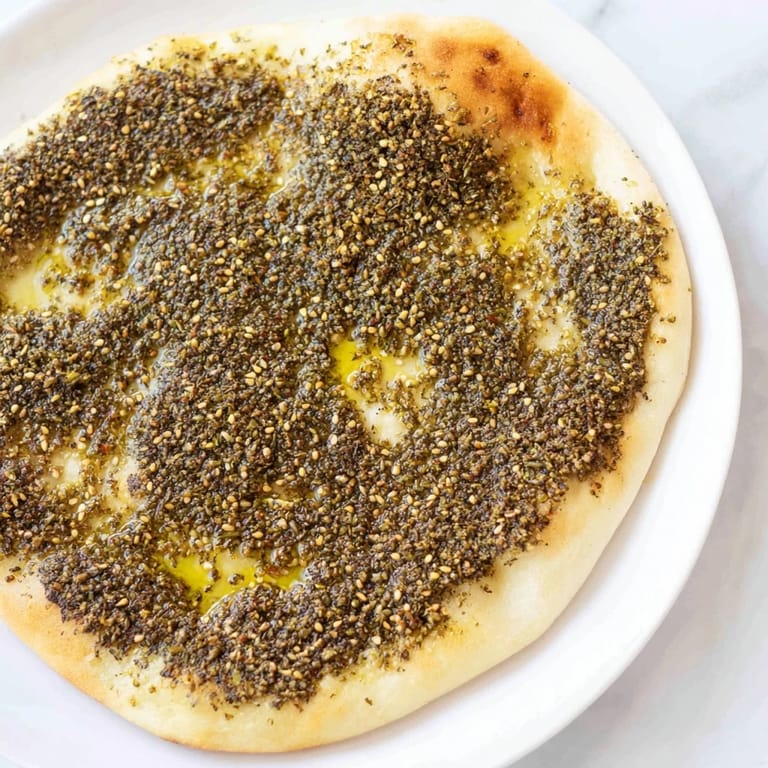
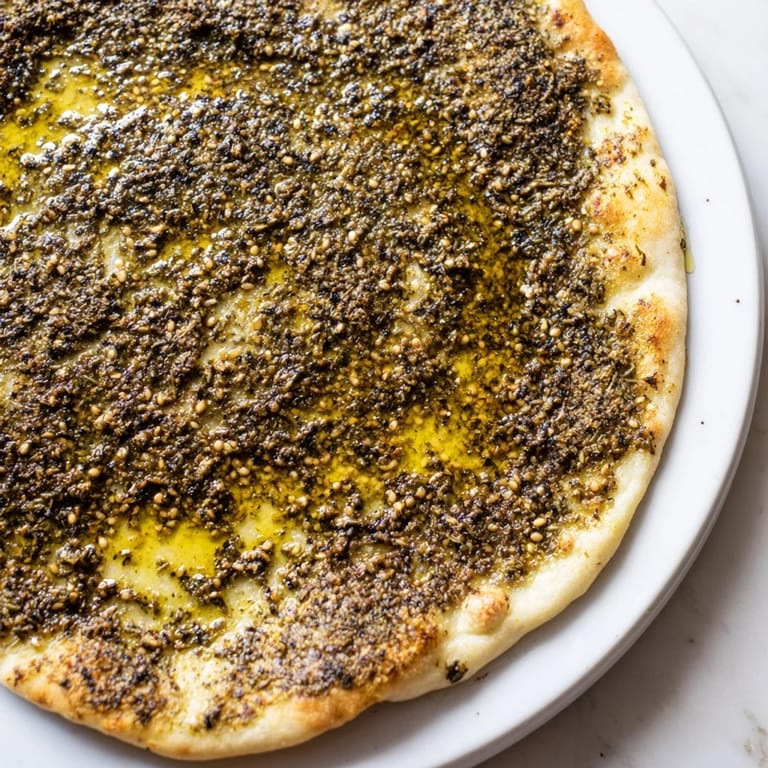
- Mix the zaatar, sesame seeds, and olive oil in a small bowl until it resembles a chunky paste. The oil should be just enough to hold everything together without making it soggy.
- Topping and baking:
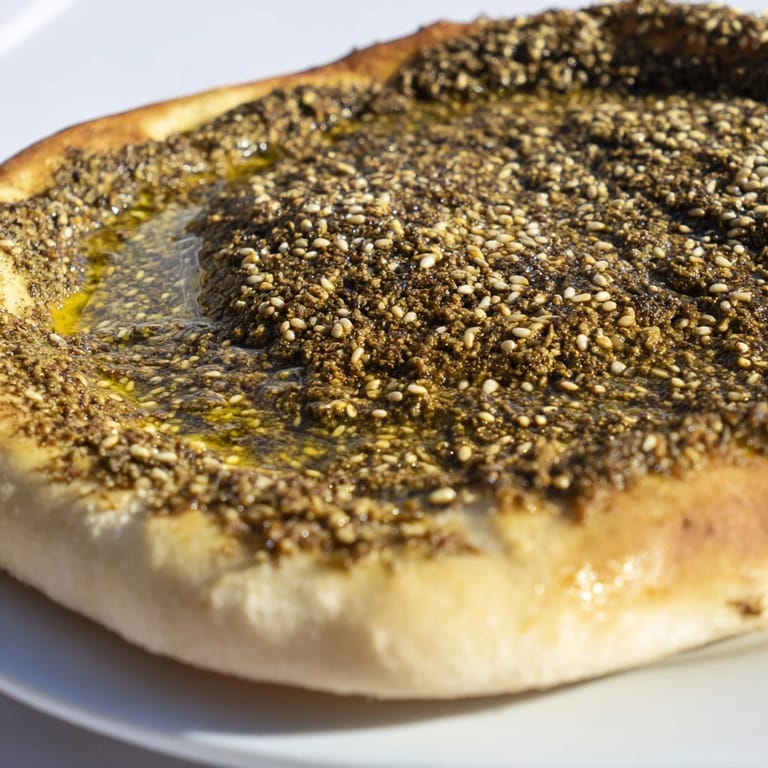
- Spread the zaatar mixture evenly over each dough round, leaving a small border so the edges can brown and crisp. Bake at 220°C until the top is fragrant and the edges are golden, about 12-15 minutes.
 Pin it
 There's a particular magic in pulling warm zaatar bread from the oven when you've made it yourself—that moment when you realize the smell you've been chasing has been in your own kitchen the whole time. It changes how you think about what's possible in a simple loaf.
Why Warm Matters
Zaatar bread tastes fundamentally different warm, when the oil is still soft and the spices are most aromatic, than it does at room temperature. The texture is more yielding, almost tender, and the flavors feel brighter and less dusty. I've served it both ways, and while it's fine at room temperature, warm is when it truly shines—that's when you understand why people line up for it at bakeries.
Pairing and Serving
This bread isn't meant to be the main event; it's the opening act that sets the tone for everything that follows. Serve it alongside labneh—that thick, creamy yogurt cheese—olives, and fresh vegetables, or use it as a vehicle for hummus and baba ganoush. I've also discovered it works beautifully torn and scattered into salads, where it adds texture and absorbs the dressing without falling apart.
Customizing Your Version
Once you've made this bread once, you'll want to play with it. Some people add a pinch of chili flakes to the topping for heat, others reduce the salt slightly if their zaatar blend is already salty, and I once added a handful of chopped fresh mint to the oil mixture on a whim and never looked back. The foundation is sturdy enough to handle small changes without falling apart.
- If you prefer a spicier edge, mix in red pepper flakes or a tiny pinch of cayenne with the zaatar topping.
- For extra flavor, let the shaped dough rest 10 minutes before topping, which allows the flavors to develop more fully.
- Store leftover bread in an airtight container and reheat gently in the oven to restore its warmth and crispness.
 Pin it
 Make this bread when you want to remind yourself that good food doesn't require complexity, just intention and a few ingredients that matter. Every time, it tastes like a small miracle.
Recipe FAQ
- → What is zaatar composed of?
Zaatar is a traditional Middle Eastern blend of dried herbs like thyme, oregano, sumac, and toasted sesame seeds, offering a tangy and nutty flavor.
- → Can I use different flours for the dough?
All-purpose flour works best for this bread, but you can experiment with bread flour for a chewier texture. Whole wheat may alter the softness.
- → How long should the dough rise?
The dough should rest in a warm place for about an hour, enough to double in size and develop a light, airy texture.
- → What are good serving suggestions?
This bread pairs wonderfully with labneh, olives, fresh vegetables, or dips like hummus and baba ganoush.
- → Can I add a spicy kick to the topping?
Yes, adding a pinch of chili flakes to the zaatar mixture enhances the flavor with a subtle heat.