 Pin it
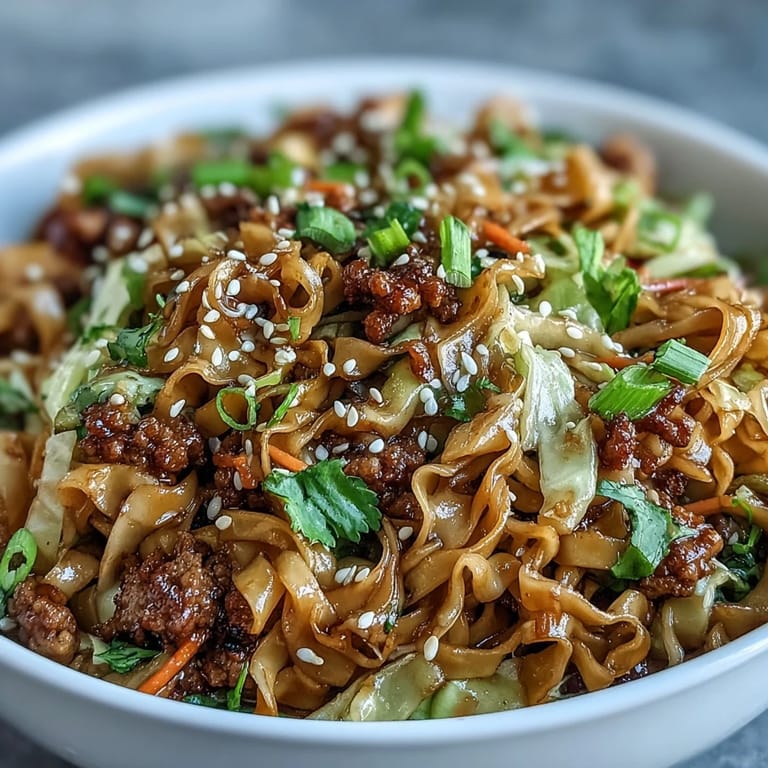
 The first time I made these bowls, my kitchen smelled like my favorite dumpling house on a Tuesday night. I had been craving potstickers but didn't have the patience for pleating and frying individual dumplings after a chaotic day at work. Something about that savory, salty, slightly sweet filling hit me right in the comfort zone.
My roommate wandered in mid-cooking and asked if I'd secretly ordered takeout. She couldn't believe it came together in about 40 minutes with mostly pantry staples. Now we make it whenever we need something that feels special but doesn't require grocery shopping or hours of standing at the stove.
Ingredients
- 8 oz dried rice noodles or lo mein noodles: Rice noodles soak up the sauce beautifully while staying tender, but wheat lo mein noodles give you that satisfying chew if you prefer
- 1 lb ground pork or chicken: Pork has the right fat content for those crispy browned bits, but chicken works if you want something lighter
- 1 tbsp soy sauce: This starts building that umami base right in the meat so every bite tastes seasoned through
- 1 tsp toasted sesame oil: A little goes a long way and it's what makes it smell like a proper Asian dish
- 1 tsp cornstarch: This is the secret that keeps the meat silky and tender instead of tough and dry
- 1/4 tsp white pepper: White pepper has that specific restaurant quality heat without the visible specks
- 1/2 tsp sugar: Just enough to balance the salt and help the meat brown better
- 1/2 tsp kosher salt: Regular soy sauce has plenty of salt, so adjust accordingly if you use that instead of low sodium
- 2 tbsp neutral oil divided: You need one batch for the meat and another for the aromatics
- 3 cloves garlic minced: Fresh garlic is non negotiable here, nothing else gives you that punch
- 1 tbsp fresh ginger finely grated: The ginger cuts through the richness and brightens everything up
- 4 green onions thinly sliced: Keep the whites and greens separate for different cooking times
- 2 cups finely shredded green cabbage: This adds crunch and bulk without overwhelming the dish
- 1 cup shredded carrots: Matchstick carrots save time but hand-shredded have better texture
- 1 cup sliced shiitake or cremini mushrooms: They become meaty and absorb all those pan juices
- 1 cup bean sprouts optional: These add a fresh snap right at the end if you can find them
- 1/3 cup low sodium soy sauce: This forms the backbone of your sauce without making it salt-heavy
- 2 tbsp rice vinegar: The acid cuts through the rich meat and balances the sugar
- 1 tbsp oyster sauce: Hoisin works too if you want it sweeter or can't find oyster sauce
- 1 tbsp chili garlic sauce: Adjust this based on your heat tolerance
- 2 tsp toasted sesame oil: This gives the sauce that restaurant finish and aroma
- 1 tbsp brown sugar or honey: Honey is milder but brown sugar has more depth
- 1/2 cup chicken broth or water: This thins the sauce to the right consistency for coating noodles
Tired of Takeout? 🥡
Get 10 meals you can make faster than delivery arrives. Seriously.
One email. No spam. Unsubscribe anytime.
Instructions
- Get your noodles ready first:
- Boil them according to the package but err on the side of underdone since they'll cook more later, then rinse with cold water and toss with a few drops of oil so they don't turn into a sticky clump
- Season the meat while water boils:
- Whisk together that soy sauce, sesame oil, cornstarch, pepper, sugar, and salt until smooth, then gently work it into the pork until it feels slightly sticky and let it hang out while you prep everything else
- Mix up your sauce in a bowl:
- Combine all the sauce ingredients and whisk until the sugar dissolves completely, then give it a taste and add more heat or sweet if that's your preference
- Prep your vegetables now:
- Shred the cabbage and carrots, slice your mushrooms, separate those green onion whites from greens, and rinse the bean sprouts if you're using them
- Crank the heat and brown the meat:
- Heat half your oil in a large skillet until it's shimmering, spread the meat in an even layer, and let it get crispy and brown before breaking it up and cooking it through
- Add the fragrant stuff:
- Push the meat aside, add the remaining oil, and toss in your garlic, ginger, and white onion parts, stirring just until you can smell them everywhere
- Cook down the vegetables:
- Add the mushrooms first and let them soften, then throw in the cabbage and carrots and stir fry until the cabbage's wilted but still has some crunch
- Bring it all together with sauce:
- Pour that sauce you made over everything and toss it around until the vegetables are glossy and the sauce has thickened slightly
- Add the noodles and toss:
- Toss in your cooked noodles and stir gently but thoroughly, adding a splash of water or broth if it's looking dry, then throw in the bean sprouts right at the end so they stay crisp
- Finish it off and serve:
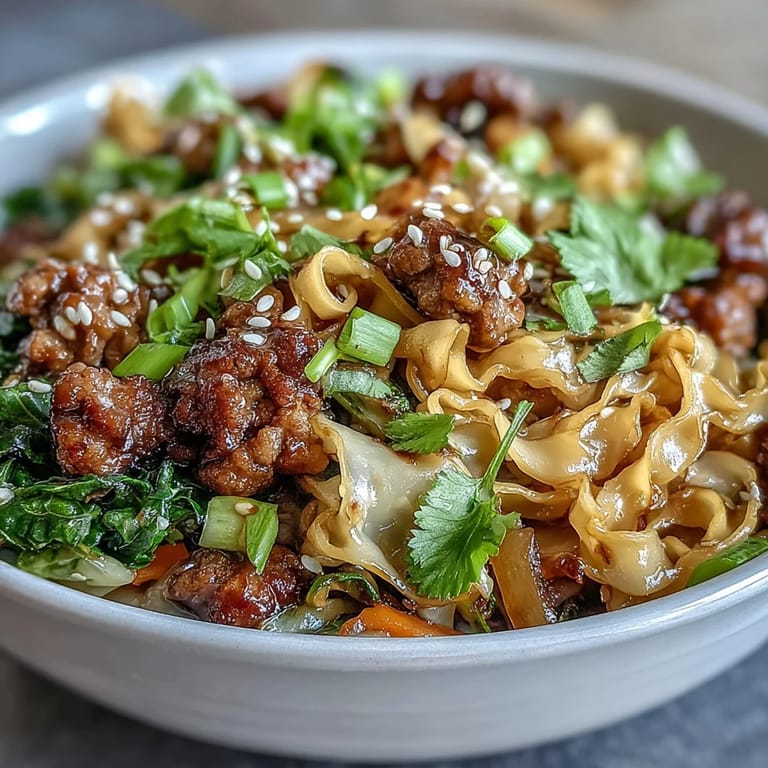
- Taste it and add more soy sauce, chili sauce, or lime if it needs balance, stir in half the green onions, and serve it up topped with the remaining onions, cilantro, and sesame seeds
 Pin it
 Last Tuesday my friend texted me at 7 PM completely defeated by her day. I had everything in my pantry to make this and she showed up with cold beer. We stood over the stove taking turns tossing the noodles and she left with a full container for lunch the next day, declaring it better than the $16 bowl she usually orders.
Making It Your Own
I've made this with ground turkey when pork felt too heavy and it still hits the spot. The vegetables are flexible too, bok choy or even kale work if that's what you have. Once I used udon noodles and the thicker texture was actually amazing for holding onto more sauce.
Getting The Texture Right
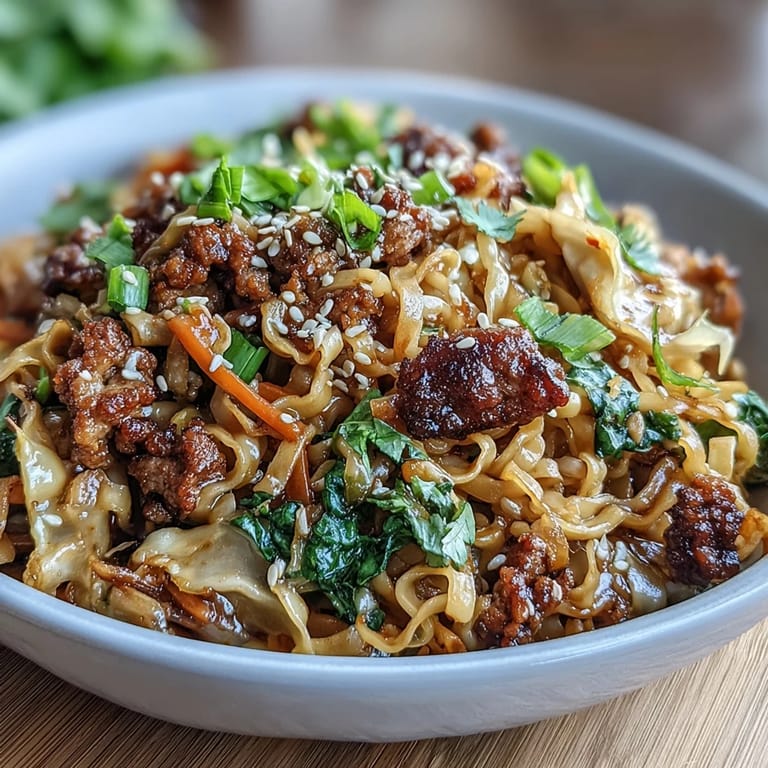
The difference between good and great is in those browned bits on the meat and the slight crunch in the vegetables. Don't rush the browning step and don't let the cabbage cook down completely. That contrast is what makes each bite interesting.
Sauce Secrets
The sauce needs to coat everything without drowning it. If it's too thick, add more broth. Too thin and it won't cling to the noodles. I keep tasting as I go because soy sauce brands vary so much in salt content.
- Make extra sauce and store it in the fridge for quick weeknight stir fries
- Add a fried egg on top with runny yolk for extra richness
- Squeeze fresh lime right before serving to wake up all the flavors
 Pin it
 This recipe has become my go-to for feeding people without losing my mind. Something about serving food in bowls makes everything feel more casual and comforting.
Recipe FAQ
- → Can I make this dish gluten-free?
Yes, simply use gluten-free tamari instead of regular soy sauce, rice noodles, and ensure your oyster sauce is certified gluten-free. The flavors remain just as vibrant and satisfying.
- → What's the best way to store leftovers?
Store in an airtight container in the refrigerator for up to 3 days. Reheat gently with a splash of water or broth to refresh the sauce and prevent noodles from drying out.
- → Can I substitute the ground pork?
Absolutely. Ground chicken, turkey, beef, or plant-based meat alternatives all work beautifully with the same seasoning blend. Adjust cooking time slightly for leaner meats.
- → How do I prevent the noodles from sticking together?
After draining, rinse the noodles briefly with cold water and toss with a few drops of sesame or neutral oil. This prevents clumping and keeps each strand separate for even coating.
- → What vegetables work best in this bowl?
Shredded green cabbage, carrots, and shiitake mushrooms provide excellent texture. You can also add baby bok choy, napa cabbage, snap peas, or bell peppers for extra crunch and color.
- → Can I adjust the spice level?
Certainly. Start with less chili-garlic sauce and add more to taste. You can also serve extra chili sauce on the side so everyone can customize their own bowl.