 Pin it
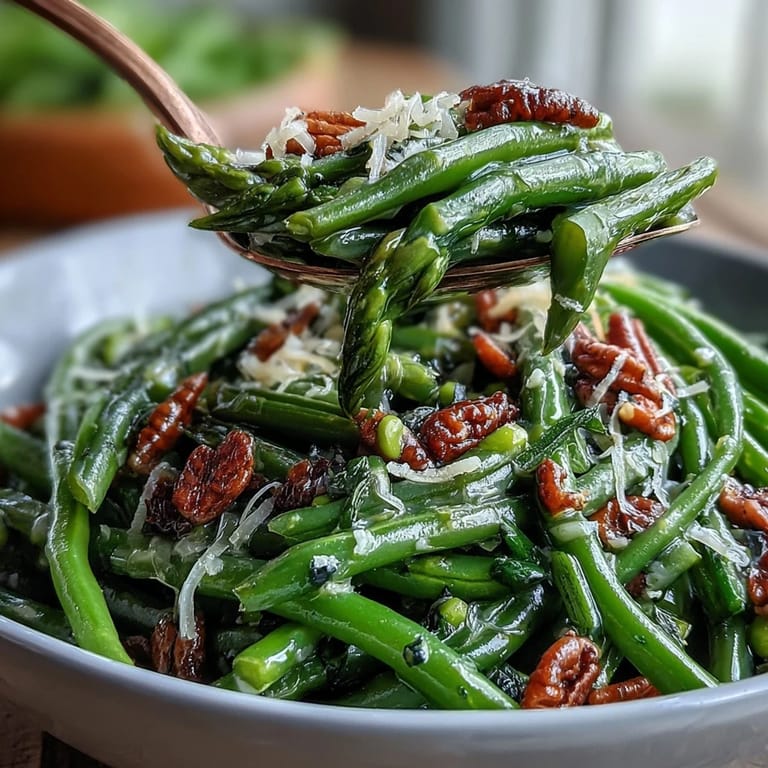
 I was standing at the farmers market on a Saturday morning when a vendor handed me a bunch of the thinnest, most delicate asparagus I'd ever seen, and something just clicked—why shave it instead of chop it? That simple question led me to this salad, which has become my answer to every spring moment that feels too perfect for heavy food. The ribbons catch the light, the peas pop with sweetness, and that lemon dressing makes everything taste like it's been waiting for you all season.
My neighbor caught me making this one afternoon and asked what smelled so bright and alive—I realized she meant the lemon zest hitting the olive oil. She asked for a taste, then for the recipe, and now we make it together every April without fail, standing in her kitchen and competing over who can shave the asparagus thinner.
Ingredients
- Fresh asparagus (about 300 g): Look for thin, tender stalks if you can find them, and trim the woody ends by snapping them where they naturally break—this tells you exactly where the tender part begins.
- Green peas (1 cup, 150 g): Fresh peas in season are incomparable, but frozen ones work beautifully and honestly taste fresher than sad fresh ones from the back of the produce section.
- Baby arugula or mixed spring greens (2 cups, 50 g): Choose whatever looks peppery and alive; the peppery bite keeps the salad from feeling too gentle.
- Radishes (2), thinly sliced: They add a crisp bite and those bright circles make the whole bowl look intentional.
- Shaved Parmesan or pecorino (1/4 cup, 30 g): Use a vegetable peeler to shave it yourself—the thin ribbons melt slightly into the warm salad in the most satisfying way.
- Toasted pine nuts or slivered almonds (1/4 cup, 30 g): Toast them yourself if you have time; the smell alone is worth it, and they taste alive rather than sleepy.
- Extra-virgin olive oil (3 tbsp): This is not the time to use the everyday bottle—a good one changes everything about this dressing.
- Freshly squeezed lemon juice (2 tbsp): Bottled will work but never quite tastes like the real promise of spring.
- Lemon zest (1 tsp): The zest matters more than you'd think; it's where all the brightness lives.
- Honey or maple syrup (1 tsp): Just a whisper of sweetness to balance the lemon's shout.
- Dijon mustard (1 tsp): This tiny amount emulsifies the dressing and gives it backbone.
- Sea salt and freshly ground black pepper (1/2 tsp and 1/4 tsp): Taste as you go; salt amounts vary depending on your greens and cheese.
Tired of Takeout? 🥡
Get 10 meals you can make faster than delivery arrives. Seriously.
One email. No spam. Unsubscribe anytime.
Instructions
- Shave the asparagus into ribbons:
- Hold each stalk at a slight angle and pull your vegetable peeler toward you, listening for that satisfying scrape as thin ribbons collect in the bowl. Work slowly; there's no rush, and the thinner your ribbons, the more elegant the whole thing becomes.
- Build your salad base:
- Combine the asparagus ribbons, peas, greens, and radish slices in a large bowl, giving everything a gentle toss so the colors mix naturally. The raw vegetables should look bright and chaotic, like you've gathered spring itself.
- Whisk the dressing together:
- In a small bowl or jar, combine the olive oil, lemon juice, zest, honey, mustard, salt, and pepper, whisking or shaking until it emulsifies into something silky and cohesive. Taste it straight from a spoon; this is your chance to adjust before it touches the salad.
- Dress and combine gently:
- Drizzle the dressing over your vegetables and toss with a light hand, trying not to bruise the delicate greens or break the asparagus ribbons. You want everything coated but not swimming.
- Finish with cheese and nuts:
- Scatter the shaved Parmesan and toasted nuts across the top, either tossing one more time or leaving them visible so each bite is a little different from the last.
- Serve right away:
- This salad is best eaten within minutes, when the crunch is still audible and the flavors haven't started to soften into each other. Fresh is the whole point here.
 Pin it
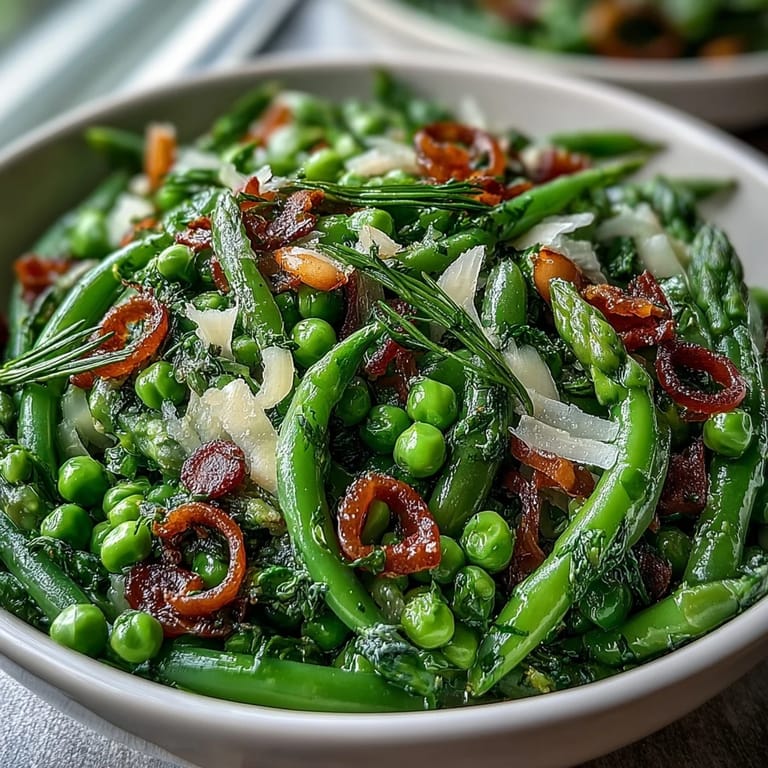
 There was an evening when I made this for someone who'd been stressed about everything, and they took one bite and exhaled in a way that had nothing to do with food and everything to do with simplicity finally showing up. That's when I understood this salad is as much about what it doesn't do as what it does.
Why This Salad Feels Different
Most spring salads feel obligatory, like you're eating what you're supposed to rather than what you want. This one doesn't—partly because shaving the asparagus instead of chopping it changes how it sits on your tongue, and partly because the lemon dressing is aggressive enough to wake everything up. Every ingredient has a job and a personality, so nothing disappears into the background.
Variations That Belong Here
I've added fresh mint when I had it, blanched fava beans instead of peas when someone's garden produced them, swapped almonds for hazelnuts without thinking twice. The skeleton of this salad is strong enough to hold whatever spring has to offer you—sometimes I add crumbled goat cheese, sometimes a handful of fresh basil, sometimes nothing but what's written here.
When to Make This
This is the salad for April and May, for when you've finally stopped craving hot soup and want to taste the season changing on your fork. It works as a side to grilled fish or roasted chicken if you need it to feel like a real meal, but honestly it's bright enough to stand alone.
- Serve it immediately after assembly for the crispest, loudest version of itself.
- If you need to make it ahead, keep the dressing separate and toss right before serving.
- Double the dressing recipe if you like things more heavily dressed, but taste it first because you might love the restraint.
 Pin it
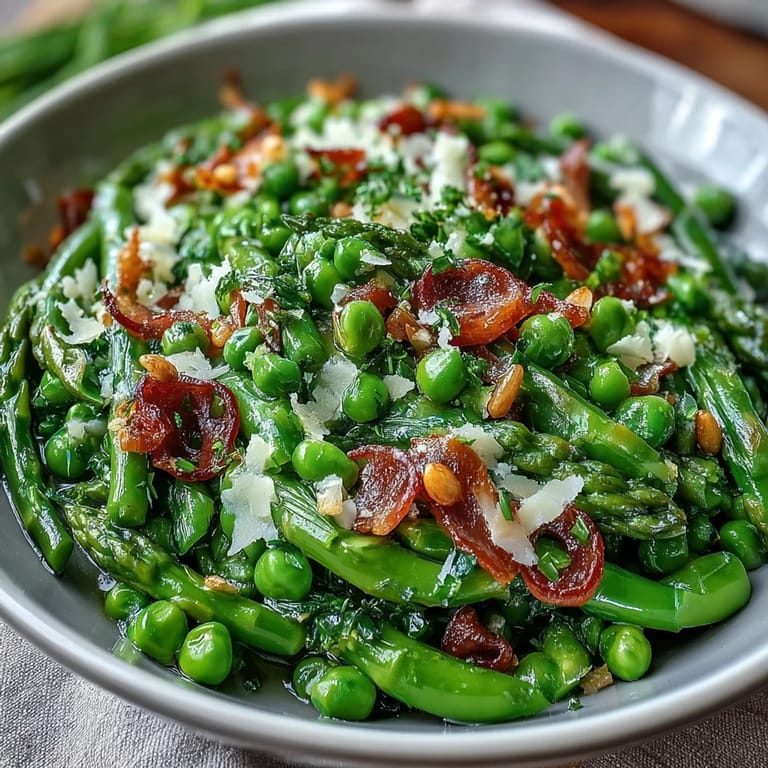
 This salad taught me that sometimes spring doesn't need convincing; it just needs to be handled gently and let shine through. Make it often, adjust it freely, and remember that the best version is the one you actually eat.
Recipe FAQ
- → How do I shave asparagus for this salad?
Use a vegetable peeler to shave the asparagus stalks into thin, ribbon-like strips, which makes the texture tender and easy to eat.
- → Can I substitute peas with other vegetables?
Yes, sugar snap peas or blanched fava beans work well as alternatives, providing similar sweetness and texture.
- → What cheese complements this salad best?
Shaved Parmesan or pecorino adds a savory, nutty element that pairs beautifully with the fresh vegetables and lemon dressing.
- → How can I make the salad vegan-friendly?
Simply omit the cheese and replace pine nuts with additional seeds or nuts as preferred to keep it plant-based.
- → Is it better to serve this salad immediately or chilled?
For the freshest texture and flavor, serve immediately after dressing to preserve the crispness of the asparagus and greens.