 Pin it
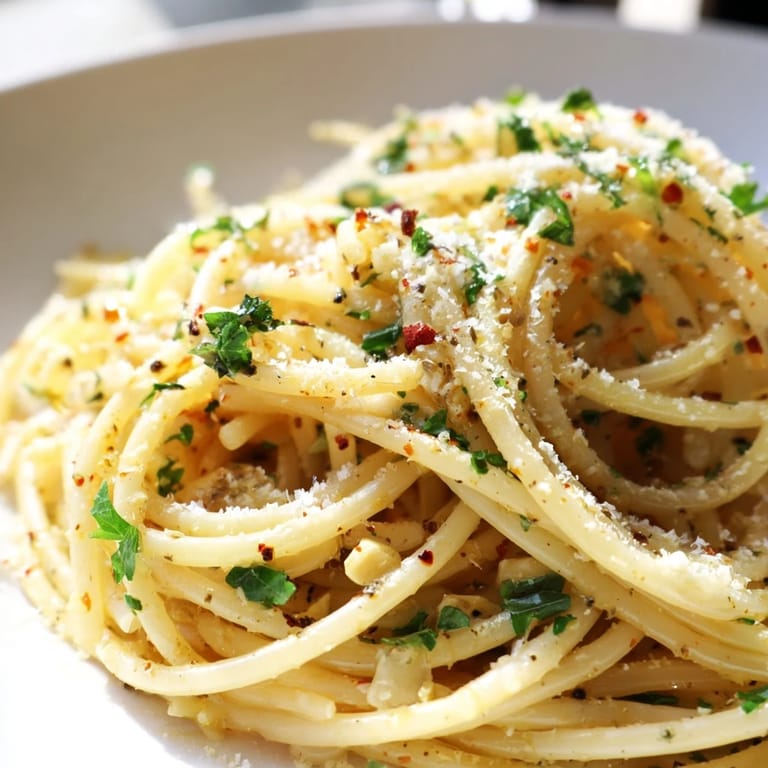
 There's something about aglio e olio that stops me mid-week rush. One Tuesday evening, my kitchen was chaos—bills on the counter, a long day behind me—and all I had the energy for was olive oil, garlic, and pasta. Ten minutes later, I was sitting down to something so alive and simple it made me forget why I was stressed. That's when I understood why this dish has survived centuries in Italian kitchens: it's not about complexity, it's about respect for each ingredient doing exactly what it's meant to do.
I made this for a friend who'd just moved to the city with almost no furniture and definitely no appetite for takeout menus. We ate it standing by her kitchen window, twirling pasta on forks with the kind of quiet satisfaction that comes from something made in minutes but tasting intentional. She's made it probably fifty times since then, and whenever I visit, the smell of that garlic oil is her kitchen's signature.
Ingredients
- Dried spaghetti (200 g): The shape matters here—spaghetti's thin and elegant, designed to catch every drop of that precious oil. Don't use fresh pasta; it softens too easily and won't hold the coating the same way.
- Extra-virgin olive oil (4 tbsp): This is non-negotiable. Use good oil you'd actually taste on its own, because here, you absolutely will. The oil is your sauce, so it carries the entire dish.
- Garlic cloves (4 large, thinly sliced): Sliced, not minced—whole slices stay intact and look beautiful, plus you control how much heat they take. I learned this after burning minced garlic into bitter specks.
- Red chili flakes (1 tsp): Start with less than you think you need. Heat builds, and you can always add more heat but you can't take it out.
- Fresh parsley (2 tbsp chopped): The brightness at the end that makes your mouth remember this is a vegetable dish, not just oil and carbs.
- Sea salt and black pepper: Finish generously—pasta water is already salty, so taste as you go.
- Parmesan cheese (2 tbsp, optional): A graze across the top if you want it, but this dish is complete without it.
Tired of Takeout? 🥡
Get 10 meals you can make faster than delivery arrives. Seriously.
One email. No spam. Unsubscribe anytime.
Instructions
- Start the pasta water:
- Fill a large pot with water and salt it like the sea—seriously, it should taste noticeably salty. Bring it to a rolling boil, the kind that's almost aggressive, then add your spaghetti and stir it once so nothing sticks together.
- Toast the garlic:
- While pasta cooks, pour your olive oil into a wide skillet over medium-low heat and add those sliced garlic cloves. This is the moment everything depends on—you're not frying the garlic, you're waking it up gently. Stir often, and the moment it turns pale gold and smells like someone just opened a kitchen from southern Italy, you're done. One minute too long and it tastes burned.
- Build the heat:
- Sprinkle the chili flakes into that warm oil and stir for just ten seconds. You're distributing the heat evenly so no one bite is unexpectedly fiery.
- Meet the pasta:
- Drain your spaghetti into a colander, but save that starchy pasta water in a measuring cup—you'll need it. Pour the hot spaghetti directly into your skillet with the garlic oil and toss constantly, letting every strand coat in that fragrant liquid.
- Loosen and adjust:
- Add pasta water a splash at a time until the pasta looks glossy and moves easily in the pan. The starch in that water creates a light, silky coating that clings to the strands.
- Finish and serve:
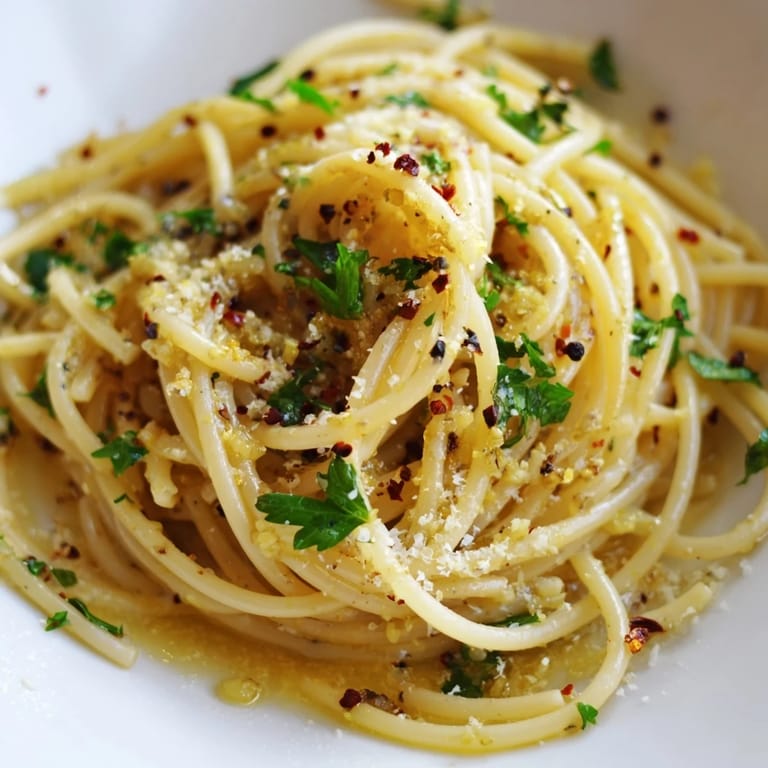
- Turn off the heat, scatter the parsley over everything, season with salt and pepper, and toss one more time. Transfer to warm plates and serve immediately, grated Parmesan on top if that's your thing.
 Pin it
 My grandmother tasted this when she was already in her eighties, and she ate it slowly, chewing each bite like she was translating something. Afterward, she said, 'This is what Italian food is supposed to be—your hands know what to do.' That stuck with me more than any recipe could.
The Magic of Restraint
This dish teaches you something that fancy cooking sometimes obscures: you don't need many ingredients to be delicious. In fact, too many things fighting for attention ruins the clarity of what makes aglio e olio special. The garlic is the star, the oil carries it, the heat punctuates it, and the parsley whispers hello at the end. Everything else is decoration. I've learned to use this principle in other dishes now, and my cooking got better the moment I stopped trying to do so much.
Timing Is Everything
Ten minutes sounds short, but it's actually generous—most of the time is waiting for water to boil. Once the pasta goes in, you're on the clock, and this is where mindfulness beats multitasking. Watch the garlic change color. Listen for the oil to quiet down once you add the pasta. Feel the difference between a loose, almost-sauce consistency and one that's coating every strand. Your senses are more reliable than any timer here.
Variations and Riffs
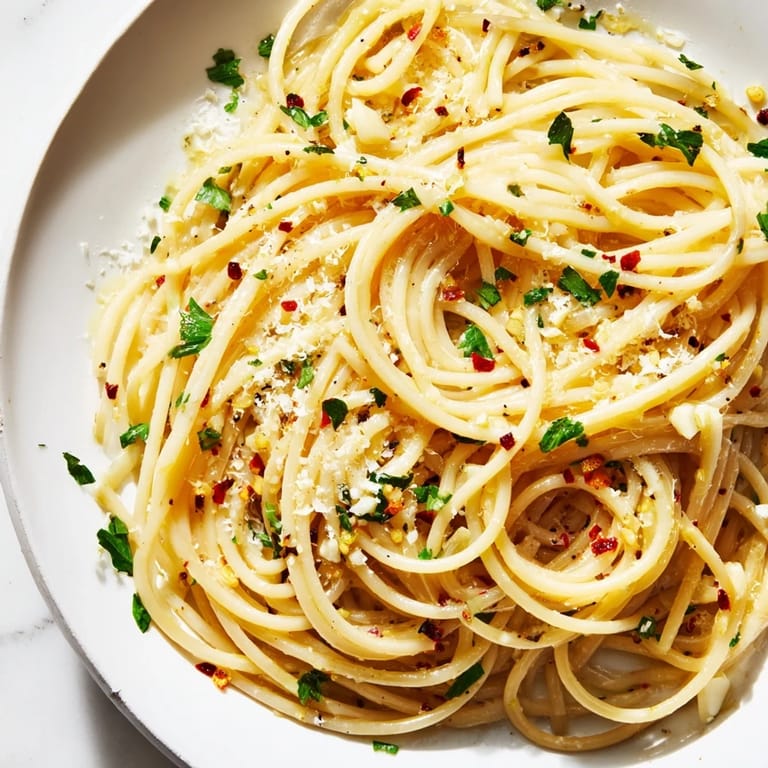
Once you've made this the traditional way at least once, you understand the blueprint well enough to improvise. I've added a squeeze of fresh lemon right at the end, which brightens everything. I've crumbled in some toasted breadcrumbs for texture. I've thrown fresh lemon zest over the top. The framework stays steady, and the small changes feel like you're having a conversation with the dish instead of just following orders.
- Try finishing with crispy panko breadcrumbs toasted in garlic oil for a textural contrast that feels unexpectedly luxurious.
- A small squeeze of fresh lemon juice added right before serving lifts the oil and makes the garlic taste even more alive.
- Red pepper flakes are personal—some people want barely a whisper, others want real heat, so taste and adjust boldly.
 Pin it
 This is the kind of dish that reminds you why you ever wanted to cook in the first place. It's simple enough for a Tuesday night and elegant enough for when someone you love is sitting at your table.
Recipe FAQ
- → What type of pasta is best for this dish?
Spaghetti works best due to its long strands that hold the garlic oil sauce evenly.
- → How can I prevent garlic from burning?
Sauté garlic on medium-low heat and stir frequently until golden and fragrant, avoiding high heat.
- → Can I adjust the spiciness level?
Yes, modify the amount of red chili flakes to suit your preferred heat intensity.
- → Is there a way to make it vegan-friendly?
Omit the Parmesan cheese or substitute with a vegan alternative to keep it dairy-free.
- → Why reserve pasta water for the sauce?
The starchy water helps loosen and bind the oil to the pasta, creating a smooth, cohesive coating.