 Pin it
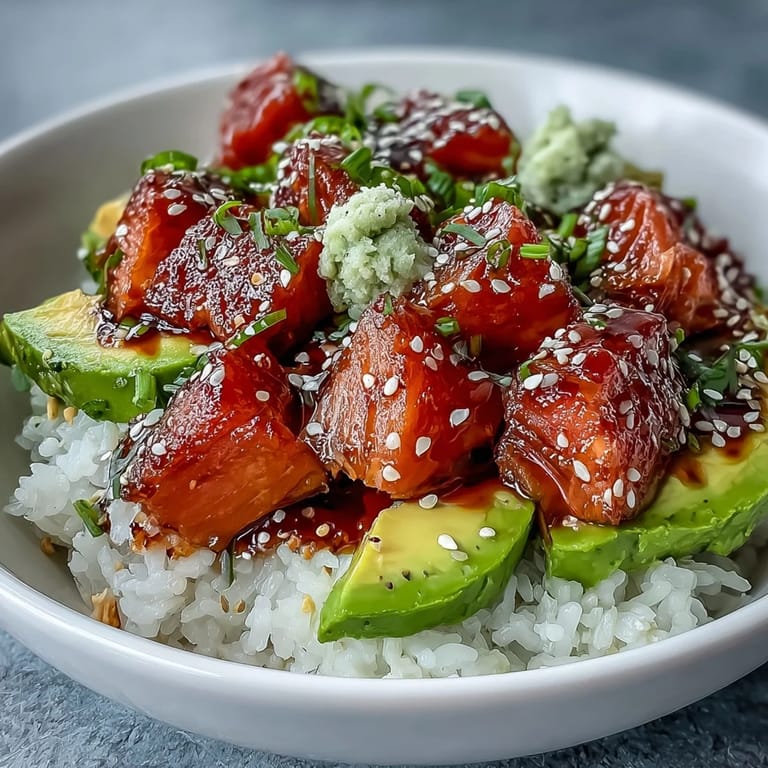
 One Tuesday evening, my friend texted asking if I could whip up something quick but impressive for dinner, and I found myself reaching for salmon and avocado—ingredients that seemed to know exactly what to do together. The combination clicked instantly: buttery avocado, flaky salmon kissed with tamari and sesame, all nestled into warm sushi rice with a whisper of heat from chili oil. What started as a last-minute improvisation became the bowl I now make whenever I want to feel like I've got my life together in the kitchen.
I made this for my partner on a rainy Sunday, and watching them squeeze lime over the bowl before diving in—that quiet moment of anticipation—reminded me why I love cooking. There's something about a bowl that invites customization and confidence, especially when the components are this good individually and somehow better together.
Ingredients
- Fresh salmon fillet, skinless and cubed: The quality here matters—look for bright, firm flesh that doesn't smell fishy, and cutting it into bite-sized pieces keeps everything balanced and easy to eat.
- Tamari sauce: This gluten-free soy sauce alternative has a deeper, rounder flavor that doesn't overpower the delicate salmon the way regular soy can.
- Toasted sesame oil: Just a teaspoon goes a long way; the toasted variety brings nuttiness that ties everything together beautifully.
- Rice vinegar: It brightens the whole bowl without the harshness of other vinegars, and appears twice because it's that essential to the flavor story.
- Honey or agave syrup: A touch of sweetness balances the salt and heat, creating harmony rather than competing flavors.
- Sushi rice: The short grains hold sauce better than long grains and create that slight stickiness that makes the bowl feel cohesive.
- Ripe avocado: Pick one that yields gently to pressure; it should be creamy but not mushy, and always slice it just before assembling so it doesn't brown.
- Roasted peanuts: Their crunch is what saves this from becoming one-note; I chop them roughly so they catch between the other ingredients.
- Chili oil: Start with less than you think you'll need, as it builds on the palate and can easily dominate if you're not careful.
- Wasabi paste: A tiny dot goes further than you'd expect; it's meant to punctuate, not overwhelm.
- Nori strips: These add oceanic umami and a crispy texture that contrasts with the soft elements.
- Cucumber and spring onions: Fresh vegetables cut through the richness and add necessary crunch and brightness.
- Toasted sesame seeds: They toast easier in a dry pan than you'd think, and their slight nutty flavor echoes the sesame oil.
Tired of Takeout? 🥡
Get 10 meals you can make faster than delivery arrives. Seriously.
One email. No spam. Unsubscribe anytime.
Instructions
- Make your marinade:
- Whisk tamari, sesame oil, rice vinegar, and honey together until the honey dissolves and everything feels balanced on your palate. Toss your salmon cubes in this mixture, cover with plastic wrap, and let them sit in the refrigerator for 10 to 15 minutes—any longer and the acid starts to cook the fish slightly, which you want to avoid.
- Season the rice base:
- While the salmon marinates, mix your warm sushi rice with rice vinegar, sugar, and salt, stirring gently to coat every grain without breaking them apart. The rice should taste subtly tangy and slightly sweet, almost like a whisper of seasoning rather than an obvious punch.
- Prep your toppings:
- Slice your avocado lengthwise, twist gently to separate the halves, and scoop the flesh onto a cutting board, then slice at an angle. Chop your peanuts, cut your nori into strips, thinly slice the cucumber and spring onions, and toast your sesame seeds in a dry pan over medium heat for about two minutes until fragrant.
- Build the bowls:
- Divide the seasoned rice between two serving bowls, creating a gentle well in the center. Arrange the marinated salmon, avocado slices, cucumber, and spring onions over the rice in a way that feels balanced and inviting to the eye.
- Add heat and finishing touches:
- Drizzle chili oil over the bowl in thin lines, then dot tiny amounts of wasabi paste around the bowl—you can always add more but you can't take it back. Sprinkle roasted peanuts, sesame seeds, and nori strips over everything, finish with cilantro or microgreens if you have them, and serve with lime wedges on the side.
 Pin it
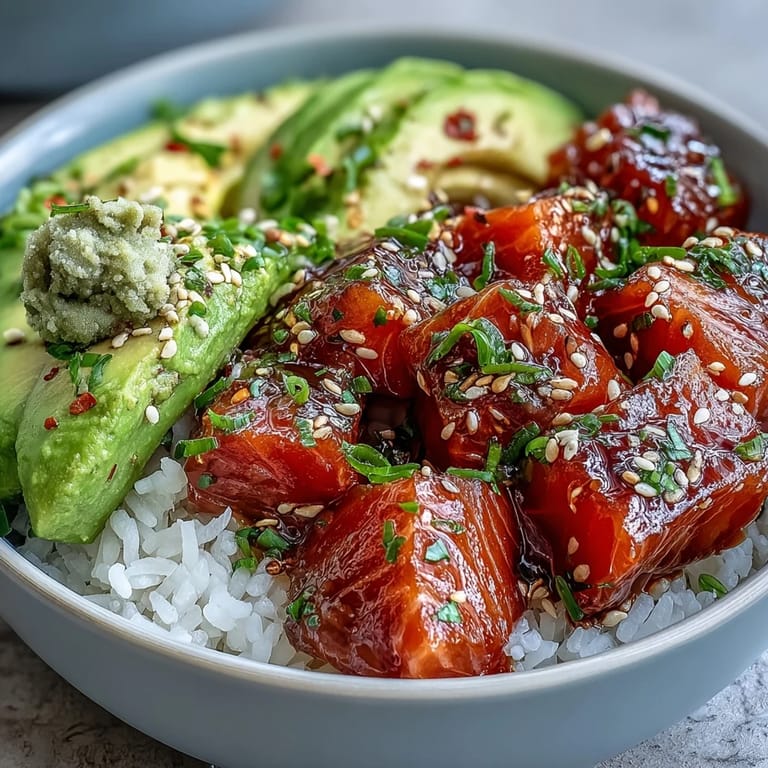
 There was a moment when a friend who usually avoids raw fish tried this bowl hesitantly, then looked up surprised because the acidity and heat and richness all worked together to make the salmon feel less raw and more like a deliberate choice. That's when I realized this bowl wasn't just dinner—it was permission to trust the ingredients and your own instincts.
The Magic of the Marinade
The short marinade time is intentional and important; it's not about cooking or curing the fish, but rather coating it with flavor that will carry through each bite. I've learned that 10 minutes is the minimum to make a difference, and 15 minutes is the sweet spot where the salmon feels intentional without losing its delicate texture. The balance of salty, sweet, and acidic in that little bowl of marinade is what prevents the whole thing from tasting flat or one-dimensional.
Rice as the Foundation
Sushi rice isn't fancy or complicated, but it is specific—the short grains and the slight stickiness they develop are what hold this bowl together structurally and emotionally. If you use long-grain rice instead, the bowl becomes more scattered, and each component feels like it's competing rather than collaborating. I've found that cooking your rice in a rice cooker, if you have one, gives you consistently better results than stovetop, and the vinegar seasoning should go into the rice while it's still warm so it absorbs properly.
Layering Heat and Texture
The chili oil and wasabi are where personality comes in—some people want just a whisper of spice, while others want their palate lit up. I always serve these on the side or dot them sparingly so people can control their own experience, because there's nothing worse than being surprised by unexpected heat when you were expecting comfort. The roasted peanuts and nori are the other half of the textural story, providing crunch that contrasts beautifully with the soft rice and creamy avocado.
- Toast your own sesame seeds in a dry pan for three minutes or less—they go from perfectly fragrant to burnt in seconds, so don't walk away.
- If avocados are out of season or hard to find, use extra cucumber or add some thinly sliced jicama for that crisp freshness.
- Lime is optional on the ingredient list but essential in practice—a squeeze right before eating brightens everything and ties the flavors together.
 Pin it
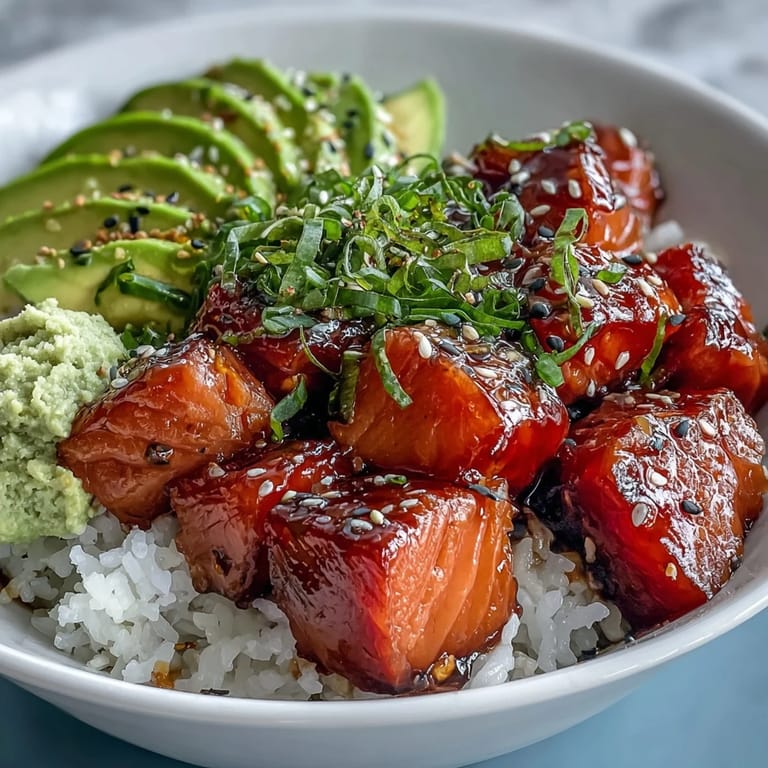
 This bowl has become my answer to the question of what to make when I want something that feels indulgent but isn't complicated, and when I want to feed someone something that tastes like I care. Make it your own, adjust the heat and the components to match your mood, and don't be afraid to play around with what feels right in your kitchen.
Recipe FAQ
- → Can I use other fish instead of salmon?
Yes, tuna, yellowtail, or cod work beautifully with these flavors. Adjust cooking time accordingly for white fish varieties.
- → How do I prevent the avocado from browning?
Toss avocado slices with lime juice before arranging, or add them just before serving to maintain vibrant green color.
- → Can I make this bowl ahead of time?
Prep components separately up to 24 hours in advance. Store rice, salmon, and toppings in individual containers and assemble when ready to eat.
- → What can substitute for sushi rice?
Short-grain brown rice, jasmine rice, or even quinoa make excellent bases while maintaining the bowl's texture profile.
- → How do I adjust the spice level?
Start with minimal chili oil and wasabi, then add gradually. Both potent condiments allow easy customization to your preferred heat.
- → Is the salmon raw or cooked?
This version uses raw marinated salmon. For fully cooked fish, pan-sear or bake the marinated cubes for 8-10 minutes before assembling.