 Pin it
 Last spring, I was standing in my kitchen on a Tuesday afternoon, staring at a half-empty fridge and feeling uninspired about lunch. Then I remembered a bowl I'd eaten at a tiny taverna in Athens years ago—nothing fancy, just bright vegetables, creamy hummus, and salty feta scattered over fluffy grains. That memory sparked something, and I started pulling together what I had on hand. What emerged was this Mediterranean Buddha Bowl, and it's been my go-to ever since whenever I need something that feels both nourishing and exciting.
I made this for my sister when she came to visit, and watching her taste it for the first time—eyes widening at how the lemon brightened everything—reminded me why I love cooking for people I care about. She asked for the recipe before she left, and now she makes it constantly. That's when I knew I'd stumbled onto something genuinely good.
Ingredients
- Quinoa, rinsed: Rinsing removes bitterness and helps it cook evenly; it's a step that genuinely matters and only takes a minute.
- Zucchini, red bell pepper, red onion, and cherry tomatoes: These vegetables caramelize beautifully when roasted, turning slightly sweet and deeply flavorful—choose firm, unblemished pieces for the best texture.
- Olive oil: Use good quality oil here since it's not being cooked extensively; it becomes part of the flavor profile.
- Dried oregano and ground cumin: These spices wake up the roasted vegetables without overpowering them—they're the whispered conversation rather than the shout.
- Chickpeas: Canned works perfectly; just drain and rinse them well to remove excess sodium and starch.
- Kalamata olives: Buy them pitted to save yourself the hassle, and halve them so they distribute evenly through the bowl.
- Hummus and Greek yogurt: These create creamy pockets throughout the bowl; the yogurt adds tartness that balances the richness beautifully.
- Feta cheese: Crumble it just before serving so the pieces stay distinct and salty rather than melting into everything.
- Fresh parsley: This bright herb is not just garnish—it adds freshness that ties the whole bowl together.
Tired of Takeout? 🥡
Get 10 meals you can make faster than delivery arrives. Seriously.
One email. No spam. Unsubscribe anytime.
Instructions
- Heat your oven and prep the vegetables:
- Set the oven to 425°F and while it's preheating, chop everything into roughly bite-sized pieces. Even sizing matters because it means everything finishes cooking at the same moment—no burnt peppers paired with raw zucchini.
- Toss and roast:
- Spread vegetables on a baking sheet, drizzle generously with olive oil, scatter the oregano and cumin over top, season with salt and pepper, then toss until everything has a light coating. You'll know you've done it right when the sheet smells absolutely incredible after about 15 minutes.
- Stir halfway through:
- After about 12 minutes, give everything a good stir so the bottom pieces get their turn facing the heat. This is when you'll notice the edges starting to caramelize, which is exactly what you want.
- Cook the quinoa while vegetables roast:
- Combine rinsed quinoa and water in a saucepan, bring to a boil, then reduce heat and cover. It'll simmer quietly for 15 minutes—you'll barely hear it, but trust that it's working. After you remove it from heat, let it sit covered for 5 minutes, then fluff with a fork; this resting time is when the grains finish absorbing moisture and become perfectly tender.
- Warm the chickpeas:
- While everything else is cooking, heat chickpeas in a skillet for a couple minutes just to take the chill off and help them integrate with the warm components of the bowl. They don't need much—just enough to make them feel integrated rather than cold against warm vegetables.
- Assemble with intention:
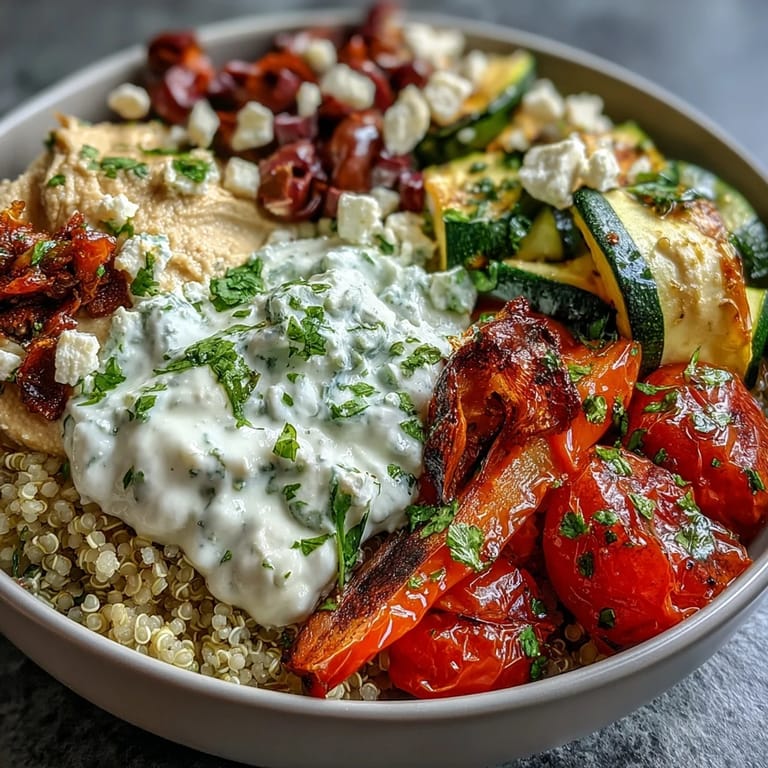
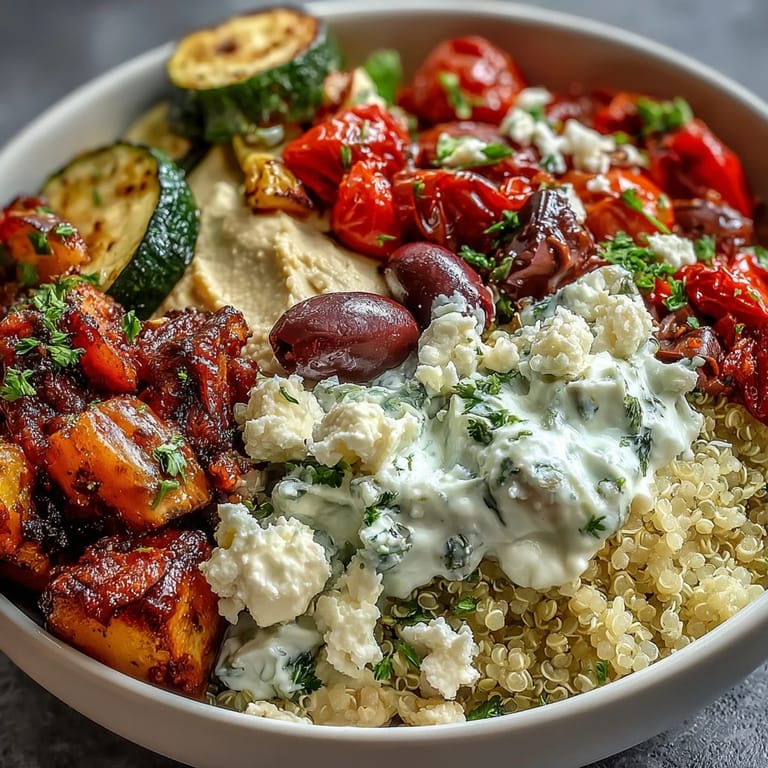
- Divide the fluffy quinoa among bowls first, creating a base. Arrange roasted vegetables, chickpeas, olives, dollops of hummus, and spoonfuls of yogurt around the quinoa, then scatter feta over top. The scattered approach means every bite gets a little bit of everything.
- Finish and serve:
- Sprinkle parsley over everything and set lemon wedges alongside each bowl so people can squeeze brightness over their portion. The acidity transforms everything, making flavors pop in a way that nothing else quite can.
 Pin it
 There's something almost meditative about assembling these bowls—the way the colors pop against the white background of the yogurt, the different temperatures all playing together. It's become my answer to those moments when I want cooking to feel less like a chore and more like a small act of care toward myself.
Customizing Your Bowl
The beautiful thing about this bowl is how forgiving it is to personal preference and what's actually in your pantry. I've made it with roasted carrots instead of zucchini on nights when that's what I had, swapped the bell pepper for roasted eggplant when I was feeling that, and even tossed in some sun-dried tomatoes when I wanted something earthier. The core flavors stay balanced because the quinoa and chickpeas anchor everything, while the vegetables are really just supporting players that can shift and change. Brown rice or farro work just as well if you're out of quinoa, and honestly, the texture difference is minimal enough that whatever grain you choose will be delicious.
Making It Work for Your Diet
This recipe naturally leans vegetarian, but it's easily adapted depending on what you're eating. If vegan is your thing, swap the Greek yogurt and feta for plant-based versions—the hummus carries enough richness that you won't miss the dairy. For those wanting extra protein, grilled chicken or shrimp scattered over the vegetables transforms it into something more substantial without changing the fundamental character of the bowl. I've even added a soft-boiled egg on occasion, letting the yolk mingle with the quinoa and yogurt. Whatever direction you go, the Mediterranean spice profile stays intact and supportive.
Storage and Make-Ahead Tips
The quiet advantage of this bowl is how well individual components keep separately, which means you can prep everything the night before and assemble fresh bowls whenever you're ready to eat. The roasted vegetables stay crisp in a container for three or four days, the quinoa keeps for up to five days, and the chickpeas even longer. The only thing I don't prepare ahead is the assembly itself, because the magic really does happen in that moment of contrasting temperatures and textures when you first put it all together.
- Store roasted vegetables and cooked quinoa in airtight containers, preferably in separate spots so nothing gets soggy.
- Keep hummus and yogurt sealed until the moment you're building bowls to prevent them absorbing flavors from the fridge.
- Toast extra chickpeas and keep them in a jar for quick protein additions to salads, grain bowls, or snacking throughout the week.
 Pin it
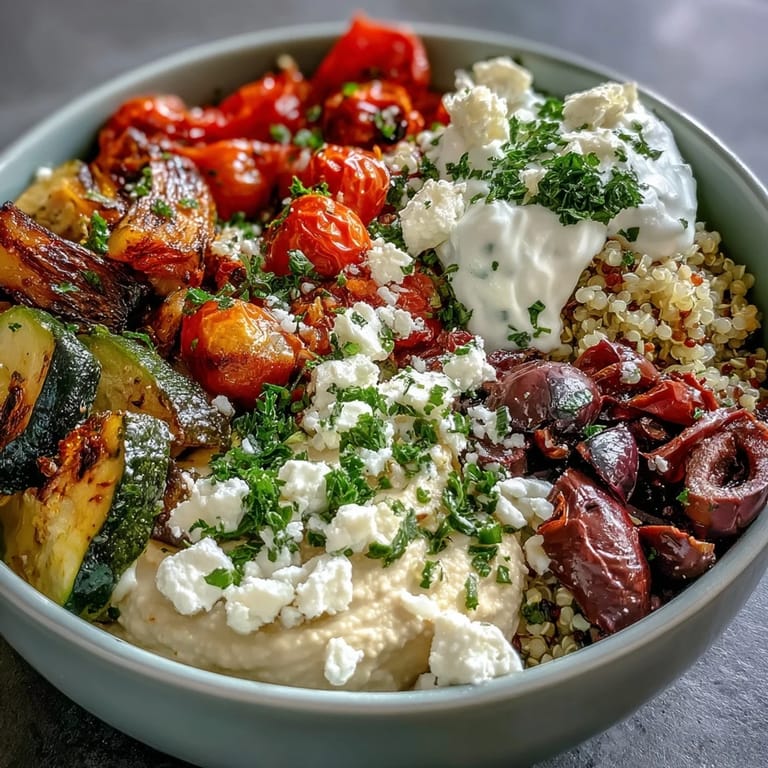
 This bowl has become my answer to a thousand different cooking moods—when I want something fast but feel like it should be special, when I'm eating alone but want to treat myself well, when I'm feeding guests who have different dietary preferences. It's the kind of dish that asks very little but gives back plenty in return.
Recipe FAQ
- → What vegetables work best in this bowl?
Zucchini, red bell pepper, red onion, and cherry tomatoes are ideal. They roast beautifully and caramelize well. You can also add eggplant, artichoke hearts, or roasted red peppers for variety.
- → Can I make this ahead of time?
Absolutely. Prepare the quinoa and roasted vegetables up to 3 days in advance. Store components separately in airtight containers and assemble when ready to serve. The flavors often develop even more overnight.
- → How do I make it vegan?
Simply omit the feta cheese and substitute the Greek yogurt with plant-based yogurt or additional hummus. The bowl remains satisfying and protein-rich with chickpeas and quinoa.
- → What can I substitute for quinoa?
Farro, brown rice, couscous, or bulgur work wonderfully. Adjust cooking times accordingly. Couscous is fastest, while farro and brown rice may take longer to cook than quinoa.
- → How do I store leftovers?
Keep components separate in the refrigerator for up to 4 days. The quinoa and roasted vegetables reheat well. Add fresh toppings like parsley and lemon wedges just before serving for best texture and flavor.
- → Can I add protein?
Grilled chicken, shrimp, or baked salmon pair beautifully. Simply season and cook your chosen protein while the vegetables roast. Place it atop the assembled bowl for a heartier meal.