 Pin it
 The first time I made this soup was during a particularly rainy November when the house felt drafty and I needed something that would warm us from the inside out. My toddler kept trying to steal roasted squash cubes off the baking sheet, burning her fingers but popping them into her mouth anyway. That evening, watching steam curl off bowls while rain drummed against the windows, I understood why this soup has lived in cookbooks for generations.
Last winter I made this for a friend who was going through a rough patch. We sat at my kitchen table for hours while the soup cooled and reheated in our bowls, talking about everything and nothing. She asked for the recipe before she even put on her coat.
Ingredients
- 1 large butternut squash: Roasting transforms the starches into natural sweetness so choose one that feels heavy for its size with no soft spots
- 1 medium yellow onion: Builds the savory foundation that balances the squashs inherent sweetness
- 2 cloves garlic: Add this right after the onion translucentizes so it mellows without burning
- 4 cups vegetable broth: Use a high quality broth since it provides half the flavor and homemade or low sodium brands let you control the salt
- 2 tbsp olive oil: One tablespoon for roasting the squash and another for sautéing the aromatics
- 1 tsp sea salt: Start with half then adjust at the end because saltiness concentrates as the soup reduces
- 1/4 tsp ground black pepper: Freshly cracked makes a noticeable difference
- 1/2 tsp ground nutmeg: This is the secret ingredient that adds an elusive warmth people notice but cannot name
- 1 tsp dried sage: Fresh sage is luxurious here but dried works perfectly if you rub it between your palms first to wake up the oils
Tired of Takeout? 🥡
Get 10 meals you can make faster than delivery arrives. Seriously.
One email. No spam. Unsubscribe anytime.
Instructions
- Roast the squash:
- Preheat your oven to 400°F and toss the cubed squash with one tablespoon olive oil half teaspoon salt and a pinch of pepper until each piece is gleaming. Spread them in a single layer on a parchment lined baking sheet and roast for 30 to 35 minutes until tender and caramelized at the edges turning once halfway through.
- Sauté the aromatics:
- While the squash roasts heat the remaining olive oil in a large pot over medium heat and cook the chopped onion for 4 to 5 minutes until it turns translucent and soft. Add the minced garlic and stir for just one minute more until fragrant.
- Combine and simmer:
- Add the roasted squash to the pot along with any caramelized bits from the baking sheet then stir in the sage and nutmeg until the sage becomes fragrant. Pour in the vegetable broth bring everything to a gentle boil then lower the heat and let it simmer for 10 minutes so the flavors marry.
- Blend until smooth:
- Remove the pot from heat and use an immersion blender to purée the soup until it is silky and smooth with no visible fibers. If you are using a countertop blender work in batches and leave the vent open to prevent steam from building up.
- Season and serve:
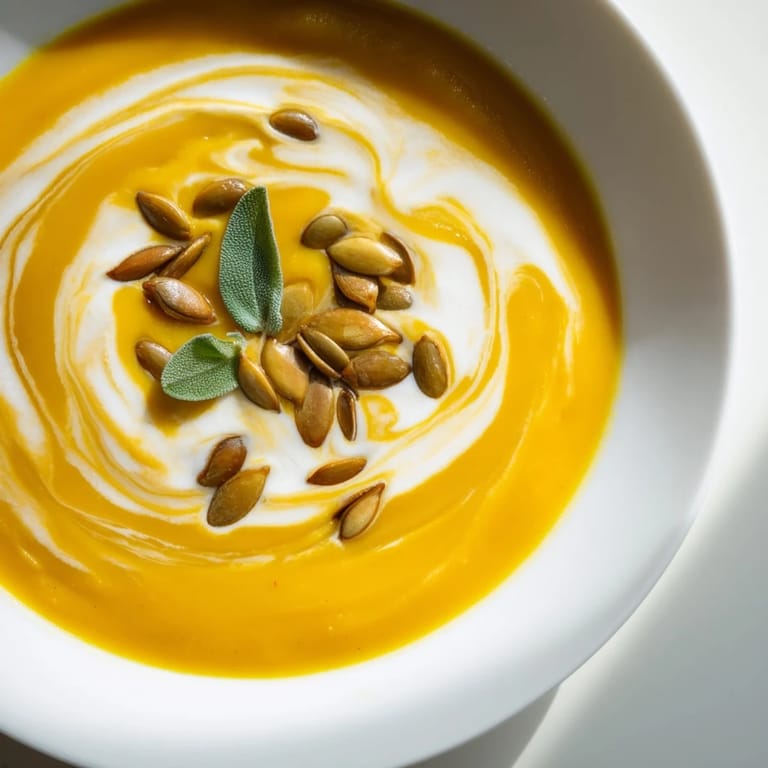
- Taste the soup and add more salt or pepper if it needs brightness then ladle into bowls. Finish with a swirl of cream or coconut milk a sprinkle of roasted pumpkin seeds and a fresh sage leaf if you want to make it pretty.
 Pin it
 My father who claims to dislike soup went back for thirds the first time I served this. I found him standing over the stove the next morning eating it cold for breakfast.
Making It Your Own
Once I added a diced apple with the squash and the resulting sweetness balanced the savory notes in a way that made the whole house smell like fall. You can also stir in a spoonful of curry paste with the onions or finish with a squeeze of lemon juice to brighten the flavors.
Texture Secrets
If you prefer an ultra velvety texture pass the blended soup through a fine mesh sieve. I rarely bother but it does make the soup feel restaurant worthy. For a rustic chunky version reserve a cup of roasted squash before blending and stir it back in at the end.
Serving Ideas
This soup carries an entire meal when served with good bread and a simple green salad dressed with vinaigrette. I have also packed it in thermoses for autumn picnics and served it in shot glasses topped with tiny sage leaves as a warming starter at winter dinner parties.
- Crusty sourdough bread is the classic choice for soaking up every last drop
- A glass of Sauvignon Blanc cuts through the creaminess beautifully
- A crisp green salad with acidic dressing balances the rich soup perfectly
 Pin it
 Something happens when vegetables are roasted slowly and simmered long enough. They stop being ingredients and become comfort.
Recipe FAQ
- → How do I roast butternut squash evenly?
Cut the squash into uniform cubes and spread them in a single layer on a parchment-lined baking sheet. Roast at 400°F for 30–35 minutes, turning halfway to ensure even caramelization.
- → Can I use fresh sage instead of dried?
Yes, fresh sage works well. Use about three times the amount of fresh compared to dried, finely chopped, to maintain balanced flavor.
- → What is the best way to achieve a silky smooth texture?
Use an immersion blender directly in the pot or transfer the soup in batches to a countertop blender until smooth and creamy.
- → How can I make this dish vegan?
Swap the heavy cream for coconut milk or another plant-based milk for a creamy finish without dairy.
- → What garnishes complement this dish?
Swirling in coconut milk or cream adds richness, while roasted pumpkin seeds and fresh sage leaves provide texture and fresh herbal notes.
- → Can I prepare this soup ahead of time?
Yes, it stores well in the refrigerator for up to 3 days and flavors often deepen when reheated gently before serving.