 Pin it
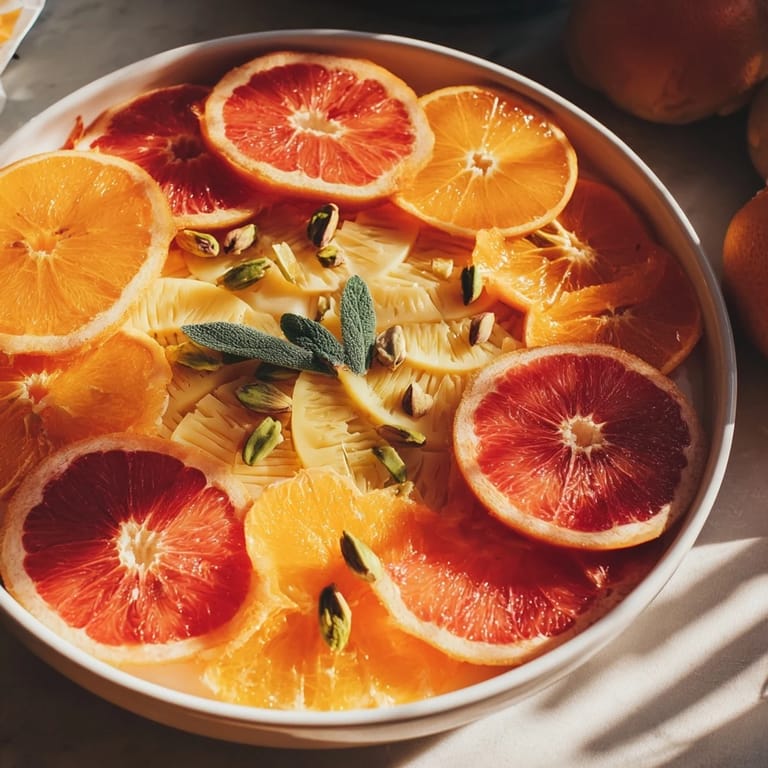
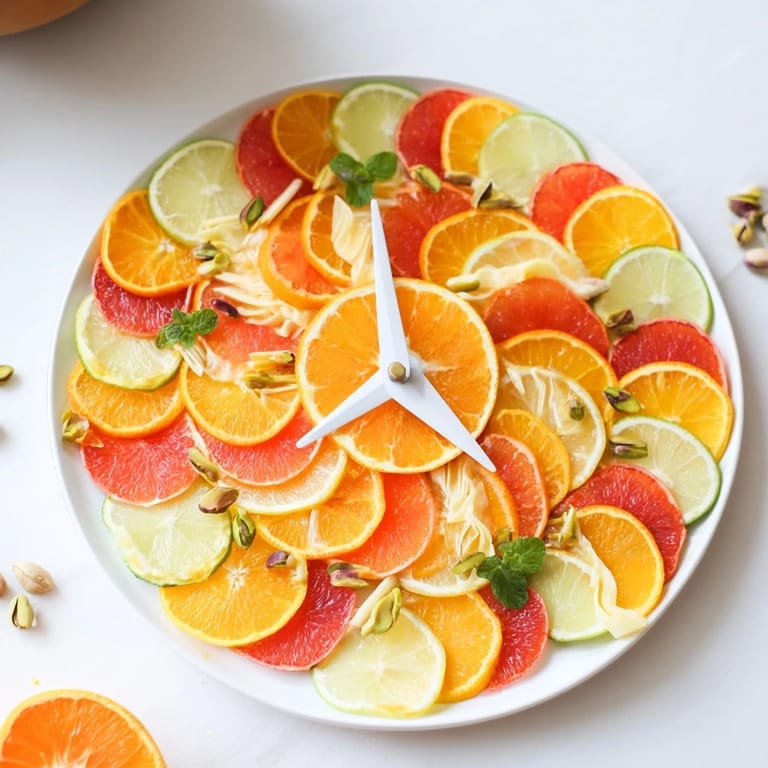
 My friend texted me a photo of a clock she'd made from breakfast—scrambled eggs at noon, bacon strips pointing toward three—and I couldn't stop laughing at the absurdity of it. That same week, I was invited to a dinner party where I needed something that would make people pause and smile before they even tasted it. The Clockwork Orange came to me while standing in front of my fruit bowl, suddenly seeing those bright citrus rounds as tiny edible hours waiting to be arranged. What started as a silly joke became this gorgeous, whimsical platter that somehow feels both sophisticated and playful.
I brought this to a dinner party on a particularly frazzled evening, convinced it would look chaotic or childish. Instead, when I set it down, the table actually went quiet for a moment—then everyone started laughing and taking photos. One guest told me it was the first time she'd felt genuinely happy looking at a cheese board, which sounds dramatic but somehow felt true.
Ingredients
- Large orange: The warm, sunny backbone of your clock face—choose one that feels heavy in your hand, which means it's full of juice.
- Blood orange: This one adds drama and depth; the darker red creates real visual contrast that makes the whole board pop.
- Grapefruit: Pink or red grapefruit keeps the palette cohesive and adds a subtle tartness that cuts through the richness of cheese.
- Clementines (2): These smaller rounds fit perfectly at certain hours and their natural sweetness is a gift.
- Lemon: The palest slice becomes your six o'clock; its brightness anchors the entire arrangement.
- Lime: Tuck this wherever you need a pop of green-yellow—it's as much about color theory as flavor.
- Firm goat cheese or manchego (150 g): This cheese holds its shape beautifully when sliced into strips and won't melt into your fruit.
- Aged cheddar or gouda (100 g): The sharper, more robust cheese creates visual contrast and flavor variety in your clock hands.
- Honey (2 tbsp): A small pool in the center catches light and adds a touch of luxury without overwhelming the palate.
- Chopped pistachios or walnuts (optional): These scattered over the honey create texture and earthiness; pistachios give a more refined look.
- Fresh mint leaves (optional): A few scattered leaves are your permission to stop arranging—they signal that this is intentionally casual.
- Crackers or crusty bread: Serve these on the side so people can build their own bites.
Tired of Takeout? 🥡
Get 10 meals you can make faster than delivery arrives. Seriously.
One email. No spam. Unsubscribe anytime.
Instructions
- Slice your citrus into thin, even rounds:
- Use a sharp knife and aim for about a quarter-inch thickness—thin enough that you can almost see light through them, but sturdy enough they won't fall apart. Remove seeds as you go; nobody wants a surprise bitter pit.
- Arrange your slices into a clock pattern:
- Place your platter in front of you and imagine those clock numbers: one slice should sit roughly where each hour would be, alternating colors so no two similar fruits sit side by side. Stand back after every few slices to check the balance.
- Cut your cheeses into clock hands:
- Slice them into long, narrow strips—one should point toward whatever time feels meaningful to you (I often choose 10:10, which makes people smile). The second hand can be shorter and thinner, or equal in length; there's no wrong answer here.
- Drizzle honey into the center and scatter your toppings:
- This is where the board gets its finishing flourish—the honey catches light, and the nuts add texture that makes people reach for this platter first. Don't over-garnish; let the citrus be the star.
- Add mint leaves as your final touch:
- Scatter these loosely; they should look like they landed there naturally, not like you placed each one with tweezers. Their aroma will hit people before they even taste anything.
 Pin it
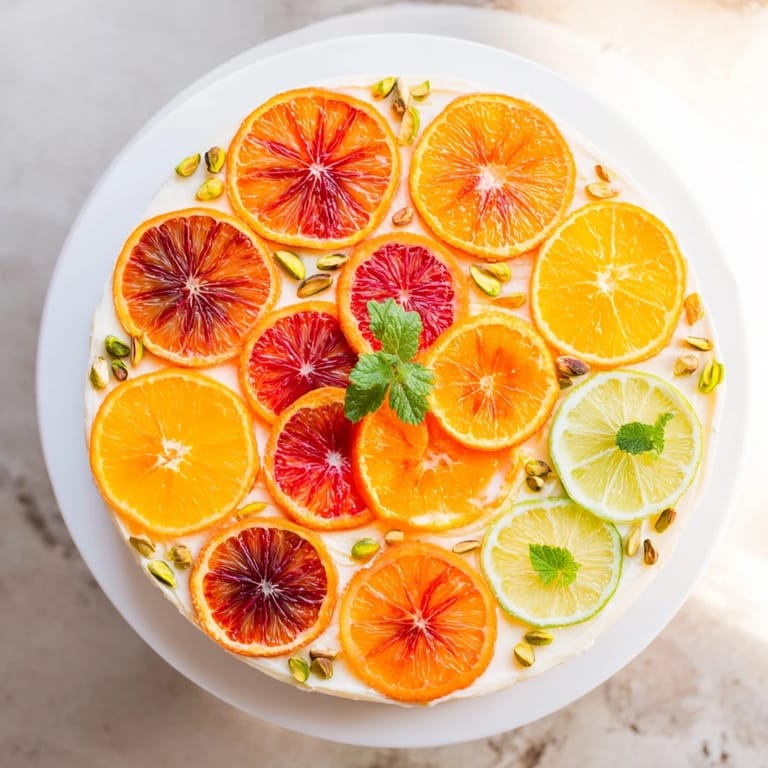
 This platter stopped being about the food for me the moment someone at that dinner party used it to settle a debate about what time was luckiest. We ended up going around the table, each person choosing their hour and explaining why—turns out everyone has a time that means something to them. That's when I realized this wasn't just a clever appetizer; it was an invitation to tell small stories.
The Magic of Plating
The way something looks matters more than most recipes admit. This clock format taps into something people recognize instantly, which makes them lean in closer and want to be part of it. Symmetry feels intentional, but a few imperfect slices or an off-center arrangement actually makes it feel handmade and real rather than sterile and store-bought.
Flavor Layering and Contrast
Each bite pulls together sweet fruit, creamy cheese, and a hint of honey-nuttiness—it's a complete flavor journey in your mouth. The citric acid from the fruit actually cleanses your palate between bites, which is why this works so well as an appetizer. By the time people reach for crackers or bread, they're hungry for the next layer of flavor, not full from a heavy first course.
Timing and Presentation Secrets
Assemble this right before your guests arrive so the citrus stays vibrant and the cheese doesn't start to weep. The entire platter can be prepped an hour ahead—slice your fruits and cheeses, cover them separately with plastic wrap, and store in the fridge, then arrange everything on the platter the moment your doorbell rings. This board is forgiving; it looks gorgeous from the moment you set it down until the last slice is gone.
- Always use a round serving platter—it completes the clock illusion and makes even an imperfect arrangement feel intentional.
- Position your cheese hands to point toward a time that means something to you, or let guests guess what time you chose.
- If you're serving this at a warm gathering, chill your platter in the fridge for ten minutes before adding the cheese—it'll hold its shape longer.
 Pin it
 This recipe taught me that food doesn't have to be complicated to be memorable—sometimes the most special moments come from something simple arranged with a little creativity and care. Serve it with good wine, watch people smile, and let it become whatever it needs to be for your table.
Recipe FAQ
- → How do I prepare the citrus slices evenly?
Use a sharp knife to cut the fruits into thin, uniform rounds. Remove seeds carefully to improve presentation.
- → Can I substitute the cheeses used here?
Yes, feel free to try blue cheese, brie, or any firm cheeses you prefer to customize the flavor profile.
- → What nuts work best as a garnish?
Chopped pistachios or walnuts add great texture and complement the honey’s sweetness nicely.
- → Is it necessary to use honey on the platter?
The honey adds a sweet contrast that balances the citrus and cheese but can be omitted or replaced if desired.
- → What drinks pair well with this platter?
A crisp Prosecco or a dry white wine complements the citrus and creamy cheese flavors beautifully.