 Pin it
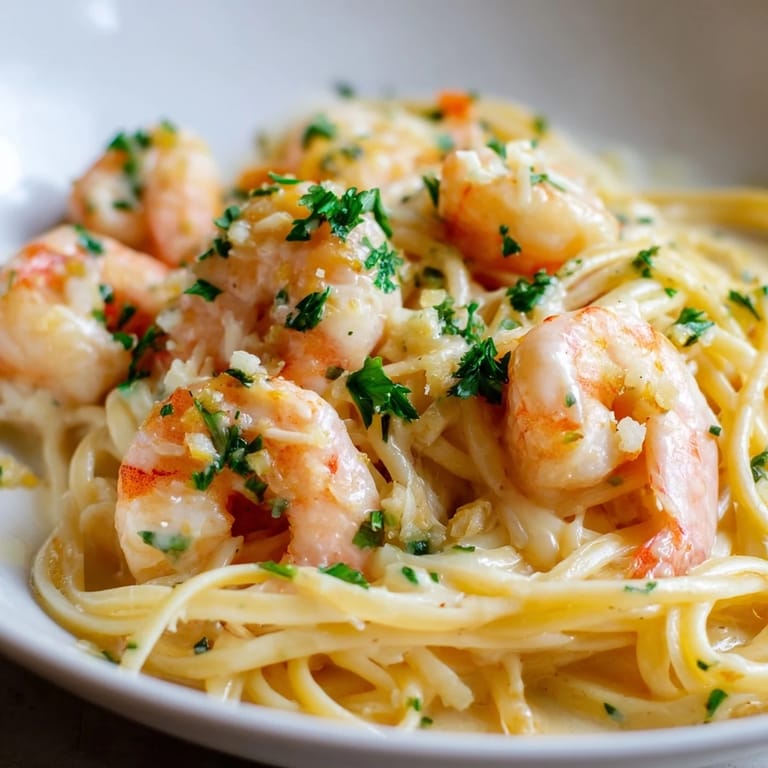
 The smell of garlic hitting warm butter is what drew my neighbor to my kitchen window one Thursday evening. I was testing this shrimp pasta after a long day, and the aroma was so inviting she knocked on my door with a bottle of wine. We ended up eating together on my tiny balcony, twirling creamy linguine while the sun set. That spontaneous dinner taught me this dish has a magnetism beyond its ingredients.
I made this for my parents on their anniversary once, plating it with extra parsley and lemon wedges like I was running a tiny restaurant. My dad, who usually drowns everything in hot sauce, took one bite and said nothing for a full minute. Then he asked for seconds. That quiet moment of approval meant more than any compliment.
Ingredients
- Large shrimp (450 g): Look for shrimp that smell like the ocean, not fishy or ammonia-like, and pat them completely dry so they sear instead of steam.
- Linguine (340 g): The flat shape holds onto cream better than round pasta, and cooking it just shy of tender lets it finish perfectly in the sauce.
- Unsalted butter (2 tbsp): Divided between searing and sautéing, it adds a silky richness that olive oil alone cannot achieve.
- Heavy cream (240 ml): This is what makes the sauce luxurious, clinging to pasta without splitting, though half and half works if you prefer lighter.
- Parmesan cheese (50 g): Freshly grated melts seamlessly into the cream, avoid pre-shredded since it contains anti-caking agents that make the sauce grainy.
- Garlic (4 cloves): Minced fine and sautéed just until fragrant, it infuses the butter without turning bitter or sharp.
- Olive oil (1 tbsp): Prevents the butter from burning when you sear the shrimp over high heat.
- Crushed red pepper flakes (1/2 tsp, optional): A subtle warmth that dances in the background without overpowering the cream.
- Salt and black pepper: Season the shrimp before cooking and taste the finished dish, cream dulls flavors so be generous.
- Fresh parsley (2 tbsp): Brightens the richness and adds a pop of color that makes every plate look intentional.
- Lemon wedges: A squeeze at the table cuts through the cream and wakes up every bite.
Tired of Takeout? 🥡
Get 10 meals you can make faster than delivery arrives. Seriously.
One email. No spam. Unsubscribe anytime.
Instructions
- Boil the pasta:
- Bring a large pot of salted water to a rolling boil and cook the linguine until al dente, about 9 minutes, then drain and reserve half a cup of the starchy pasta water. This water is your secret weapon for adjusting sauce consistency later.
- Prep the shrimp:
- While the pasta cooks, pat the shrimp completely dry with paper towels and season both sides with salt and pepper. Dry shrimp sear beautifully and develop a light golden crust.
- Sear the shrimp:
- Heat olive oil and 1 tablespoon butter in a large skillet over medium high heat, then add shrimp in a single layer and cook 1 to 2 minutes per side until pink and just opaque. Remove shrimp to a plate so they do not overcook while you build the sauce.
- Sauté the garlic:
- Add the remaining tablespoon of butter to the same skillet and toss in minced garlic and red pepper flakes if using, stirring constantly for about a minute until fragrant but not browned. Burnt garlic is bitter, so watch it closely.
- Build the cream sauce:
- Pour in the heavy cream and bring it to a gentle simmer, letting it bubble softly for 2 to 3 minutes until it thickens just enough to coat the back of a spoon. Patience here prevents a thin sauce.
- Melt in the Parmesan:
- Stir in the grated Parmesan cheese and whisk until it melts completely into a smooth, glossy sauce. If it looks too thick, splash in a bit of reserved pasta water.
- Toss the pasta:
- Add the cooked linguine to the skillet and toss with tongs until every strand is coated in cream, adding reserved pasta water a little at a time if you want a silkier consistency. The starch helps the sauce cling.
- Finish with shrimp:
- Return the shrimp to the pan and toss gently just until warmed through, about 1 minute. Overcooking now makes them rubbery.
- Season and serve:
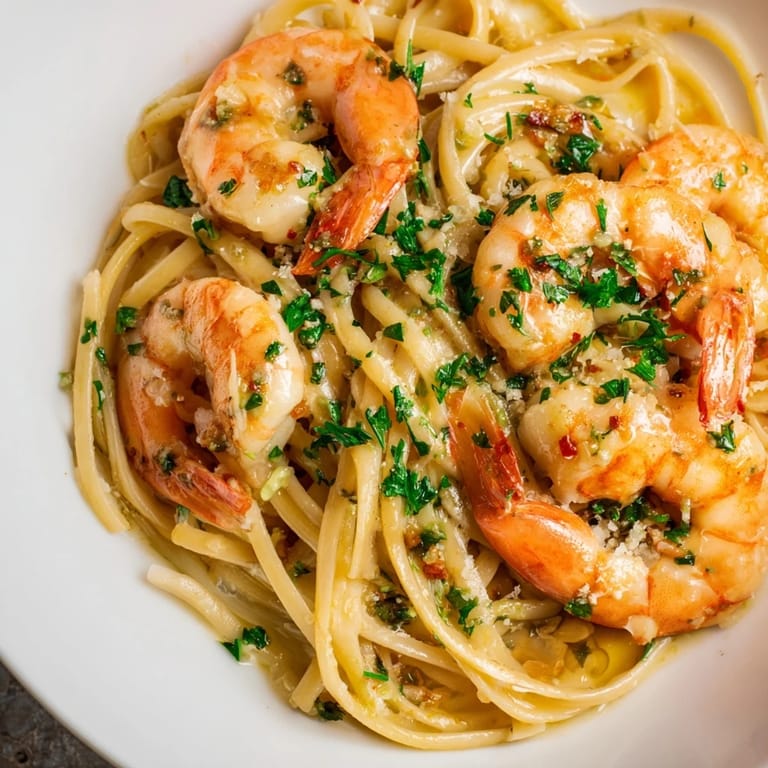
- Taste and add more salt and pepper if needed, then sprinkle with fresh parsley and serve immediately with lemon wedges on the side. Squeeze lemon over each bite for brightness.
 Pin it
 One evening I doubled this recipe for a small dinner party and watched four people go quiet as they twirled their forks. Someone finally said it tasted like vacation, which made me laugh, but I understood. Sometimes a dish this simple and indulgent does feel like an escape. We finished two bottles of wine and every last shrimp.
Choosing the Best Shrimp
I used to grab whatever shrimp was on sale until I noticed a huge difference in texture and flavor. Look for shrimp labeled wild-caught if possible, they tend to have a sweeter, cleaner taste. Avoid shrimp that smell overly fishy or have black spots, which signal age or mishandling. If using frozen, thaw them overnight in the fridge or under cold running water, never in warm water or the microwave. Large shrimp work best here because they stay juicy and hold up to the quick sear without turning rubbery.
Making the Sauce Silky
The first time I made this, my cream sauce broke into greasy puddles because I boiled it too hard. Cream needs a gentle simmer, not a rolling boil, or the fat separates and the texture turns grainy. Stir in the Parmesan off the heat or on very low to prevent clumping. If your sauce looks too thick, add pasta water one tablespoon at a time, the starch acts like glue and brings everything together. If it is too thin, let it simmer another minute or add a bit more cheese. Taste as you go, cream mutes salt so season boldly at the end.
Serving and Pairing Ideas
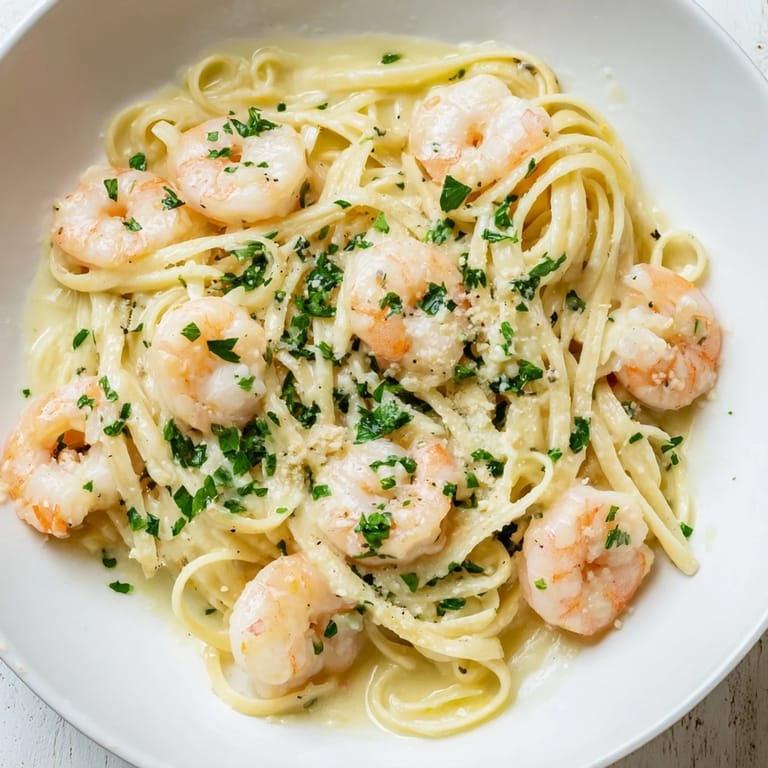
This pasta shines on its own but feels even more complete with a simple arugula salad dressed in lemon and olive oil to cut the richness. Garlic bread is tempting, but I find it makes the meal too heavy, a light green salad or roasted asparagus feels just right. For wine, I love a crisp Pinot Grigio or Sauvignon Blanc, the acidity balances the cream beautifully. If you want to stretch this for more people, add sautéed spinach or halved cherry tomatoes to the sauce. Leftovers reheat gently in a skillet with a splash of cream or milk, never the microwave or the shrimp turn tough.
- Serve with a squeeze of fresh lemon over each plate for brightness.
- Garnish with extra Parmesan and a crack of black pepper at the table.
- Pair with crusty bread only if you are ready to mop up every drop of sauce.
 Pin it
 This dish never fails to make a weeknight feel special, and it comes together so fast you will wonder why you ever ordered takeout. Keep these ingredients on hand and you will always have an elegant meal waiting in your pantry and freezer.
Recipe FAQ
- → How do I prevent the shrimp from becoming rubbery?
Pat the shrimp dry before cooking and cook for only 1–2 minutes per side over medium-high heat. Once pink and opaque, remove immediately from the skillet. Overcooking is the main culprit for tough, rubbery texture.
- → Can I prepare this dish ahead of time?
Cook the pasta and shrimp separately up to 2 hours ahead. Store them in airtight containers in the refrigerator. Just before serving, reheat the skillet and prepare the cream sauce fresh, then combine all components for the best flavor and texture.
- → What if my sauce is too thick?
Add reserved pasta water one tablespoon at a time, stirring gently, until you reach the desired consistency. The starch in pasta water helps the sauce cling to the noodles while maintaining a silky texture.
- → Can I substitute the heavy cream?
Yes, half-and-half creates a lighter version with good results. For a richer alternative, use equal parts cream and whole milk. Avoid non-dairy substitutes as they may break when heated with the acidic ingredients.
- → What wine pairs best with this dish?
A crisp Pinot Grigio or Sauvignon Blanc complements the rich cream sauce beautifully. The acidity cuts through the richness and cleanses the palate between bites, enhancing the garlic and lemon notes.
- → How do I add more flavor to the sauce?
A splash of dry white wine added after sautéing the garlic deepens the flavor profile. Fresh lemon zest or juice brightens the dish, while additional crushed red pepper flakes add heat. Fresh herbs like basil or thyme work wonderfully too.