 Pin it
 I'll never forget the evening I stood in my kitchen, inspired by a gallery opening I'd attended that afternoon, and thought: what if I could serve art on a plate? The Cubist Deconstruction was born from that moment of playful experimentation, when I decided to stop arranging food in traditional ways and instead let geometry guide my hands. Cutting vegetables into unexpected shapes felt like I was finally giving my kitchen the creative permission it deserved.
I remember serving this to friends who were skeptical about 'deconstructed' anything, thinking it sounded pretentious. But watching their faces light up as they realized they were both looking at and tasting modern art changed everything. One friend said it felt like permission to play with food again, the way we did as children.
Ingredients
- Cucumber, peeled: The cool, crisp foundation that grounds the whole arrangement. A sharp knife and steady hand make those geometric cuts feel intentional rather than accidental
- Golden beet, cooked and peeled: Its earthy sweetness and jewel-like color are essential to the visual story you're telling. I always cook beets ahead so I'm not rushed when it's time to arrange
- Watermelon radish, peeled: The secret weapon of this dish, with its stunning pink and white rings and peppery bite that wakes up your palate
- Ripe avocado: Adds a buttery richness and that creamy texture that makes each geometric piece feel indulgent. The trick is cutting it at the last possible moment
- Feta cheese block, not crumbled: Using a block means you control the shape and size, turning cheese into a design element rather than an afterthought
- Ripe mango, peeled: Its bright sweetness and golden hue complete the color palette while adding a tropical whisper to the savory elements
- Extra virgin olive oil: The dressing that ties everything together, but use the good stuff because this simple oil is the only thing holding the flavors in conversation
- Lemon juice: Just enough acidity to make every bite feel brighter and fresher than you expected
- Flaky sea salt and fresh cracked black pepper: Applied with restraint, they're the punctuation marks that let each ingredient speak
- Microgreens or fresh herbs: These final touches add delicate color and a fresh note that makes the whole arrangement feel alive
Tired of Takeout? 🥡
Get 10 meals you can make faster than delivery arrives. Seriously.
One email. No spam. Unsubscribe anytime.
Instructions
- Gather your canvas and tools:
- Set out your sharp chef's knife and optional cookie cutters. The sharper your knife, the cleaner your cuts will be, and clean cuts are what make this dish sing. If you're using a beet, make sure it's fully cooled and peeled so it holds its shape perfectly.
- Cut with intention, not precision:
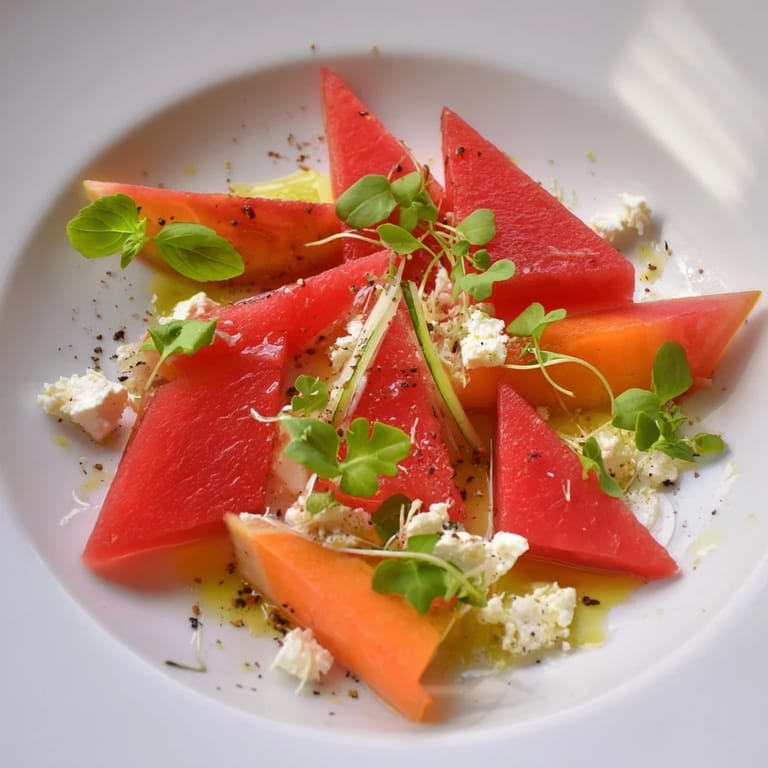
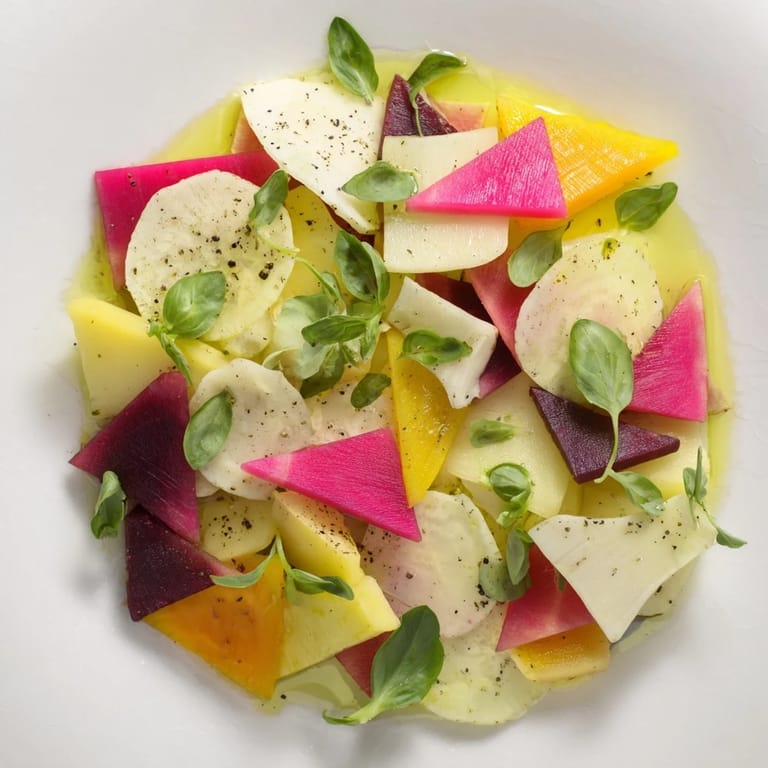
- Begin slicing your vegetables and fruits into geometric shapes, aiming for approximately 1 cm thickness. This is where the magic happens. Use triangles, parallelograms, hexagons, irregular polygons. Let your knife become an extension of your artistic vision. Don't stress about perfection; slight variations actually make the composition more interesting, like a real cubist painting.
- Transform the cheese into geometry:
- Cut your feta block into cubes or prisms that echo the shapes around it. Watch how the cheese pieces catch the light differently than the vegetables, creating visual rhythm and texture.
- Compose your masterpiece:
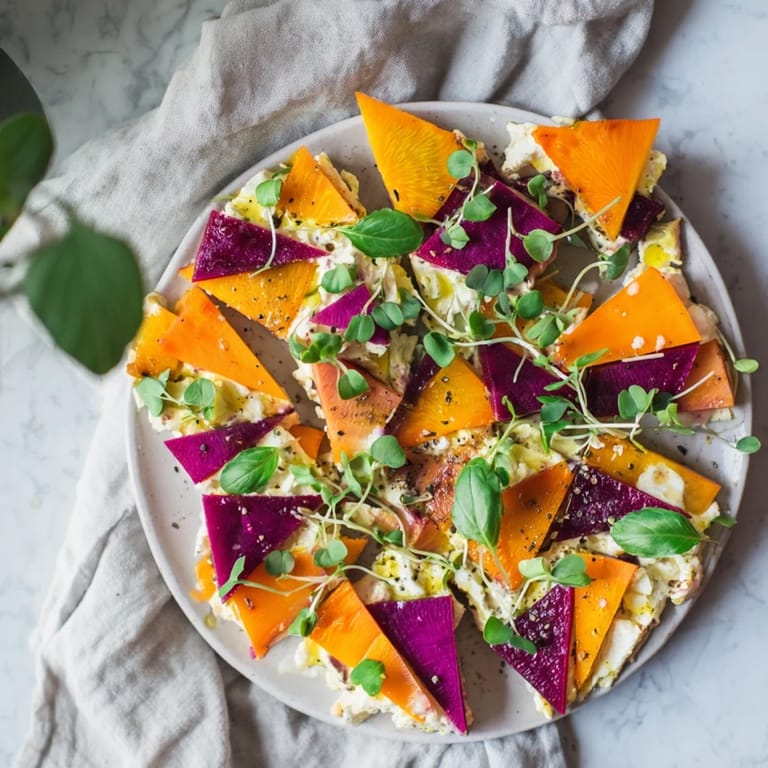
- This is the moment that feels like arranging a gallery installation. On your large flat platter, place each piece close together without overlapping, creating a visually compelling mosaic. Step back often. Adjust. Notice how colors relate to each other. Does your composition feel balanced? Is there a flow for the eye to follow?
- Anoint with oil and brightness:
- Drizzle the olive oil and lemon juice evenly over your arrangement. Watch how the oil catches light and makes the colors gleam. This isn't just dressing; it's the final varnish on your edible artwork.
- Season with restraint and grace:
- Sprinkle flaky sea salt and freshly cracked black pepper across the composition. A gentle hand here respects the artistry you've just created and lets each ingredient maintain its integrity.
- Crown with living garnish:
- Scatter your microgreens or fresh herbs as the final flourish. Choose colors that complement your palette. These delicate additions should feel like they're floating on top of your creation, adding freshness and dimension.
- Serve with reverence:
- Bring this to the table immediately, before any piece loses its crisp edges or vibrant color. Let it exist in its moment of perfection. This is food meant to be admired before it's devoured.
 Pin it
 The first time someone closed their eyes while eating this, I understood that deconstructed doesn't mean disconnected. Every geometric piece was a small meditation on flavor, a moment to appreciate ingredients as themselves rather than combined into something else. That's when food became more than food.
The Art of Geometric Cutting
The knife work in this dish is meditative. Unlike traditional cooking where precision is about consistency, here your uniqueness is the point. Each cut is a brushstroke. I find myself using my favorite knife, the one that feels balanced in my hand, and letting my intuition guide the shapes. A triangle here, a parallelogram there. The imperfections are what make it feel human and alive rather than machine-perfect and cold.
Color Theory on Your Plate
There's something about arranging ingredients by color that makes you see them differently. The golden beet glows next to the pink watermelon radish. The pale cucumber and creamy avocado create breathing room. The bright mango introduces warmth. This isn't random; it's composition. Before I plate, I sometimes sketch the arrangement mentally, thinking about balance and rhythm. The result feels intentional, like you planned something beautiful.
Serving and Sharing This Moment
I've learned that this dish deserves a moment before eating. Set it down, let people look. Use cocktail picks if you're serving as an appetizer so people can taste their way through the composition thoughtfully. Pair it with a crisp white wine like Sauvignon Blanc, which echoes the fresh, clean feeling of the food. The temperature of the plate matters too; a cool plate keeps everything fresh-tasting and extends those clean lines visually.
- For added variety, include other colorful vegetables like purple carrots or yellow bell peppers to deepen the palette
- If you're cooking vegan, substitute the feta with firm tofu cut into the same geometric shapes, and it becomes just as beautiful and equally delicious
- The whole composition should feel alive and energetic, so arrange it no more than ten minutes before serving for maximum visual impact
 Pin it
 This dish taught me that sometimes the most impressive meals are the simplest ones, and that presenting food with care and creativity says something true about how much you respect the people you're feeding. It's become my favorite way to remind people that cooking is art.
Recipe FAQ
- → What types of vegetables work best for this dish?
Firm, colorful vegetables like cucumber, golden beet, and watermelon radish hold their shape well when cut into geometric forms, adding vibrant hues and varied textures.
- → Can I substitute feta cheese for a vegan option?
Yes, firm tofu can replace feta to maintain the geometric shapes and provide a similar texture in this dish.
- → How do I achieve precise geometric cuts?
Using a sharp knife or small cookie cutters allows for clean, uniform shapes like triangles, hexagons, and parallelograms about 1 cm thick.
- → Is cooking required for this preparation?
No cooking is needed aside from pre-cooking the golden beet; the dish relies on fresh, raw ingredients artfully arranged.
- → What garnishes enhance the presentation and flavor?
Microgreens or fresh herbs like basil and cilantro add color, freshness, and aromatic notes to complement the flavors.
- → How should this be served for best taste and appearance?
Serve immediately on a large flat platter to preserve the clean lines and vibrant presentation of the geometric arrangement.