 Pin it
 I remember the moment my science-loving friend challenged me to create something beautiful that would spark conversation at her genetics conference party. Standing in my kitchen, I thought: what if I made something people could actually eat that told the story of life itself? That's when the Double Helix was born—a playful, edible celebration of DNA that turned out to be far easier than anyone expected.
The first time I served this, I watched my friend's face light up as she recognized the DNA structure. Her colleagues spent the entire party debating the molecular accuracy while actually enjoying fresh, beautiful food. That's when I knew I'd created something special—something that bridges science, art, and flavor in one unforgettable platter.
Ingredients
- Black olives, pitted and sliced (100 g): These are your darkest line—use them as the visual anchor because their deep color will pop against everything else on the board
- Cherry tomatoes, halved (100 g): The brightness of these creates beautiful contrast; if they're still attached to the vine, they'll be sweeter and fresher
- Cucumber, cut into thin half-moons (100 g): Slice these just before assembly so they stay crisp and refreshing; the pale green adds another layer of visual interest
- Roasted red peppers, sliced (100 g): Buy these jarred to save time, but taste them first—some brands are saltier than others
- Smoked salmon or marinated tofu strips (100 g, optional): This is your wild card; smoked salmon adds luxury and depth, while tofu keeps it plant-based and lighter
- Mozzarella cheese, cut into thin strips or small cubes (150 g): This is your connector—keep it soft and pliable by not refrigerating it longer than necessary before serving
- Cheddar cheese, cut into thin strips or small cubes (100 g): The deeper color of aged cheddar actually helps the helix structure read better visually
- Fresh basil leaves (50 g): Tear these gently just before placing them; torn basil looks more intentional and releases its aromatics
- Crackers or gluten-free crackers (50 g, optional): These are your supporting players—choose ones with interesting texture or seeds for visual appeal
- Olive oil (1 tbsp): A good quality one matters here because it's tasted raw; your best oil deserves the spotlight
- Freshly ground black pepper, to taste: Grind it fresh right before serving so the aroma and flavor are at their peak
Tired of Takeout? 🥡
Get 10 meals you can make faster than delivery arrives. Seriously.
One email. No spam. Unsubscribe anytime.
Instructions
- Create your foundation lines:
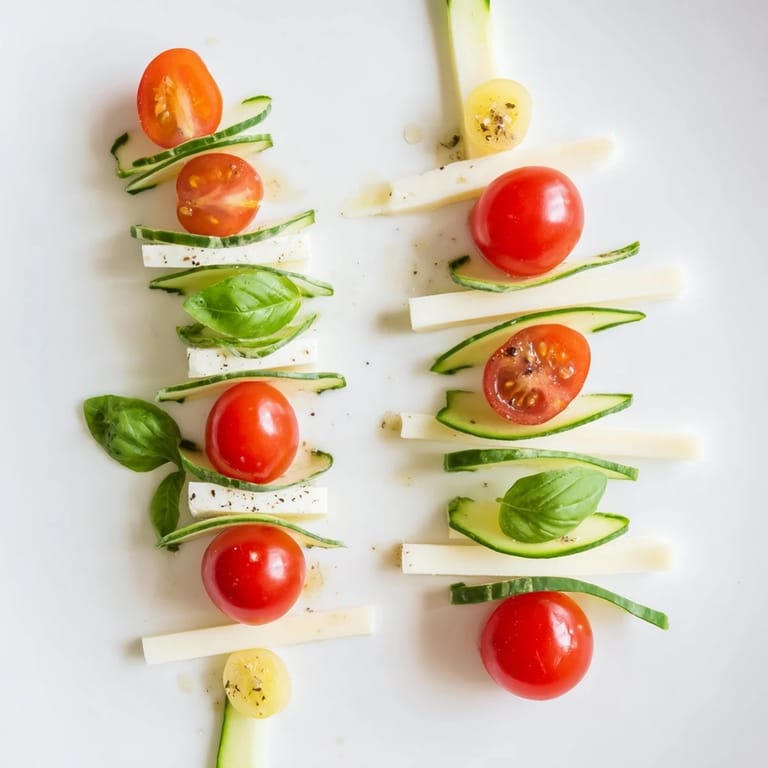
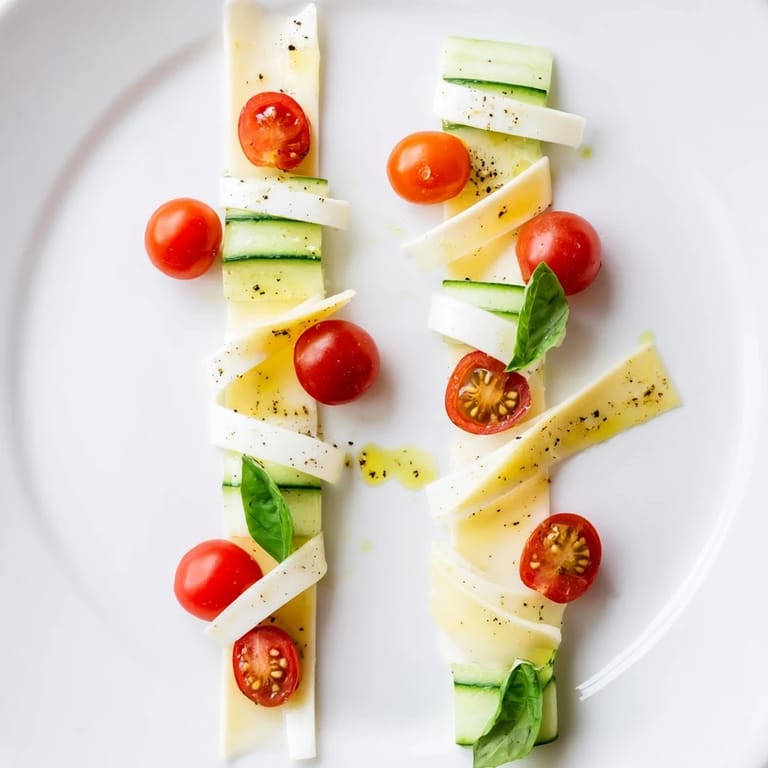
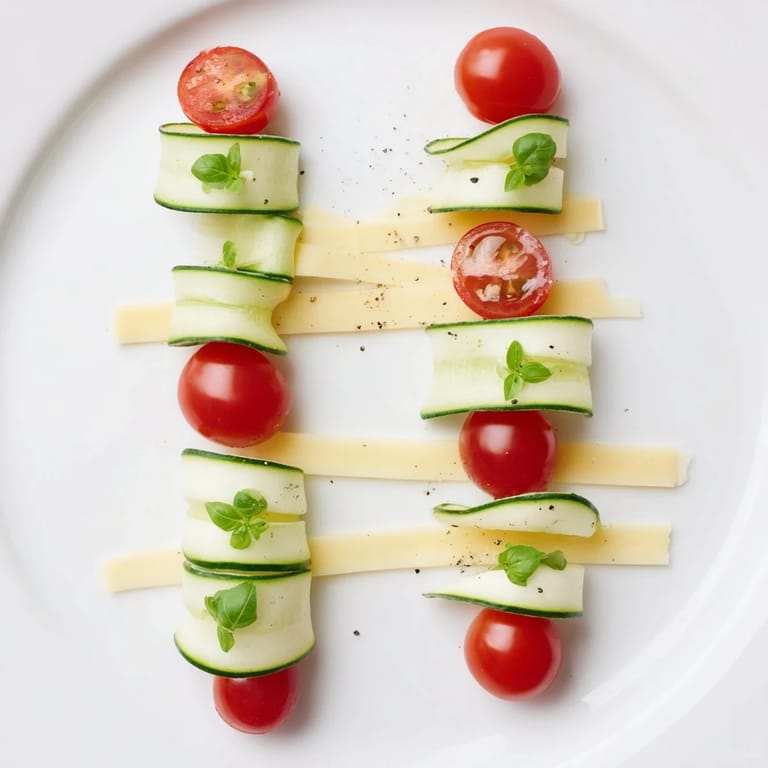
- On your largest serving board or platter, imagine two railroad tracks running parallel to each other with a gentle twist, like the actual DNA molecule. Using your black olives for one line and cherry tomatoes for the other, create two long, winding parallel lines. This is your visual map for everything that follows, so take a moment to step back and make sure they feel balanced.
- Build out the color contrast:
- Now layer in your cucumber slices alongside one line and your roasted red peppers alongside the other. The goal here is to make each parallel line unmistakably distinct in color and texture. If you're using the smoked salmon or tofu, weave it into one line for even more visual drama. This is where your platter transforms from simple to stunning.
- Connect with cheese rungs:
- This is the moment the DNA structure comes alive. Take your mozzarella and cheddar pieces and arrange them perpendicular to your two parallel lines, spacing them about 2 to 3 inches apart. Think of them as the rungs on a ladder or the base pairs connecting a DNA helix. The color contrast between white mozzarella and golden cheddar helps emphasize the structure, and alternating them adds visual rhythm.
- Tuck in the basil:
- Gently place your torn basil leaves along the length of your lines. They should look almost natural, like they're growing out of the arrangement. This adds a fresh green note and makes the entire structure feel more alive and intentional.
- Finish with oil and pepper:
- Drizzle your best olive oil in a light, artistic pattern across the whole platter—not too much, just enough to catch the light and add richness to every bite. Finish with freshly ground black pepper scattered over the cheese rungs. At this point, your Double Helix is ready to make its grand entrance.
- Serve thoughtfully:
- Arrange your crackers alongside the platter rather than on it, so the structure remains the star. Place some small forks or toothpicks nearby to make it easy for guests to pull apart the rungs and construct their own bites, or simply eat the pieces they're most drawn to.
 Pin it
 I'll never forget when a visiting biochemist came to that party and actually brought her daughter over to show her how the structure mirrored what she was learning in school. Suddenly, it wasn't just food—it was a teaching moment, a conversation starter, and proof that the most delicious ideas often live at the intersection of science and creativity.
Making It Your Own
The beauty of this design is that it begs to be personalized. You're not married to any single ingredient here. Love artichoke hearts? Swap them in. Prefer goat cheese? It actually creates a more sophisticated appearance with its creamy white color. Have beautiful radishes? Their thin slices and pink interior could become a stunning third line. I've made this dish seven different ways now, and every version felt completely authentic. The DNA structure is just your canvas—the ingredients are your paint.
Pairing and Presentation
This appetizer doesn't demand anything fancy in terms of accompaniments, but it absolutely deserves the right setting. A crisp white wine like sauvignon blanc or a sparkling water with fresh lemon will complement the fresh vegetables perfectly without overwhelming the delicate flavors. If you're serving this at a party, I've learned to give it the place of honor—a clear table space, good lighting from above, and room for people to gather around it. The moment someone recognizes the DNA structure, others gravitate over immediately.
- Serve at room temperature for the best flavor—everything tastes more alive when it's not cold
- If you're preparing this ahead, keep components separate and assemble 2 to 3 hours before guests arrive
- Consider adding a small card explaining the structure; it's a conversation piece that invites engagement
Variations and Accessibility
For a fully vegan version, use marinated tofu strips instead of salmon and swap in plant-based cheese alternatives—the visual impact stays just as strong, and honestly, the fresher vegetable flavors sometimes shine even brighter. If you need to keep this gluten-free, simply serve it without crackers or use certified gluten-free ones. For a heartier appetizer that works as a light lunch, I sometimes add grilled chicken strips or even thin slices of Italian cured meats to create a third line. The structure is flexible enough to welcome any ingredient that speaks to you.
 Pin it
 This recipe taught me that the most memorable dishes aren't always the most complicated—sometimes they're simply the ones that make people pause, smile, and feel connected to both the food and each other. Make this when you want to bring a little wonder to your table.
Recipe FAQ
- → What ingredients create the double helix effect?
Alternating slices of black olives, cherry tomatoes, cucumber, and roasted red peppers form the twisting lines, connected by mozzarella and cheddar cheese strips to mimic the rungs.
- → Can this dish accommodate vegan diets?
Yes, substitute marinated tofu for smoked salmon and use plant-based cheeses to create a vegan-friendly version.
- → How should this dish be served?
Arrange on a large serving board and optionally serve alongside gluten-free crackers or regular crackers for added texture.
- → What seasonings enhance the flavor?
A light drizzle of olive oil and freshly ground black pepper complement the fresh vegetables and cheeses, enhancing aroma and taste.
- → Is there flexibility with the vegetable and cheese choices?
Absolutely, feel free to vary the vegetables and cheese types for color contrast and flavor diversity while maintaining the double helix design.