 Pin it
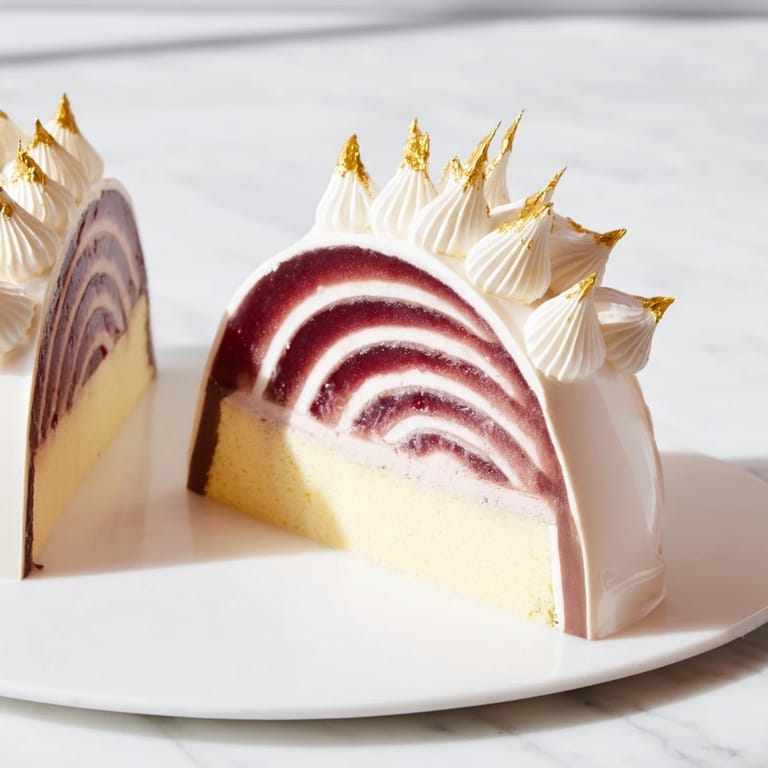
 I'll never forget the afternoon I discovered the Golden Ratio while sketching in my kitchen. A mathematics book lay open on the counter, and there it was—that beautiful spiral that appears everywhere in nature. That evening, I decided to bring it to life through dessert. After months of testing, layering mousse with jelly and sponge, I finally created something that tasted as magnificent as it looked. This dessert isn't just food; it's mathematics made delicious, a moment when science and sweetness became one.
I still remember plating this for my sister's engagement dinner. As I drizzled the white chocolate glaze and added that final touch of gold leaf, I watched my hands shake just slightly—not from nerves, but from the pure joy of creating something beautiful. When the desserts were presented, the table went silent for a moment. That's when I knew this recipe had transcended being just another dish.
Ingredients
- All-purpose flour (60 g): This forms the tender foundation of your sponge. I learned to sift it gently—the secret to avoiding a dense cake is treating this flour with respect, folding it in with a light hand.
- Granulated sugar (60 g for sponge, 30 g for jelly, 25 g for mousse): Sugar appears in three roles here. For the sponge, it's whisked until thick and pale, incorporating air that makes the cake cloud-like. Each portion is carefully measured.
- Large eggs (2 for sponge, 2 yolks for mousse): These are your binders and emulsifiers. The eggs in the sponge create lift, while the yolks in the mousse create that impossibly smooth, velvety texture.
- Unsalted butter (30 g, melted): Melted butter folded at the end ensures moisture without deflating your sponge. I learned this after many disappointing dense cakes.
- Vanilla extract (1 tsp sponge, 1 tsp mousse): Don't skip this—it's the quiet backbone that makes everything taste more like itself.
- Pinch of salt: This tiny amount heightens all the flavors around it, making sweetness taste sweeter and chocolate taste richer.
- Fresh raspberry puree (110 g): The heart of your jelly layer, providing both visual drama and bright acidity that balances the richness of the mousse.
- Powdered gelatin (4 g): This is what transforms fruit into a delicate, jewel-like layer. Bloom it properly, and it sets with perfect clarity.
- Cold water (25 ml): For blooming gelatin. The cold matters—it allows the gelatin granules to absorb evenly.
- Lemon juice (1 tsp): A small squeeze that prevents the jelly from tasting one-dimensional, adding brightness to the raspberries.
- Dark chocolate 70% (180 g, chopped): This is the soul of your mousse. The 70% cocoa content provides complexity without bitterness. Chop it into small pieces so it melts evenly.
- Heavy cream (140 ml for mousse, 40 ml for glaze): The mousse cream gets whipped to soft peaks—don't overbeat or you'll have butter instead of clouds. The glaze cream stays liquid, creating a silky coating.
- White chocolate (100 g, chopped): For the glaze. Temper it gently with cream to avoid a grainy finish.
- Edible gold leaf or gold dust (optional): This is pure luxury. The gold catches light and makes each dessert look like it belongs in a gallery.
Tired of Takeout? 🥡
Get 10 meals you can make faster than delivery arrives. Seriously.
One email. No spam. Unsubscribe anytime.
Instructions
- Prepare your workspace:
- Preheat your oven to 180°C and line your 24 x 16 cm baking tray with parchment paper. Have all your ingredients measured and ready—this is a choreographed dance, and you don't want to be searching for the vanilla mid-whisk.
- Create the sponge foundation:
- Crack your eggs into a large bowl and add the granulated sugar. Using an electric mixer, whisk them together until they're thick, pale, and about triple in volume. This takes about 5 minutes and is non-negotiable—this is where the air that makes your sponge light lives. Sift the flour and salt gently over the top, then fold it in with a spatula using broad, graceful strokes. Pour the melted butter around the edges and fold it in last, being careful not to deflate all your hard-won air. Spread this batter evenly into your prepared tray and bake for 10 to 12 minutes until golden and a toothpick emerges clean. Let it cool completely on a wire rack.
- Prepare the raspberry jelly spiral:
- Sprinkle the powdered gelatin over 25 ml of cold water and let it sit untouched for 5 minutes—this bloom is essential for proper setting. Gently warm your 110 g of raspberry puree with the 30 g of sugar in a small saucepan until just steaming, then remove from heat. Add the bloomed gelatin and stir until completely dissolved, then add the lemon juice. Line a 16 x 16 cm tray with plastic wrap and pour in the mixture. Chill this until it's set to the touch, about 90 minutes. Once set, you'll cut this into strips that mimic a Golden Ratio spiral—start with a 3 cm width and gradually narrow to 1.8 cm, creating that mathematical harmony.
- Craft the chocolate mousse:
- Chop your dark chocolate finely and place it in a heatproof bowl. Set this bowl over a pot of simmering water, making sure the bottom doesn't touch the water. Stir occasionally until completely melted and smooth. In another bowl, whisk your egg yolks with 25 g of sugar until pale and voluminous. Heat your 140 ml of heavy cream until it's steaming and wisps of steam rise from the surface. Very slowly drizzle a bit of this hot cream into your egg yolks while whisking constantly—this tempering prevents scrambled eggs and ensures smooth chocolate. Once warmed, pour the yolk mixture into the melted chocolate, add the vanilla, and stir until glossy and combined. Let this cool slightly, about 5 minutes. In a separate bowl, whip the remaining cream to soft peaks where it still flows slightly. Fold this whipped cream into the chocolate mixture in two additions, being gentle and methodical.
- Assemble your Golden Ratio creation:
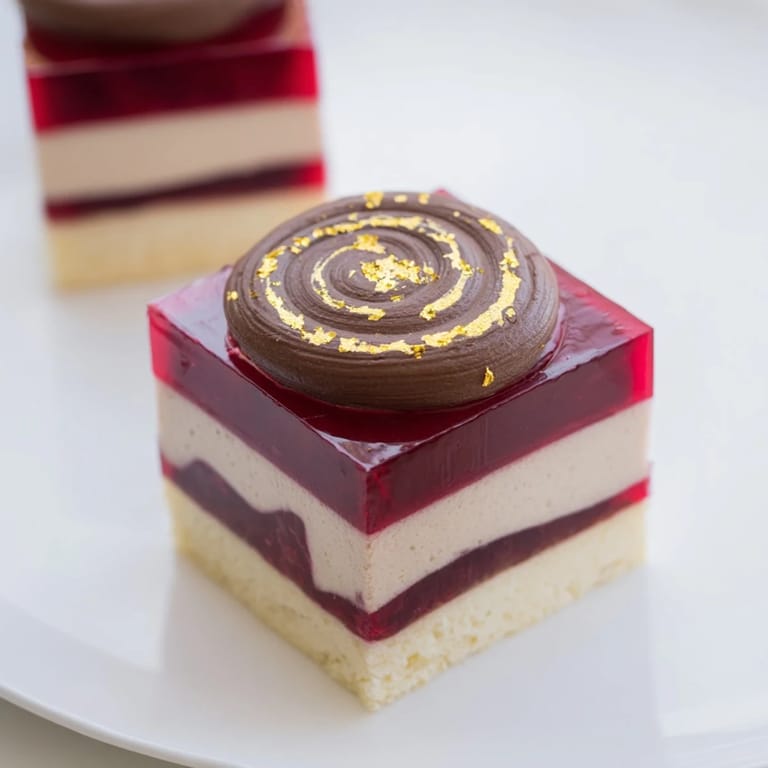
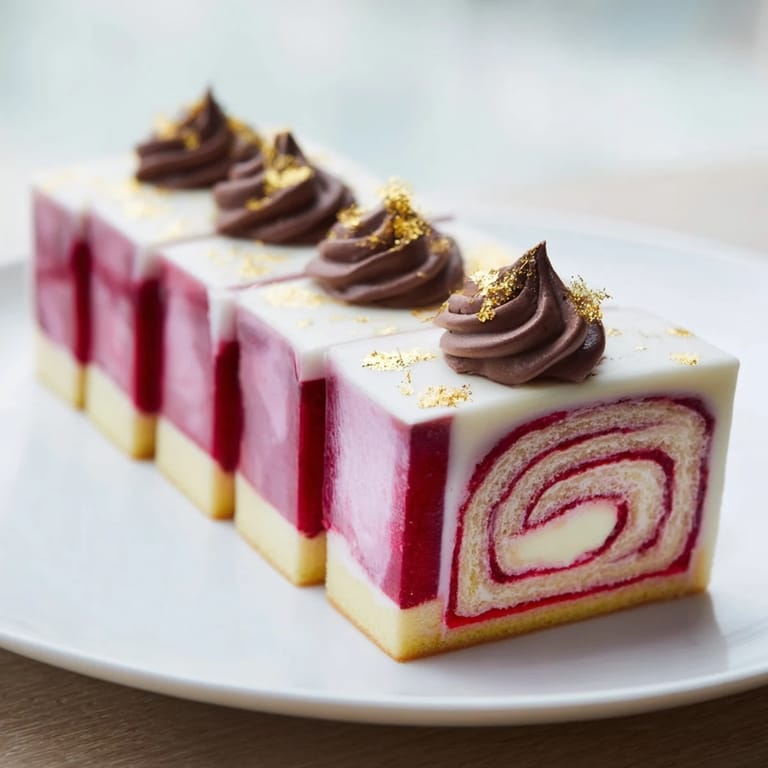
- Cut your cooled sponge into 8 rectangles, each approximately 5 x 8 cm—these follow the 5:8 ratio that echoes the Golden Ratio. Place one sponge rectangle as your base. Using a piping bag, pipe a layer of chocolate mousse about 3 cm high onto each base. Now comes the artistry: arrange your jelly spiral on top, following that elegant curve. Each layer builds the mathematical harmony you've been working toward.
- Create the white chocolate glaze:
- Chop your white chocolate finely. Heat the 40 ml of heavy cream until it's hot but not boiling, then pour it over the chocolate and let it sit for a minute. Stir gently until you have a smooth, glossy glaze. Allow it to cool for just a couple of minutes—you want it warm enough to pour gracefully but cool enough not to melt your mousse. Pour this glaze over each assembled dessert, letting it cascade slightly down the sides. If you're using edible gold leaf, apply it now while the glaze is still slightly tacky—it will adhere beautifully.
- Final chill and serve:
- Place your finished desserts in the refrigerator for at least 2 hours. This final rest allows all the layers to set properly and the flavors to settle into harmony. Just before serving, let them sit at room temperature for 5 minutes—this brings out the chocolate's flavor and softens the texture slightly.
 Pin it
 There was a moment when I realized this wasn't just about perfect spirals or mathematical precision. It was when someone took their first bite and closed their eyes, and in that silence, I understood that food is really about connection. The Golden Ratio was just the language I used to say, 'I made this with care for you.'
Understanding the Golden Ratio in Dessert
The Golden Ratio, or phi (approximately 1.618), is nature's favorite proportion. It appears in sunflower seeds, nautilus shells, and spiral galaxies. Bringing this mathematical constant into your kitchen transforms a dessert from something merely delicious into something that feels inherently right to the eye. When proportions follow this ratio, our brains perceive them as harmonious and beautiful before we even taste them. The spiral of jelly that adorns this dessert isn't random—it follows the same curves you find in nature itself. This is why the dessert feels so balanced and elegant.
Flavor Pairing and Wine Suggestions
The interplay of dark chocolate mousse against bright raspberry jelly creates a conversation of flavors. The chocolate's depth and richness are cut beautifully by the tartness of the raspberries, while the delicate sponge provides neutral ground for both to shine. A crisp Moscato d'Asti with its subtle sweetness and slight fizz is the perfect companion—it won't compete with the dessert but will cleanse your palate between bites. Champagne works beautifully too, especially if you want something more celebratory. Avoid heavily oaked wines, which would overwhelm the delicate balance you've worked to create.
Variations and Substitutions
Once you've mastered this recipe, the possibilities expand. Mango puree creates a tropical brightness, while passionfruit adds an exotic tartness that's absolutely magnificent. White chocolate mousse can replace dark chocolate for a more delicate dessert, though it requires slightly less tempering and patience. I've experimented with different fruit liqueurs in the glaze—raspberry liqueur adds depth without changing the appearance. A pistachio cream layer can replace the mousse entirely for something unexpected. The structure remains constant; only the flavors dance.
- Substitute raspberry puree with mango, passionfruit, or even blackcurrant for different flavor profiles.
- Replace dark chocolate mousse with white chocolate or milk chocolate versions, adjusting sweetness accordingly.
- Experiment with flavored creams—Earl Grey, lavender, or espresso can infuse the mousse with subtle complexity.
 Pin it
 This dessert teaches us that beauty and deliciousness aren't opposing forces—they're partners. Make this once, and it becomes a story you'll tell. Make it twice, and it becomes your signature.
Recipe FAQ
- → What is the golden ratio in this dessert?
The dessert's layers and the fruit jelly spiral are sized and arranged following the golden ratio, ensuring visually pleasing proportions and balance.
- → Can other fruit purees be used for the jelly?
Yes, alternatives like mango or passionfruit purees can replace raspberry to vary flavor and color while maintaining texture.
- → How should the mousse be prepared for best texture?
Temper egg yolks with warm cream before mixing with melted chocolate, then gently fold in softly whipped cream for a light, airy texture.
- → Is there a specific glaze to use?
The glaze combines melted white chocolate and cream for a smooth finish, optionally decorated with edible gold for an elegant touch.
- → How long should the dessert chill before serving?
Chill the assembled layers for at least two hours to allow set layers and meld flavors for optimal presentation.