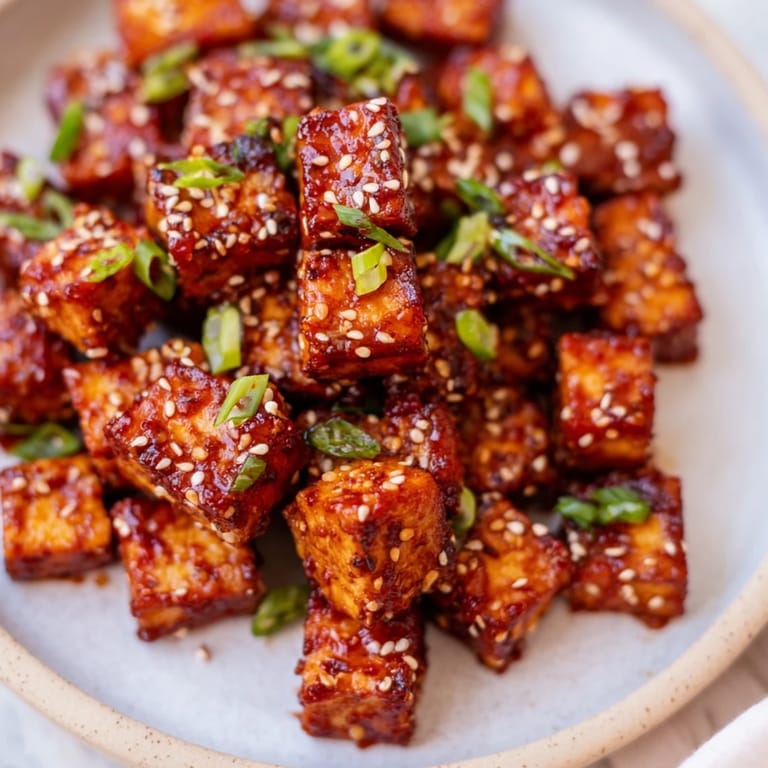
 Pin it
 I discovered this dish on a Tuesday night when my friend brought over a jar of gochujang and refused to leave until we used it. We had some tofu sitting in the fridge, honey in the pantry, and absolutely no plan. Twenty minutes later, we were standing over the stove watching these golden cubes get glazed in the most addictive sauce, passing bites back and forth and debating whether it was sweet or spicy first. It became the kind of happy accident you actually want to repeat.
The first time I made this for a dinner party, I was nervous about serving tofu to people who claimed they didn't like it. I watched their faces light up as they tasted that balance of heat and sweetness, and someone asked for the recipe before dessert. That's when I realized the magic wasn't the tofu—it was the sauce doing all the convincing.
Ingredients
- Firm tofu: Press it well and it becomes a vehicle for crispiness; skip this step and you'll end up with steam instead of a crust.
- Cornstarch: The secret ingredient that transforms tofu into something with actual texture.
- Salt: Don't skip seasoning the coating—it brings out the tofu's subtle flavor.
- Neutral oil: You need enough heat and enough oil; medium-high is your friend here.
- Gochujang: Korean chili paste that tastes like umami and warmth had a baby.
- Honey: Balances the heat without making it cloying.
- Soy sauce: The savory backbone that makes everything taste intentional.
- Rice vinegar: A tiny splash of brightness that prevents the sauce from being one-dimensional.
- Sesame oil: Just a drizzle, because it's potent and carries the whole dish toward something special.
- Garlic and ginger: Fresh versions only—they add a sharpness that lifts everything.
- Sesame seeds and green onions: These aren't just garnish; they add texture and a final pop of flavor.
Tired of Takeout? 🥡
Get 10 meals you can make faster than delivery arrives. Seriously.
One email. No spam. Unsubscribe anytime.
Instructions
- Press your tofu like you mean it:
- Wrap it in paper towels or a clean kitchen towel and let it sit under a heavy pan or some cans for at least ten minutes. You're trying to remove as much moisture as possible so it can actually get crispy instead of steaming.
- Coat and season:
- Toss the cubes with cornstarch and salt until each one is lightly dusted. This is what gives you that satisfying crunch.
- Get that golden crust:
- Heat oil until it shimmers, then let the tofu sit undisturbed for a minute or two before turning. You want deep golden color on at least two sides—this takes patience but it's worth it.
- Build the sauce:
- Whisk everything together in a separate bowl first so it comes together smoothly when you pour it into the hot pan. You'll see it bubble slightly and smell the garlic and ginger wake up.
- Let it simmer and thicken:
- This takes just a few minutes and you'll watch the sauce go from thin to glossy. Don't rush it.
- Reunite tofu and sauce:
- Toss everything together gently so the tofu gets coated without falling apart. It should look sticky and slightly shiny when you're done.
- Finish with intention:
- Sprinkle sesame seeds while everything is still warm so they toast slightly, then scatter green onions on top for a fresh contrast.
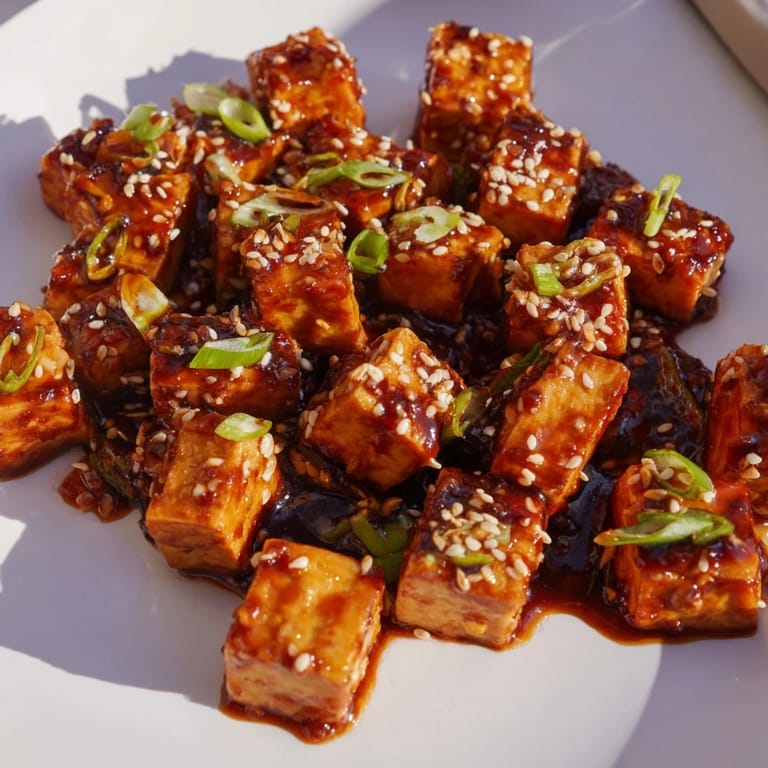 Pin it
 There was a moment when my partner took a bite and closed their eyes. They didn't say anything for a few seconds, just smiled. That silence felt like the dish had said something words couldn't.
The Crispy-Sticky Sweet Spot
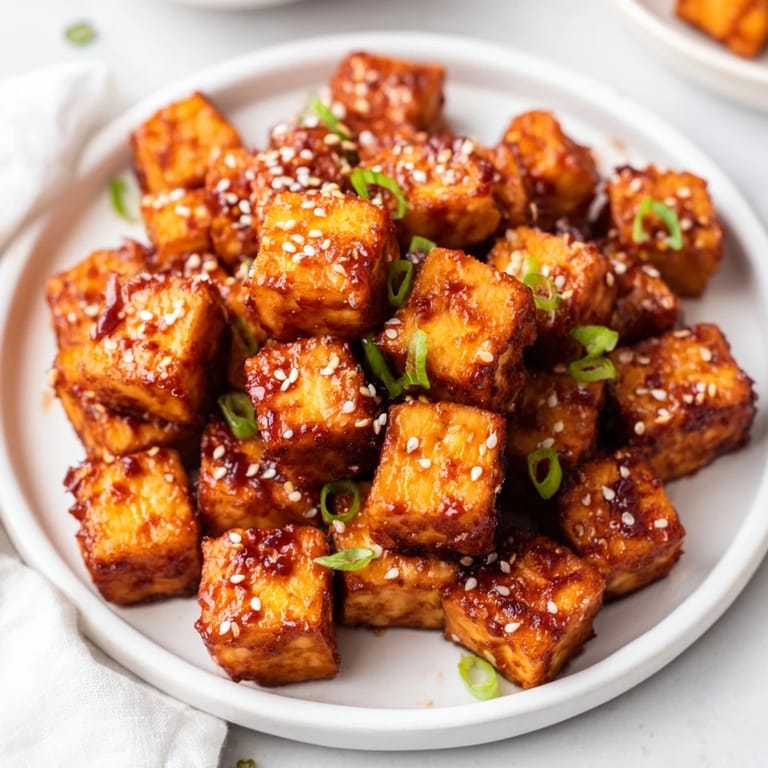
The magic of this dish lives in the textural contrast. You're chasing that moment when the tofu is still crispy on the outside but the sauce clings to it and gets sticky and glossy. This happens because cornstarch creates a barrier that doesn't absorb liquid too quickly, and because you're returning already-cooked tofu to the hot sauce rather than adding it raw. It sounds technical, but it's really just about understanding that good food is the result of small, intentional choices.
Temperature and Timing
Medium-high heat is your baseline, but pay attention to how your stove behaves. If your oil is smoking before the tofu goes in, you've gone too hot and the outside will burn before the inside crisps. If it barely sizzles, you're not hot enough. The sweet spot is when a cube sizzles immediately and steadily, and the pan is hot enough that you feel the warmth a few inches away. Timing matters too—those eight to ten minutes for crisping aren't arbitrary. Some pans cook hotter than others, so watch for deep golden color rather than watching the clock.
Serving and Storage
This dish is best eaten fresh and hot, when the tofu is still crispy and the sauce still has that glossy cling. Over rice, in lettuce wraps, or straight from the plate all work beautifully. If you have leftovers, store them in an airtight container in the fridge for up to three days, though the crispiness will soften—they still taste good, just different.
- Reheat gently in a skillet over medium heat if you want to restore some crispiness.
- You can double this recipe easily; just make sure your pan is large enough that tofu isn't crowded.
- Serve with something cool like cucumber or steamed rice to balance the heat.
 Pin it
 This is the kind of dish that feels like it took more effort than it actually did. Serve it with confidence, knowing that the simplicity of the method is where the elegance lives.
Recipe FAQ
- → How do I get tofu extra crispy?
Press tofu to remove moisture, coat evenly with cornstarch, then pan-fry over medium-high heat until golden on all sides.
- → Can the honey in the glaze be substituted?
Yes, maple syrup or agave nectar work well for a vegan-friendly alternative.
- → What spice level does gochujang add?
Gochujang provides mild to moderate heat with a rich, fermented chili flavor that can be adjusted to taste.
- → Which oils are best for frying tofu here?
Neutral-flavored oils like canola or sunflower ensure even frying without overpowering the glaze’s flavors.
- → What dishes pair well with this tofu glaze?
Steamed rice, quinoa, or fresh lettuce wraps complement the sticky, spicy tofu perfectly.