 Pin it
 The first time I made labneh, I wasn't trying to make cheese at all. I'd bought too much yogurt for a breakfast project that never happened, and it was sitting in my fridge starting to worry me. My grandmother's voice echoed in my head, something about waste being a sin, so I lined a sieve with cheesecloth out of pure stubborn necessity. By morning, what poured into the bowl beneath was clear golden whey, and what remained above was something entirely transformed—tangy, thick, luxuriously creamy. I drizzled it with olive oil and tasted it straight, and suddenly understood why this humble act of patience had sustained whole kitchens for centuries.
I served labneh at a late-night gathering last winter, spooned into a shallow bowl and topped with a pool of emerald oil and scattered dried mint. My friend Sarah tore into warm pita and spread it thick, then paused mid-bite and asked what it was—she'd never encountered anything quite like it. Watching someone discover something so simple and elemental for the first time reminded me that the best meals are often the ones nobody rushes through.
Ingredients
- Full-fat plain yogurt (1 kg): Use the thickest, creamiest yogurt you can find—Greek yogurt works beautifully, but regular plain yogurt works too; the fat content is what makes the final cheese luxurious and rich.
- Fine sea salt (½ tsp): This draws out moisture and seasons the cheese gently; don't skip it, as it's the only seasoning the base gets.
- Extra-virgin olive oil (2 tbsp): This is your finishing touch, so choose one you actually enjoy drinking or drizzling on bread.
- Dried mint or zaatar (1 tsp, optional): These add a whisper of herbal brightness that makes people ask what they're tasting.
- Aleppo pepper or sumac (pinch, optional): Either one adds a subtle warmth or brightness without overwhelming the delicate tang.
Tired of Takeout? 🥡
Get 10 meals you can make faster than delivery arrives. Seriously.
One email. No spam. Unsubscribe anytime.
Instructions
- Stir in the salt:
- Pour your yogurt into a bowl and sprinkle the salt over it. Stir slowly until the salt dissolves and the yogurt feels evenly seasoned—you're waking it up, not beating it into submission.
- Prepare your draining station:
- Double-fold a piece of cheesecloth or use a thin, clean kitchen towel. Drape it into your sieve and position the whole setup over a deep bowl so there's room for whey to collect beneath without the cloth touching liquid.
- Pour and gather:
- Gently pour the salted yogurt into the lined sieve. Gather the cloth edges up and over the yogurt like you're tucking it into bed, creating a sealed bundle. The whey will start weeping almost immediately.
- Refrigerate and wait:
- This is where patience becomes an ingredient. Slide the whole setup into your fridge and let time do the work—12 hours gives you soft, creamy labneh; 24 hours gives you something almost cheese-like in texture.
- Turn it out and dress it:
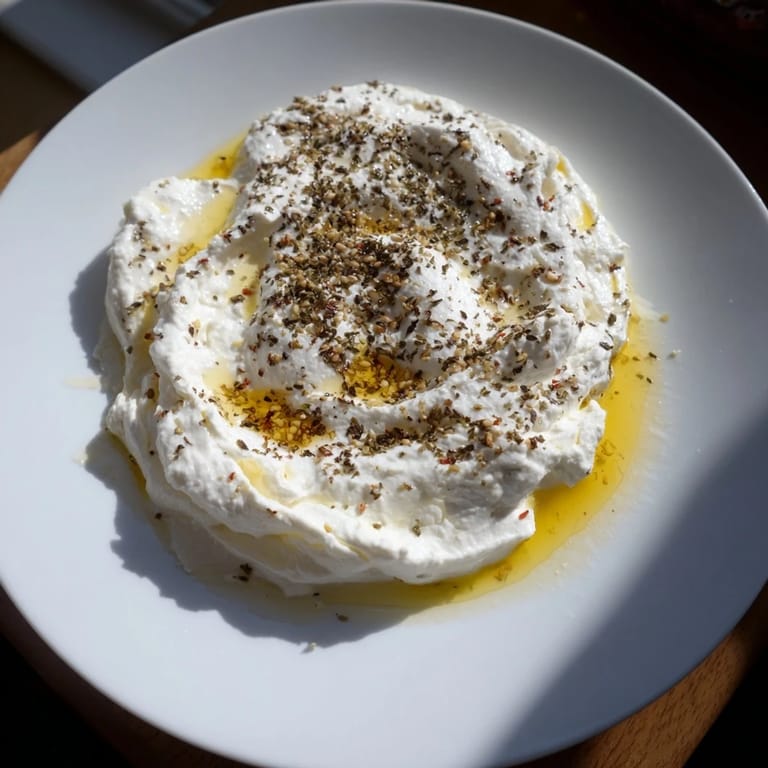
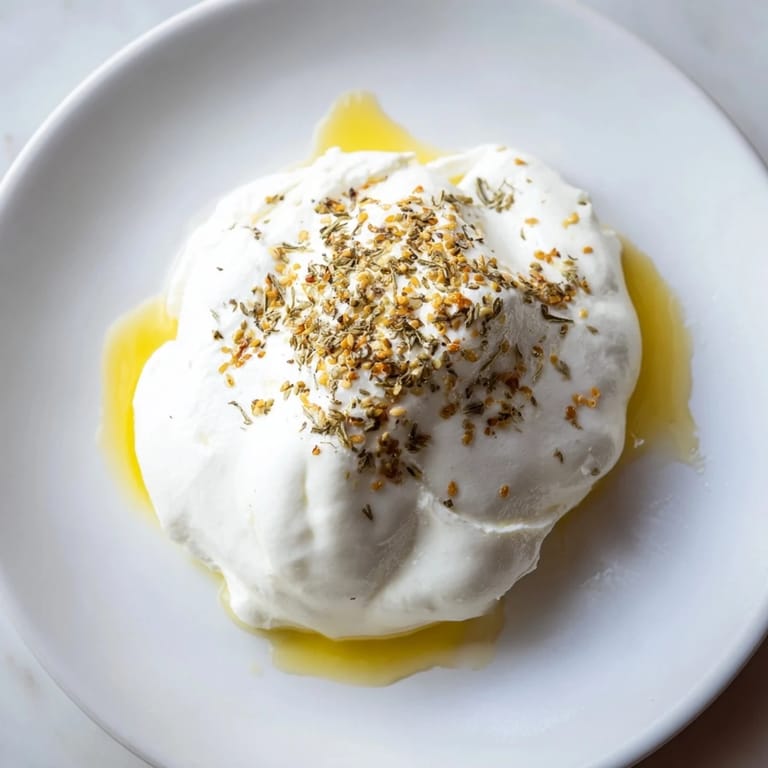
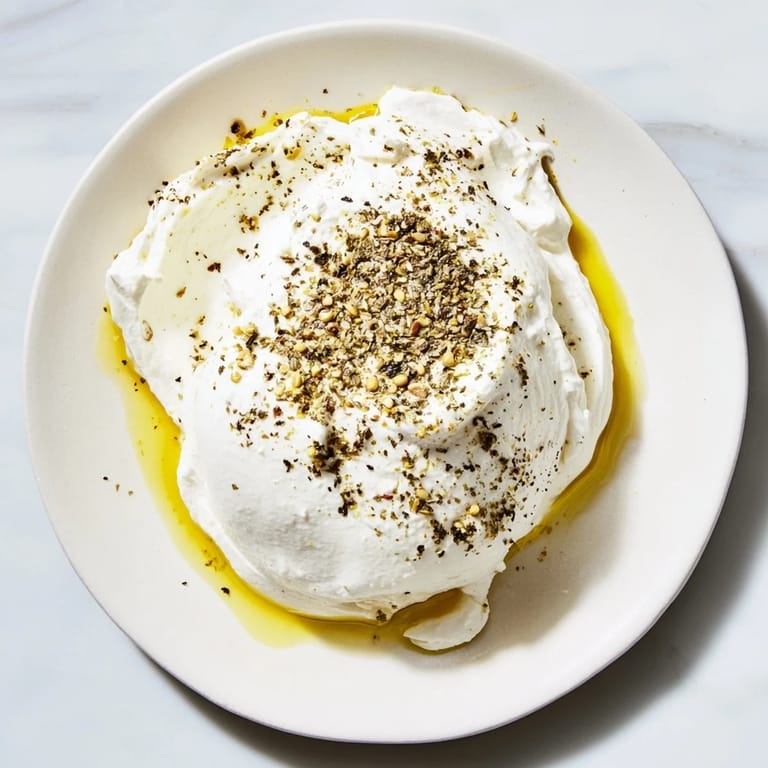
- Unwrap your labneh carefully and transfer it to a serving dish. Make a shallow well in the center and pour olive oil around it, then scatter your chosen herbs or spices over the top if you're using them.
- Serve with intention:
- Bring it to the table chilled, alongside warm pita, fresh vegetables, or olives. Watch people's faces when they taste it.
 Pin it
 My neighbor brought over her homesick son one afternoon, and he took one taste of labneh with warm pita and got very quiet. Later, he told me it tasted like his grandmother's kitchen in Beirut, even though he'd never actually met her. That's when I realized this recipe is bigger than ingredients—it's a bridge between people and places, a edible conversation across time.
The Magic of Time
Making labneh taught me something about cooking that most recipes won't tell you: the most transformative ingredient is often just time and restraint. You're not adding heat or complicated techniques, just gravity and patience. There's something deeply satisfying about cooking like this, especially in a world that moves too fast. The yogurt doesn't know it's becoming cheese; it just knows it's slowly becoming itself.
Variations and Play
Once you've mastered the basic labneh, the possibilities unfold quietly. I've rolled the firmer version into small balls and stored them in olive oil infused with garlic and chili, creating something that lasts weeks and improves with time. Some mornings I spoon it straight into my coffee cup with a pinch of salt—a strange little comfort that shouldn't work but does. You can serve it warm or cold, plain or dressed, alone or with everything.
Why This Recipe Stays in Your Life
Labneh is humble, but it's the kind of humble that sticks with you. It teaches you about transformation through waiting, about how simple ingredients treated with care become something unexpected. Once you've made it once, you'll understand why it's been a staple in Middle Eastern kitchens for so long—not out of necessity alone, but because it's genuinely delicious and genuinely kind to make.
- Store your finished labneh in a glass container with a tight lid, and it keeps for up to five days.
- If you want to serve it as elegant balls, drain for the full 24 hours and roll gently with slightly damp hands.
- Taste it before you garnish it; sometimes the plain version is the most beautiful thing you can put on a table.
 Pin it
 There's a quietness to making labneh that I've come to treasure. It asks almost nothing of you except to set it up and let it be, and in return it gives you something creamy and alive and completely your own.
Recipe FAQ
- → What is labneh and how is it made?
Labneh is a creamy, tangy cheese made by straining plain yogurt to remove whey, resulting in a thick spreadable texture.
- → How long should labneh be strained?
Strain labneh for 12 hours for a soft texture or up to 24 hours for a firmer consistency.
- → What garnishes complement labneh?
Common garnishes include extra-virgin olive oil, dried mint, zaatar, or sumac to enhance flavor.
- → Can labneh be made vegan?
Yes, by using thick plant-based yogurt as a substitute for dairy yogurt.
- → How should labneh be stored?
Store labneh refrigerated in a sealed container for up to 5 days to maintain freshness.
- → What dishes pair well with labneh?
Labneh pairs well with warm pita bread, fresh vegetables, olives, and mezze platters.