 Pin it
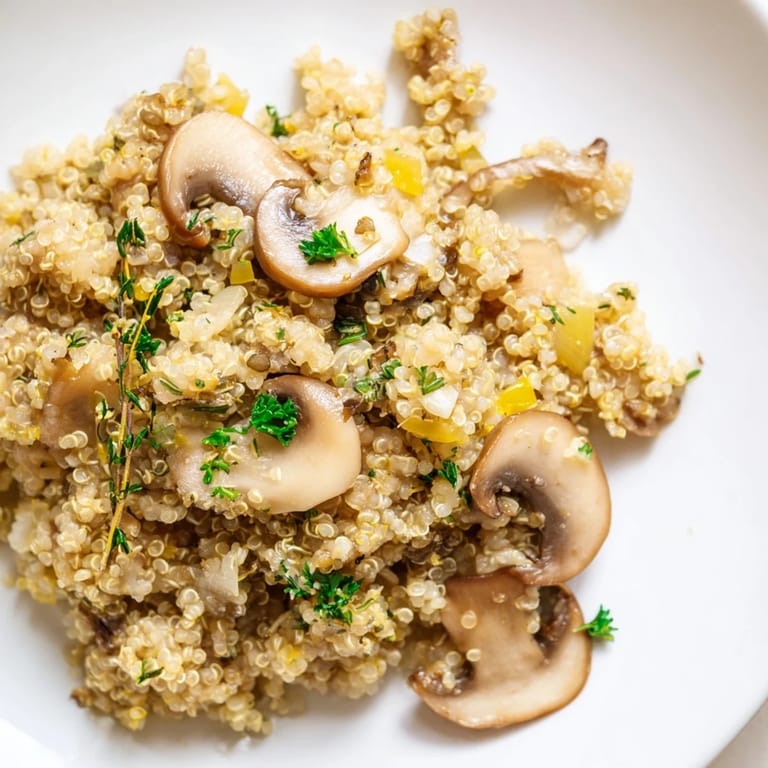
 Last spring, I was searching for something to make for dinner that felt special but wouldn't keep me in the kitchen all evening. I'd just bought a bag of quinoa that kept getting pushed to the back of my pantry, and I had a heap of mushrooms from the farmers market turning dark at the edges. That's when it hit me: what if risotto didn't need to be rice? The idea of swapping quinoa in felt both risky and exciting, and by the time the first spoonful hit my tongue, I knew I'd stumbled onto something I'd make again and again.
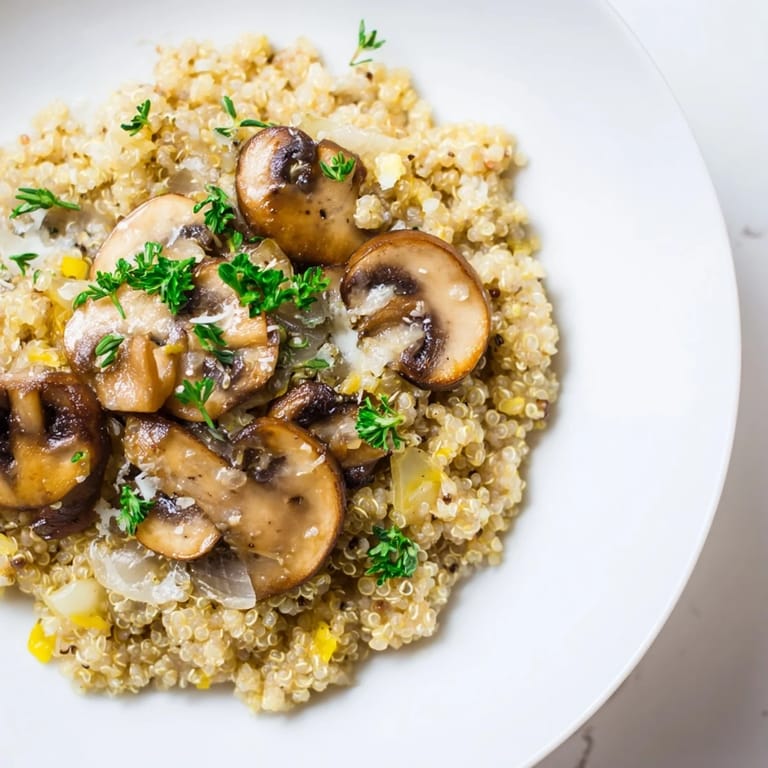
I made this for my sister's dinner party last October, and I remember standing at the stove, stirring methodically and watching guests peer into the kitchen with curiosity. When I served it in shallow bowls with a final shower of fresh parsley, someone asked what made it so creamy without cream being the star. That's the magic of this dish—it whispers rather than shouts, and somehow that makes it more memorable.
Ingredients
- Mushrooms (400 g cremini or mixed): They're the soul of this dish, so don't skimp on quality or quantity. Cremini have a deeper flavor than button mushrooms, but any mix works beautifully.
- Quinoa (200 g, rinsed): Rinsing removes bitterness and helps each grain stay distinct rather than gluey, which keeps the texture light.
- Yellow onion (1 medium, finely chopped): This is your flavor foundation, so take time to chop it small and let it soften completely.
- Garlic (2 cloves, minced): Mince it fresh just before you need it to keep that sharp, clean bite alive.
- Vegetable broth (1 L, kept warm): Warm broth absorbs into quinoa more evenly than cold, and keeping it on a side burner takes one step out of the dance.
- Dry white wine (120 ml): It cuts through richness and adds complexity that you can't replicate with broth alone.
- Unsalted butter (40 g): Divided between cooking and finishing, it creates the silkiness that makes this feel indulgent.
- Parmesan (60 g, freshly grated): Freshly grated melts and distributes more evenly than pre-shredded, and it tastes noticeably better.
- Heavy cream (2 tbsp, optional): I skip it sometimes, but on days when I want extra luxury, those two tablespoons make all the difference.
- Olive oil (2 tbsp): Use something you like the taste of, since it's a base flavor here.
- Fresh thyme (1 tbsp) or dried (1 tsp): Thyme and mushrooms are made for each other, so don't leave this out.
- Fresh parsley (2 tbsp, chopped): Save this for garnish to keep it bright and to catch the light on each bowl.
- Sea salt and black pepper: Taste as you go, especially near the end when you're building final seasoning.
Tired of Takeout? 🥡
Get 10 meals you can make faster than delivery arrives. Seriously.
One email. No spam. Unsubscribe anytime.
Instructions
- Get everything ready:
- Rinse your quinoa, warm your broth, and have all your ingredients chopped and measured before you start cooking. This isn't just neat—it's essential when you're stirring constantly and can't stop to chop an onion.
- Start with aromatics:
- Heat olive oil and 1 tablespoon butter in a large saucepan over medium heat, then add your onion. Let it sit for 2-3 minutes without stirring too much, so it softens and turns translucent at the edges.
- Wake up the garlic:
- After the onion has softened, add your minced garlic and stir for about 1 minute until it becomes fragrant. Don't let it brown or it'll turn bitter.
- Brown the mushrooms:
- Add your sliced mushrooms and fresh thyme, then give them 6-8 minutes to release their moisture and develop a golden color. You'll know they're ready when the pan looks almost dry again.
- Toast the quinoa:
- Stir in your rinsed quinoa and cook for 1-2 minutes until each grain is lightly coated and you can smell its nutty aroma. This step makes a real difference in the final flavor.
- Deglaze with wine:
- Pour in the white wine and stir constantly, letting it absorb almost completely. This usually takes 2-3 minutes and helps build depth.
- The patient part—add broth gradually:
- Add the warm broth one ladle at a time, stirring frequently. Wait until each addition is mostly absorbed before adding the next, just like you would with rice risotto. This takes about 20-25 minutes total and is when the magic happens.
- Finish creamy:
- When the quinoa is tender and the mixture looks creamy, stir in the remaining butter, freshly grated Parmesan, and cream if you're using it. Taste and adjust salt and pepper.
- Rest and serve:
- Remove from heat, cover, and let it sit for 2 minutes. This allows everything to settle together and become even more luxurious.
 Pin it
 What surprised me most about this dish is how it transforms from individual components into something unified and silky. There's a moment, usually around minute 20, when you realize you're not just cooking anymore—you're building something that tastes like comfort and sophistication at the same time.
Why Quinoa Instead of Rice
I chose quinoa because it needed to earn its place in my kitchen, and risotto felt like the ultimate test. Unlike arborio rice, which relies almost entirely on released starch for creaminess, quinoa brings natural protein and a subtle earthiness that feels more complete on the plate. The texture is softer and less dependent on technique, which makes this forgiving enough for a weeknight but impressive enough for guests. Plus, if you care about nutrition beyond pure indulgence, quinoa makes risotto feel less like a decadent splurge and more like a meal you can feel good about eating.
Building Flavor with Mushrooms
Mushrooms are where most of the personality lives in this dish, so treating them well matters. I brown them properly to develop their umami depth, and I always use a mix if I can—cremini for earthiness, oyster or shiitake if I'm feeling fancy. The thyme doesn't just season; it harmonizes with the mushroom flavor in a way that makes people pause and wonder what they're tasting. If you only have access to regular button mushrooms, they'll work, but they'll taste like the polite cousin of this dish rather than the full experience.
Variations and Next Steps
Once you master the base, this dish becomes a canvas for seasons and what's in your kitchen. In summer, I've stirred in fresh peas and tender asparagus pieces right before serving. In autumn, I've added roasted butternut squash. Fresh spinach wilts in beautifully at the end if you want extra greens. The core technique stays the same; you're just changing the supporting players.
- For a vegan version, swap unsalted butter for vegan butter and use a plant-based cheese or skip the cheese entirely—the mushrooms are rich enough to stand alone.
- If your broth isn't particularly flavorful, taste and adjust seasoning more aggressively near the end because the final flavors depend on what you're adding.
- Leftovers can be gently reheated with a splash of broth or water, though the texture won't be quite as creamy as the first night.
 Pin it
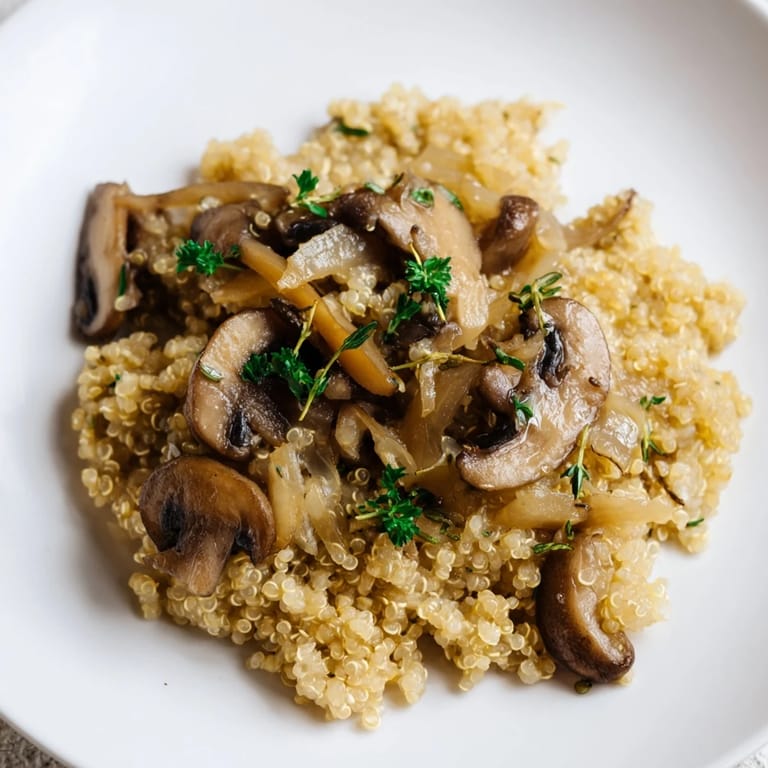
 This risotto taught me that the best recipes are the ones that make you feel like you're cooking with someone who knows what they're doing, even if you're learning as you go. I hope it becomes something you reach for again and again.
Recipe FAQ
- → Can I use a different grain instead of quinoa?
Yes, but cooking times and textures will vary. Arborio rice is traditional for risotto but quinoa offers a higher protein alternative.
- → What mushrooms work best for this dish?
Cremini or mixed mushrooms provide a rich, earthy flavor. Button mushrooms can be used but offer a milder taste.
- → How do I achieve the creamy texture without cream?
Slowly adding warm broth while stirring releases quinoa’s natural starches, creating creaminess similar to traditional risotto.
- → Can this dish be made vegan?
Yes, substitute vegan butter and choose plant-based cheese or omit cheese altogether to maintain creaminess and flavor.
- → Is white wine essential in the cooking process?
White wine adds depth and acidity but can be substituted with additional broth if preferred, though flavor complexity may be reduced.