 Pin it
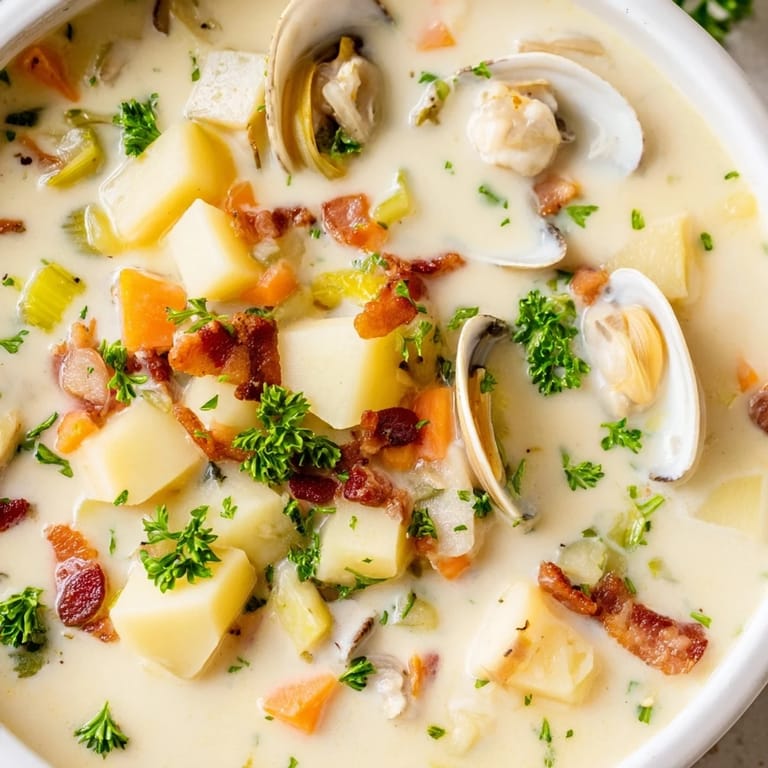
 My first real bowl of New England clam chowder came on a gray October afternoon when a friend dragged me into a tiny seafood shack near the Boston waterfront. I was skeptical—the place looked weathered, smelled strongly of salt and butter, and the menu was handwritten on a chalkboard. But that first spoonful changed everything: the cream was lush but not heavy, the clams were tender nuggets of briny sweetness, and the potatoes had absorbed just enough of that oceanic flavor to feel essential rather than filler. I went home determined to recreate it, and after several attempts, I finally understood what made it work: patience with the clams, respect for the roux, and never, ever letting that cream boil.
Years later, I made this for my mom on a snowy evening when she was feeling under the weather. She sat at the counter while I worked, and I remember her closing her eyes as she tasted it, then asking for seconds in a way that made the whole evening feel worthwhile. That's when I realized this soup isn't really about being authentic to some coastal memory—it's about creating one right in front of you, one spoonful at a time.
Ingredients
- Fresh littleneck clams (2 lbs): The heart of the dish; littlenecks are forgiving and flavorful, smaller than cherrystones and less chewy than larger varieties. Ask your fishmonger for the smallest available, and buy them the day you plan to cook.
- Clam juice (1 cup): A backup to the liquid you'll steam from the clams themselves, ensuring you have enough briny depth no matter how modest the yield from your shellfish.
- Russet potatoes (2 medium): Starchy and mild, they break down just slightly at the edges while staying intact, creating that signature texture throughout the chowder.
- Onion, celery, and carrot (the holy trinity): These three are the backbone—they cook down into sweetness and body that makes the soup feel rounded and homemade rather than one-note.
- Garlic (2 cloves): Minced fine and cooked low with the other vegetables, it adds whisper of umami without announcing itself loudly.
- Heavy cream and whole milk: The cream makes it luxurious; the milk keeps it balanced and prevents that cloying heaviness you get from cream alone.
- Unsalted butter (2 tbsp): Use good butter if you can—it builds the roux and flavors everything it touches.
- All-purpose flour (2 tbsp): Creates the roux that gently thickens without making the soup feel starchy or gluey.
- Bacon (2 slices): Smoked and crispy, it adds depth and a gentle saltiness that rounds out all the sweetness from the vegetables.
- Bay leaf and dried thyme: Bay is classic and nearly invisible; thyme adds herbaceous warmth without dominating the subtle clam flavor.
Tired of Takeout? 🥡
Get 10 meals you can make faster than delivery arrives. Seriously.
One email. No spam. Unsubscribe anytime.
Instructions
- Prepare the clams:
- Rinse them under cold water and scrub each shell with a stiff brush to remove grit and sand. Place them in a large pot with 2 cups of water, cover, and bring to a boil; they'll steam and open in about 5–7 minutes, releasing their liquid into the pot. Once cool enough to handle, shuck them carefully, chop the meat into bite-sized pieces, and strain the cooking liquid through a fine mesh or cheesecloth into a bowl.
- Render the bacon:
- In your Dutch oven, cook the diced bacon over medium heat until the edges turn mahogany-brown and crispy. This takes about 5–7 minutes and releases a fragrant fat that becomes your cooking medium for everything that follows.
- Build the aromatic base:
- Add butter to the bacon fat and let it melt, then toss in your chopped onion, celery, and carrot. Sauté gently for about 5 minutes, stirring occasionally, until the vegetables soften and begin to turn translucent at the edges. Add the garlic in the final minute so it perfumes everything without burning.
- Make the roux:
- Sprinkle the flour over the softened vegetables and stir constantly for about 1 minute to cook out the raw flour taste. The mixture should look like wet sand and smell toasty, not chalky.
- Add the liquid:
- Pour in your reserved clam cooking liquid and bottled clam juice slowly while stirring, scraping the bottom of the pot to loosen any browned bits stuck there. These browned flavors are liquid gold—don't leave them behind.
- Cook the potatoes:
- Add your diced potatoes along with the bay leaf and thyme, then bring everything to a gentle simmer. Cook uncovered for 10–12 minutes, until a fork slides through the potato pieces with almost no resistance but they haven't fallen apart.
- Finish gently:
- Reduce the heat to low and stir in the chopped clams, crispy bacon, cream, and milk. Let it simmer very gently—never boil, or the cream will separate and curdle—for another 5–10 minutes, stirring now and then. This rest time lets all the flavors marry and deepens into something greater than the sum of its parts.
- Taste and adjust:
- Remove the bay leaf and taste carefully, seasoning with salt and pepper until it feels balanced. The clams will bring saltiness, so add conservatively and taste between additions.
- Serve with warmth:
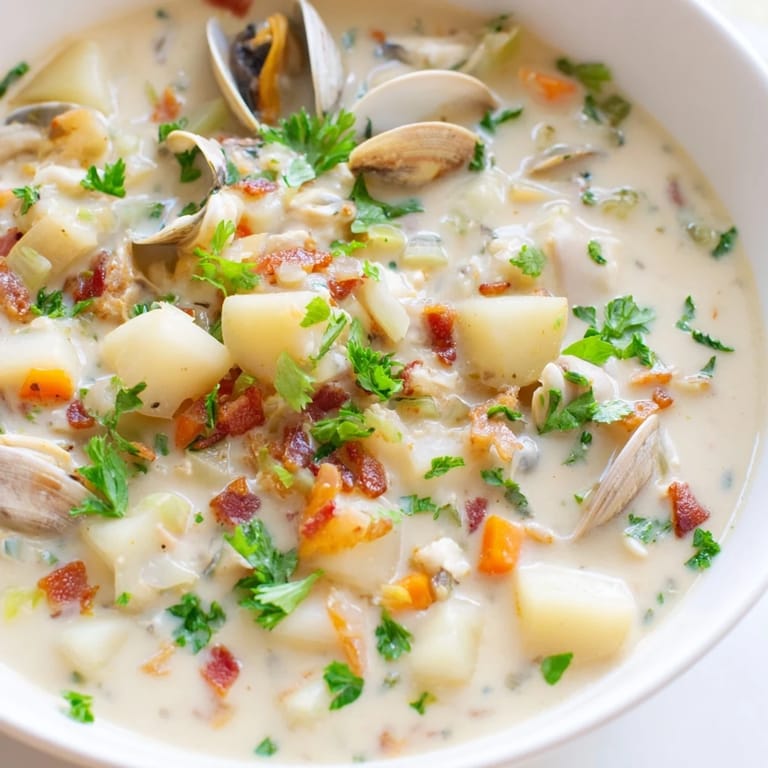
- Ladle the hot soup into bowls, sprinkle fresh parsley across the top for brightness, and set out a sleeve of oyster crackers on the side.
 Pin it
 I learned early on that this soup rewards unhurried cooking. The first time I rushed, turning the heat up high to speed things along, the cream broke and the texture turned grainy and thin. Now I know: good chowder asks you to slow down, to let the vegetables and clams infuse the broth with their essence, and to finish with restraint. It's a lesson that applies beyond the kitchen.
Why Littleneck Clams Matter Most
Littleneck clams are the Goldilocks of the clam world—large enough to yield decent meat, small enough to stay tender after cooking. I've tried using larger quahogs and ended up with rubbery pieces that needed longer cooking and broke the timing of the dish. Littlenecks cook through quickly and stay sweet and supple, which is exactly what you want in a chowder where the clam meat is meant to punctuate each spoonful rather than dominate it. If you can only find larger clams, chop them smaller and watch them carefully to avoid overcooking.
The Roux Is Your Secret Weapon
That moment when you sprinkle flour into hot butter and fat, then stir it into a paste, is where most home cooks stumble. You're essentially making a thickening agent that will coat the back of a spoon while keeping the soup silky rather than floury-tasting. The trick is stirring that roux for exactly one minute—long enough to cook out the raw starch taste, short enough that it doesn't brown too much and turn bitter. If you're nervous, you can make a slurry by mixing the flour with a little cold milk first, then stirring it in at the very end, though the traditional roux method works perfectly if you stay present and attentive.
Seasonality and Customization
I make this year-round, but it tastes best in cooler months when you crave something warm and substantial. For a lighter version, swap the heavy cream and whole milk for equal parts cream and half-and-half, or even use all half-and-half if you prefer something less rich. Some cooks add a handful of chopped fresh thyme at the end for brightness, or a dash of hot sauce for an unexpected kick. One winter, a friend added a tiny sprinkle of smoked paprika, and it introduced a dimension of warmth that made the soup feel almost spiced.
- If you want a thicker chowder, mash a few of the cooked potatoes right in the pot before adding the cream—the starch will help it cling to your spoon.
- Oyster crackers are traditional, but crusty bread torn into chunks works beautifully too and soaks up every precious drop.
- Make this a day ahead if you can; it tastes even better as the flavors settle and deepen overnight.
 Pin it
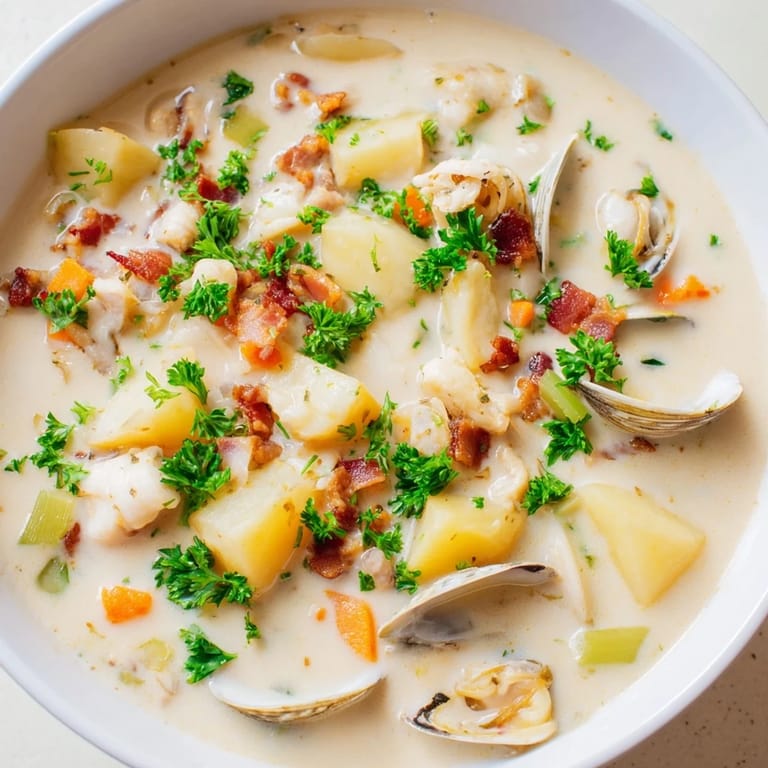
 This chowder is the kind of recipe that gets better every time you make it, as your hands remember the motion of the wooden spoon, and you learn to recognize exactly when the vegetables have softened enough. It's comfort distilled into a bowl, and once you've made it, you'll understand why coastal families have been making versions of it for centuries.
Recipe FAQ
- → How do I clean the clams properly?
Rinse clams under cold water and scrub their shells thoroughly to remove any sand or debris before cooking.
- → Can I substitute the cream for a lighter option?
Yes, replacing cream and milk with half-and-half creates a lighter, yet still creamy texture without sacrificing flavor.
- → What is the best way to thicken the chowder?
Forming a roux with butter and flour helps thicken the base, and mashing a few potatoes into the broth adds extra body.
- → How should the chowder be seasoned?
Season with salt, black pepper, and dried thyme to balance the flavors. Adjust seasoning at the end to taste.
- → What sides pair well with this chowder?
Oyster crackers are traditional, and a crisp white wine like Sauvignon Blanc complements the rich, savory flavors beautifully.