 Pin it
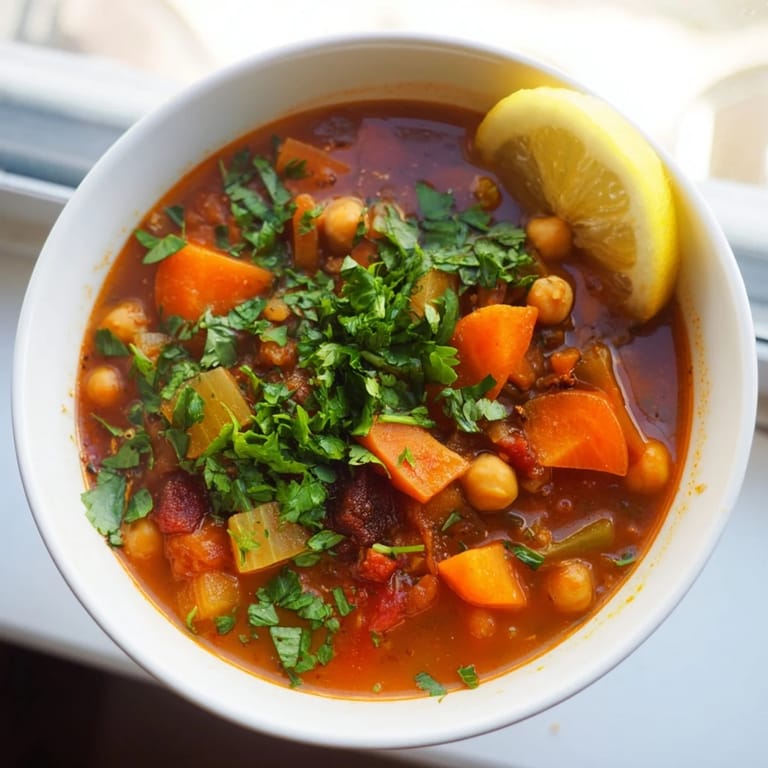
 The first time I tasted harira, I was sitting in a modest kitchen in Marrakech, steam rising from a clay bowl that had been passed down through three generations. My host stirred the pot slowly, deliberately, as if conducting an orchestra—each spice adding its own note to something far bigger than just soup. Years later, when I tried recreating it in my own kitchen on a drizzly November evening, I realized that what made it so memorable wasn't the ingredients list, but the warmth that seemed to live in every spoonful. This soup became my answer whenever I wanted to feel like I was traveling without leaving home.
I remember ladling this into bowls for a dinner party where someone mentioned they'd never had North African food before—by the second spoonful, they were asking for the recipe. There's something about harira that makes people slow down and actually taste what's in front of them, that makes conversation linger longer around the table. It became my go-to dish for those moments when I wanted to cook something that felt both exotic and genuinely nourishing.
Ingredients
- Dried chickpeas: Use overnight-soaked chickpeas if you have the time—they develop a creamier texture than canned—but canned ones work beautifully if you're short on patience or hours. Just rinse them well so you don't end up with a cloudy, starchy broth.
- Lentils: Choose brown or green lentils that hold their shape; red ones will dissolve and thicken the soup into almost a stew, which isn't what we're after here.
- Olive oil: This is your flavor foundation, so use something you'd actually want to drizzle over bread.
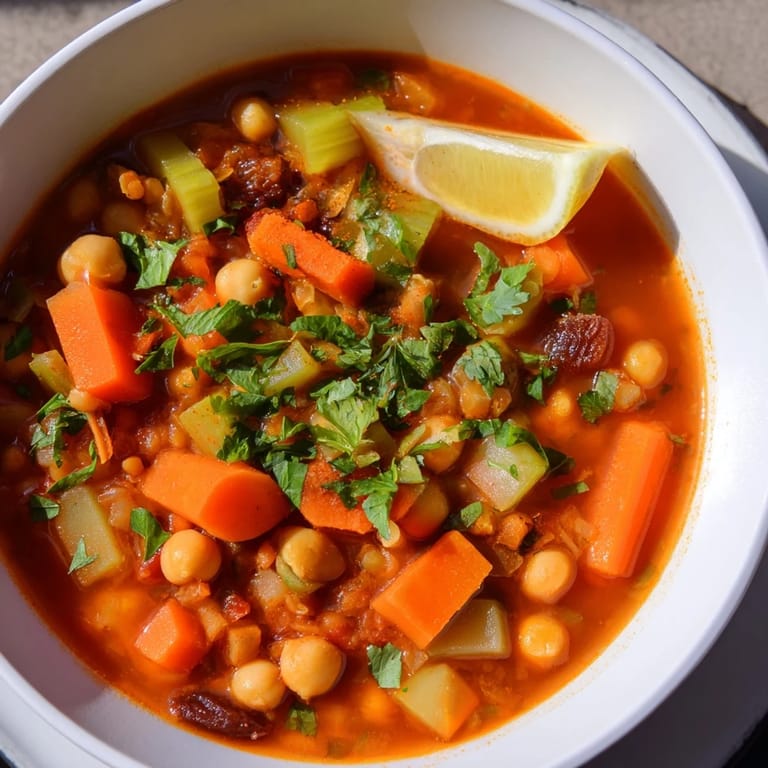
- Onion, celery, and carrots: This holy trio creates the aromatic base that makes people ask what smells so incredible before they even sit down.
- Garlic: Mince it small so it disappears into the soup rather than hitting you with harsh chunks.
- Tomato paste and canned tomatoes: The tomato paste concentrates sweetness and depth, while canned tomatoes provide body without requiring you to blanch fresh ones in boiling water.
- Cumin, cinnamon, ginger, turmeric, and paprika: These five spices are the soul of harira—don't skip any of them, and if possible, buy them whole and toast them briefly to wake up their essential oils.
- Dried apricots: They dissolve slightly into the broth while adding a subtle sweetness that balances the savory elements and spices.
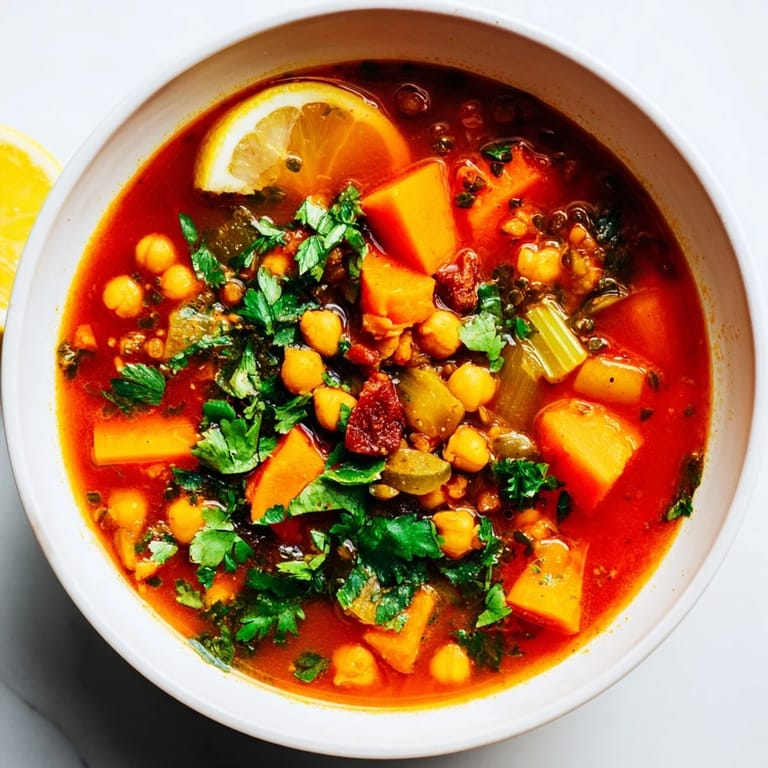
- Fresh cilantro and parsley: Add these at the very end so they stay bright and don't turn into bitter-tasting shadows of themselves.
- Lemon juice: This is the final wake-up call that brings all the other flavors into sharp focus.
- Vegetable broth: Use something with good flavor—homemade is best, but a quality store-bought broth makes a real difference.
Tired of Takeout? 🥡
Get 10 meals you can make faster than delivery arrives. Seriously.
One email. No spam. Unsubscribe anytime.
Instructions
- Start with the aromatics:
- Heat your olive oil over medium heat and add the chopped onion, celery, and carrots. You're looking for that moment when they soften and become translucent—about 6 to 8 minutes—and the kitchen starts smelling like something good is about to happen.
- Toast the spices:
- Once your vegetables have softened, stir in the garlic and all your spices at once. Let them cook for just one minute, stirring constantly, so they release their fragrance and the raw edge disappears.
- Build the base:
- Add the tomato paste first, let it cook for a minute so it loses its tinny taste, then add your chopped tomatoes, chickpeas, lentils, and apricots. Stir everything together so nothing sticks to the bottom.
- The long, slow simmer:
- Pour in your vegetable broth, bring the whole pot to a boil, then lower the heat and let it simmer uncovered for 45 to 50 minutes. Stir it occasionally, mostly just to check on it and inhale the steam—the chickpeas and lentils will gradually soften until they're tender all the way through.
- Finish with brightness:
- Once everything is cooked through, stir in your fresh cilantro, parsley, and lemon juice. Taste it and adjust the salt and pepper—this is your moment to make it sing.
- Optional heartiness:
- If you want a thicker, more substantial soup, stir in some cooked vermicelli or rice right before serving.
 Pin it
 There was an afternoon last winter when I made this soup for my neighbor who was recovering from an illness, and she called me the next day just to say that eating it had made her feel like things might get better. That's when I understood that harira isn't just a recipe—it's a kind of edible comfort, a way of saying someone matters to you without having to say much of anything.
The Story Behind Harira
Harira is the soup of North Africa—particularly Morocco, Algeria, and Tunisia—where it shows up most famously during Ramadan as the first thing people eat when they break their fast at sunset. But it's not just a religious dish; it's what families make when someone needs feeding, what shows up at celebrations, what grandmothers pass down as proof that they care. The balance of spices, the way cinnamon and cumin somehow make each other better, the apricots that whisper sweetness—all of it comes from a tradition of cooks who understood that the best food is food that tells a story. When you make this soup, you're not just following a recipe; you're joining a conversation that spans centuries and borders.
Customizing Your Harira
One of the most beautiful things about harira is how much room it leaves for your own preferences and what's in your pantry. You can adjust the spice level by adding more or less cayenne pepper—some people want harira to warm them from the inside with gentle heat, while others prefer a more pronounced kick. If you're drawn to deeper, earthier flavors, a tiny pinch of saffron or a spoonful of harissa paste transforms the entire character of the soup, though these additions are definitely optional. The vermicelli or rice at the end changes it from a brothier soup to something more substantial and hearty, which matters depending on whether you're serving it as part of a larger meal or as the main event.
Serving and Storage
Harira is best served hot, in bowls deep enough to hold the broth and all the goodness within it, with lemon wedges on the side and extra cilantro scattered across the top. The beauty of this soup is that it actually improves as it sits—the spices continue to develop, the flavors deepen, and the broth becomes richer. Keep it in the refrigerator for up to four days, or freeze it for up to three months, and you'll always have something restorative waiting in your kitchen.
- If you refrigerate harira overnight, the flavors will be even more developed the next day, so don't hesitate to make it ahead.
- To reheat without losing any brightness, add the lemon juice fresh each time rather than letting it sit in the reheated soup.
- Always taste and adjust seasoning when you reheat—sometimes the salt needs a gentle bump after a night in the fridge.
 Pin it
 Making harira is one of those quiet kitchen rituals that reminds you why cooking matters—not because it's complicated or impressive, but because it's genuinely nourishing and genuinely kind. Every time you make it, you're making it a little bit your own.
Recipe FAQ
- → What legumes are used in this Harira?
Chickpeas and lentils form the protein-rich base, creating a hearty texture and earthy flavor.
- → Which spices give Harira its distinctive taste?
Warm spices such as cumin, cinnamon, ginger, turmeric, paprika, and a hint of cayenne provide aromatic and slightly spicy notes.
- → Can this dish be made vegan?
Yes, by using vegetable broth instead of any animal-based stock, the dish easily suits vegan diets.
- → How are dried apricots used in the dish?
Chopped dried apricots add a subtle sweetness balancing the savory and spiced flavors.
- → What vegetables enhance this dish's flavor profile?
Onion, celery, carrots, and garlic provide aromatic depth and contribute to the rich body of the stew.
- → Are there traditional garnishes for this dish?
Fresh cilantro or parsley and lemon wedges brighten the flavors and add freshness at serving.