 Pin it
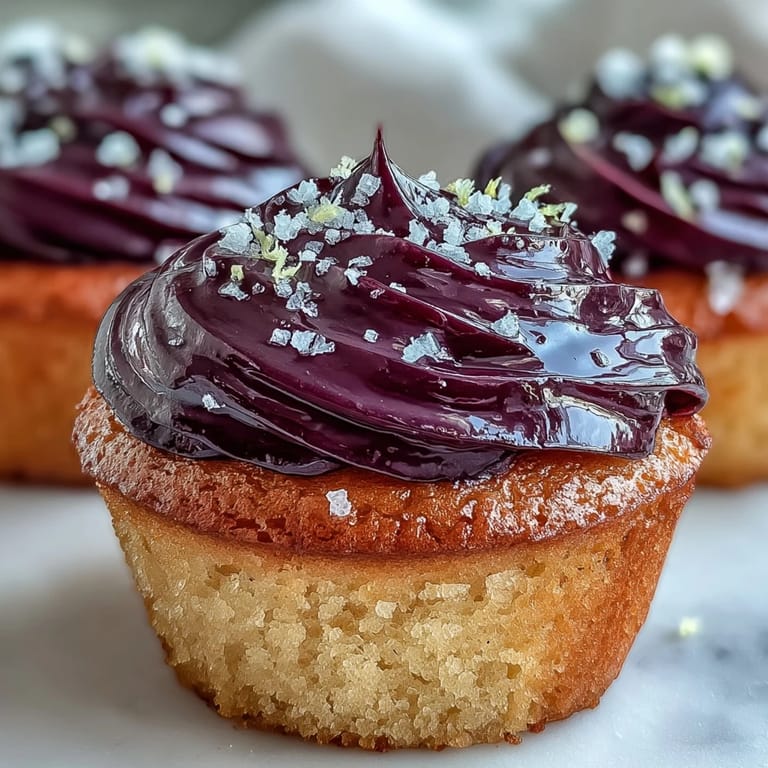
 My neighbor brought over a bottle of excellent olive oil from her trip to Tuscany, and I had no idea what to do with it—baking seemed wild, but then I remembered reading about Italian olive oil cakes. That afternoon, I started experimenting, and the result was these delicate, almost buttery cupcakes that tasted nothing like the dense oil cakes I'd imagined. The black currant frosting happened by accident when I found jam in my pantry and thought, why not lean into something unexpected?
I served these at an afternoon tea party last spring, and watching my friends taste them was the moment I realized this wasn't just another cupcake recipe—it was something that made people pause and actually think about what they were eating. One guest asked if they were from a patisserie, which felt like the highest compliment.
Ingredients
- All-purpose flour: The base that keeps things tender; make sure to measure by weight if possible, as scooping can pack it down too much.
- Baking powder and baking soda: The soda reacts with the acidic elements (buttermilk would work too), while the powder gives you a gentle lift.
- Fine sea salt: A small amount enhances sweetness and balances the richness of the oil.
- Granulated sugar: Creamed with eggs, it traps air and creates that fluffy texture you're after.
- Eggs at room temperature: Cold eggs won't incorporate smoothly, so take them out 20 minutes before you start.
- Extra virgin olive oil: Use something fruity and medium-bodied, not your most expensive bottle—heat can mute delicate flavors anyway.
- Whole milk at room temperature: This keeps the batter from getting shocked by temperature changes.
- Pure vanilla extract: Don't skip this; it grounds all the other flavors.
- Lemon zest: Optional but highly recommended; it adds brightness that plays beautifully with the black currant.
- Unsalted butter for frosting: You need the control of unsalted so the frosting doesn't become too salty.
- Cream cheese, softened: This gives the frosting tang and prevents it from becoming cloying.
- Powdered sugar, sifted: Sifting removes lumps and makes beating smoother.
- Black currant jam or puree: Jam is easier to find; puree makes a slightly smoother frosting.
- Lemon juice: Just enough to cut through the sweetness and echo the brightness in the cake.
Tired of Takeout? 🥡
Get 10 meals you can make faster than delivery arrives. Seriously.
One email. No spam. Unsubscribe anytime.
Instructions
- Heat your oven and prepare:
- Set the oven to 350°F (175°C) and line your muffin tin with paper liners—this prevents sticking and makes serving feel a little fancier.
- Combine the dry team:
- Whisk together flour, baking powder, baking soda, and salt in a medium bowl. This distributes the leavening evenly so every cupcake rises the same way.
- Cream eggs and sugar:
- Beat them together for about 2 minutes until the mixture is pale and fluffy—you're incorporating air, which is essential for tender crumbs. This is easier with an electric mixer, but a hand whisk works too if you have patience.
- Add the olive oil slowly:
- Whisk in the oil gradually while continuing to beat; if you dump it in all at once, the mixture can look separated and greasy. The goal is smooth and emulsified, like a pale mayo.
- Introduce the milk and flavorings:
- Stir in milk, vanilla extract, and lemon zest if using. The milk helps loosen the batter so it's not too thick.
- Fold in the dry ingredients gently:
- This is where patience matters—overmixing develops gluten, which makes cupcakes tough and dense. Fold until you just see no streaks of flour, then stop. A few lumps are fine; they'll smooth out in the oven.
- Fill the liners:
- Divide batter evenly, filling each liner about two-thirds full. Even distribution means they'll bake at the same rate.
- Bake until golden:
- Watch for 16-18 minutes until a toothpick comes out clean and the tops are light golden. They should feel slightly springy when you touch them gently.
- Cool properly:
- Let them sit in the pan for 5 minutes so they set slightly, then transfer to a wire rack. Cooling completely is crucial before frosting or they'll melt it off.
- Make the frosting base:
- Beat butter and cream cheese together until smooth and creamy, with no lumps. This takes about 2-3 minutes on medium speed.
- Incorporate the powdered sugar:
- Add it gradually while beating so you don't create a cloud of sugar dust in your kitchen. Beat until fluffy and light, which happens after another 2-3 minutes.
- Add the black currant character:
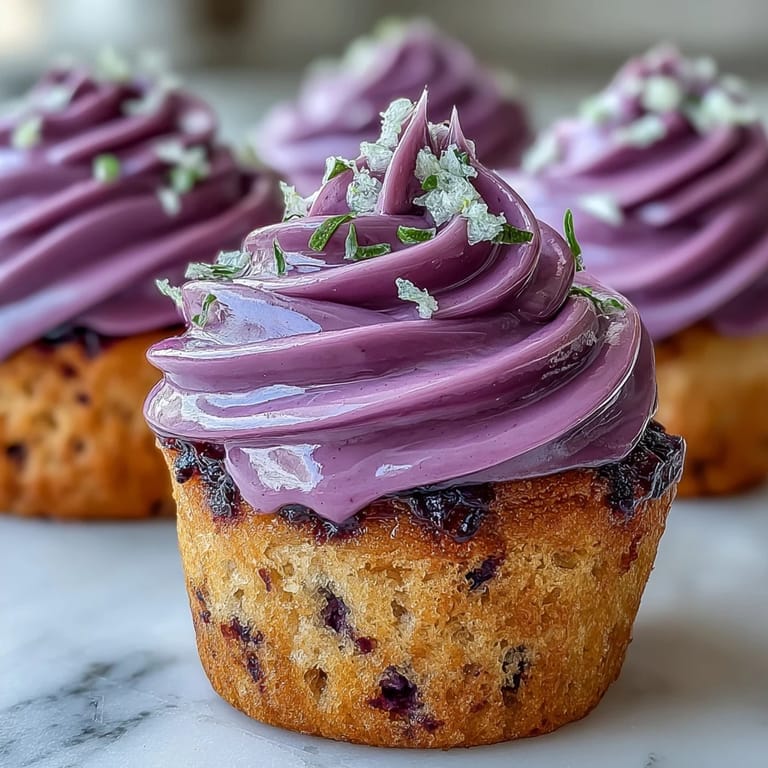
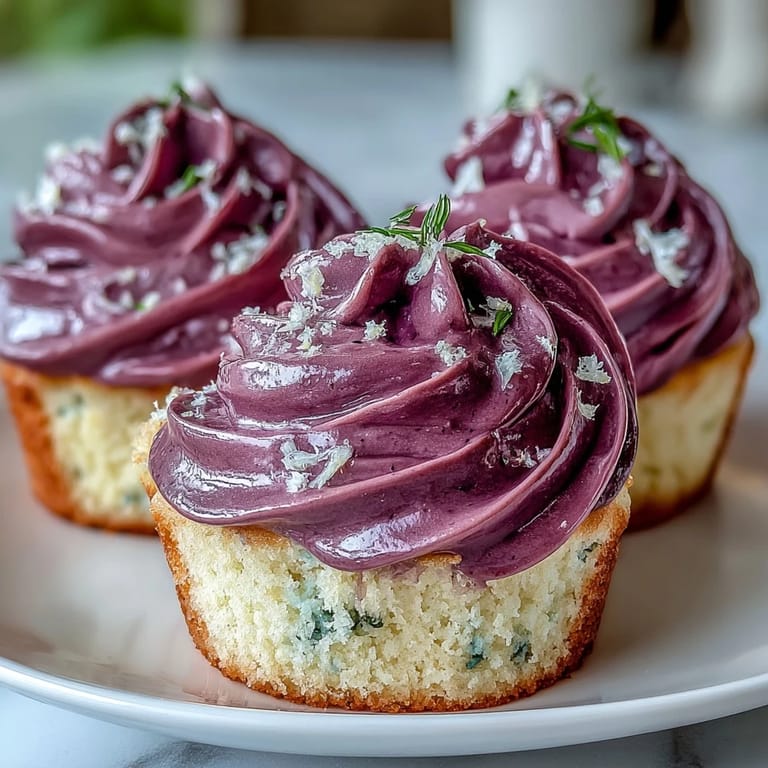
- Mix in the jam, lemon juice, and salt, beating until fully incorporated. The frosting should be spreadable but hold its shape—if it's too soft, chill it for 10 minutes.
- Frost with confidence:
- Spread or pipe the frosting onto cooled cupcakes. A small offset spatula or even the back of a spoon works beautifully.
- Garnish if you like:
- Fresh black currants or a whisper of lemon zest on top makes them look bakery-worthy.
 Pin it
 There's something about serving cupcakes that taste a little fancy without being pretentious—it turns an ordinary afternoon into something memorable. These ones do exactly that.
Why Olive Oil Instead of Butter
When I first saw olive oil in a cupcake recipe, I was skeptical, but there's real chemistry here. Olive oil creates a more tender crumb than butter because it doesn't set as firmly when cooled, and it keeps cupcakes moist longer. The flavor is also different—less heavy, more subtle—which lets the delicate lemon and black currant shine without competition.
The Black Currant and Lemon Connection
Black currant isn't as common in American desserts, so it feels like a discovery every time someone tries it. The tartness balances the sweetness perfectly, and when you add lemon zest to the cake and a touch of lemon juice to the frosting, you create this bright, sophisticated flavor profile that tastes like you spent hours perfecting it. Honestly, you spent maybe 10 minutes mixing.
Storage and Making Ahead
These cupcakes actually improve on day two as the flavors meld and the crumb sets into its softest state—proof that not everything needs to be served fresh from the oven. Keep them in an airtight container at room temperature for up to three days, or refrigerate the frosted cupcakes if you want them to last longer.
- Unfrosted cupcakes can be frozen for up to a month; thaw them at room temperature before frosting.
- The frosting itself keeps in the fridge for about a week, so you could frost cupcakes the day before serving.
- If your frosting gets too soft after frosting, pop the whole batch in the fridge for 15 minutes to set.
 Pin it
 These cupcakes proved to me that sometimes the best desserts are the ones that take a small risk on ingredients and execution. Serve them with tea, sparkling wine, or just the genuine pleasure of knowing you made something worth savoring.
Recipe FAQ
- → Why use olive oil in cupcakes?
Olive oil creates exceptionally moist cupcakes with a tender crumb. Unlike butter, it remains liquid at room temperature, keeping the texture soft for days. A mild extra virgin olive oil adds subtle fruity notes without overwhelming the delicate flavor profile.
- → Can I make black currant frosting from scratch?
Absolutely. Simmer fresh or frozen black currants with a tablespoon of sugar until softened, then strain and cool. Use this puree instead of jam for an intense fresh fruit flavor. You may need to adjust powdered sugar slightly to achieve the right consistency.
- → How should I store these cupcakes?
Store frosted cupcakes in an airtight container at room temperature for up to 2 days. For longer storage, refrigerate for up to 5 days, though bring to room temperature before serving for the best texture and flavor. Unfrosted cupcakes freeze well for up to 3 months.
- → What can I substitute for black currant jam?
Blackberry or raspberry jam work beautifully as substitutes, offering similar tart sweetness. You could also use currant jelly, pomegranate molasses for a deeper flavor, or even lemon curd for a bright citrus variation that complements the olive oil base.
- → Why do the eggs and sugar need beating until pale?
Beating eggs and sugar incorporates air into the batter, creating structure and lift. This step is crucial since olive oil doesn't cream like butter does. The pale, fluffy mixture ensures your cupcakes rise properly and achieve that desirable light, tender texture.
- → Can I make these gluten-free?
Yes, substitute an equal amount of cup-for-cup gluten-free flour blend for the all-purpose flour. The texture will remain quite similar thanks to the moisture from olive oil. Ensure your baking powder is gluten-free as well.