 Pin it
 I discovered the magic of assembled boards by accident one Saturday when friends dropped by unannounced and my planned appetizer fell through. Rummaging through the fridge, I found an odd collection of cured meats, cheeses, and that crusty flatbread I'd grabbed at the market. Instead of panicking, I heated the flatbreads, arranged everything on a wooden board like edible rafts, and watched my guests light up as they built their own bites. That casual improvisation turned into something I now make intentionally, because there's something wonderful about giving people permission to play with their food.
My mom used to host these casual dinner parties where people would hover around the kitchen instead of sitting at the table, and I finally understood why when I served this. There's something about a shared board—the way it invites people to reach, taste, mix flavors, and have conversations while they eat. It became the centerpiece of the evening in a way a plated appetizer never could.
Ingredients
- Flatbreads: Lavash, naan, or sturdy ciabatta work best because they need to hold weight without falling apart; I prefer ones with a bit of char already on them.
- Olive oil: Good quality matters here since it's one of the few things you taste directly on the bread.
- Garlic clove: Just one minced clove perfumes the entire flatbread without overwhelming it.
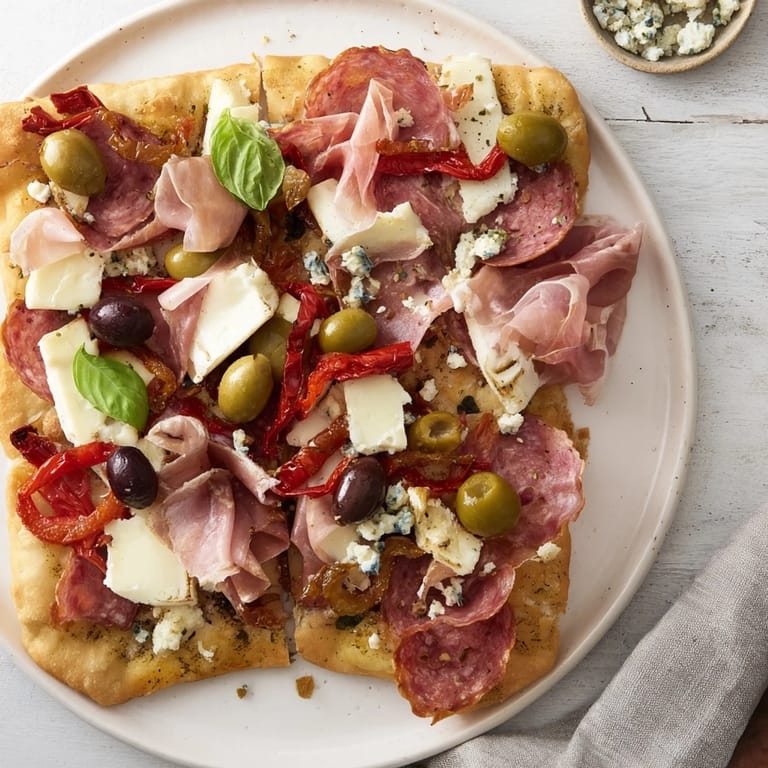
- Prosciutto, salami, smoked turkey, and soppressata: Buy them sliced thin so they drape elegantly and don't feel heavy on each bite.
- Brie, aged cheddar, manchego, and blue cheese: The variety is the whole point—soft, sharp, nutty, and pungent all on one board.
- Grapes, cherry tomatoes, olives, roasted red peppers: These aren't just decoration; they cut through the richness and add brightness to each forkful.
- Fresh basil and honey: Basil gives a pop of green and herbal freshness, while honey or fig jam adds an unexpected sweetness against the savory meats.
Tired of Takeout? 🥡
Get 10 meals you can make faster than delivery arrives. Seriously.
One email. No spam. Unsubscribe anytime.
Instructions
- Get your oven ready:
- Preheat to 200°C (400°F) so the flatbreads warm through and get just slightly crisp at the edges.
- Oil and flavor the flatbreads:
- Brush each one with olive oil and scatter minced garlic across the surface, then let them warm in the oven for 5 to 7 minutes until they smell incredible and feel a little toasted.
- Set your stage:
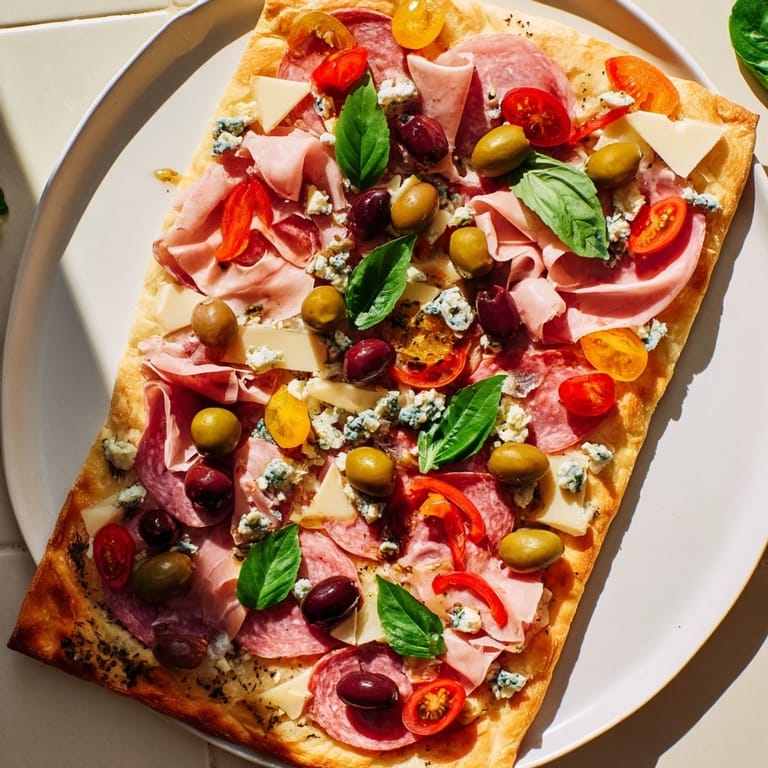
- Arrange the warm flatbreads on a large wooden board or platter with a little space between them—you want them to look like actual rafts with room to load cargo.
- Layer with intention:
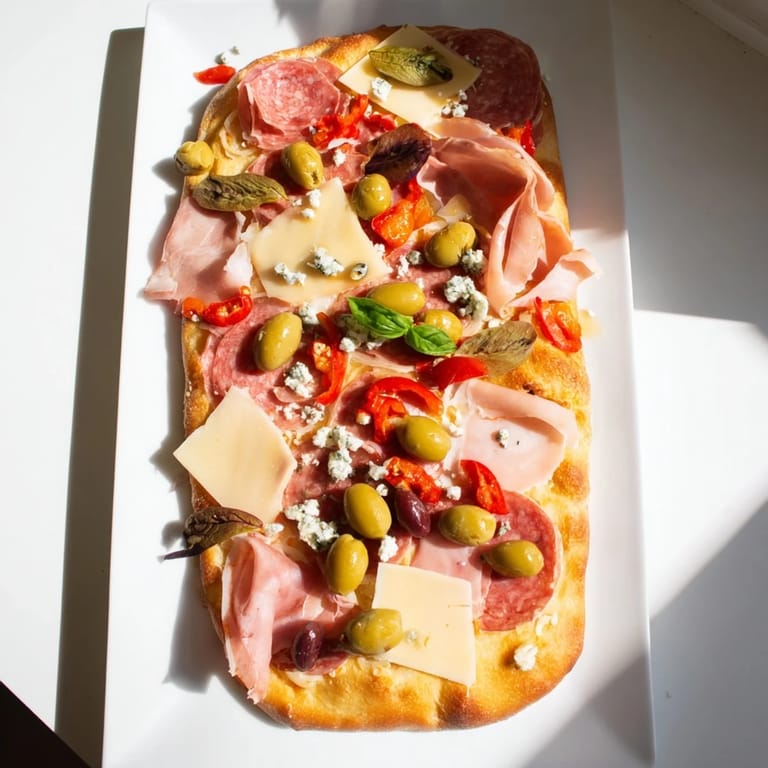
- Drape the meats and cheeses across each flatbread in an alternating pattern so it's both stunning and easy to grab pieces of everything at once.
- Fill the gaps:
- Cluster the grapes, tomatoes, olives, and peppers in the spaces between the flatbreads, treating the whole board as one composed landscape.
- Finish and serve:
- Scatter fresh basil leaves across everything, set small bowls of honey and fig jam nearby, and encourage people to break off pieces of flatbread with their chosen toppings as they eat.
 Pin it
 There was a moment when a quiet friend who usually sits in the corner suddenly started describing flavor combinations to the person next to her, and I realized that good appetizers are really about creating conversation. This board did exactly that.
Why This Board Format Works
The beauty of this approach is that it removes the anxiety from entertaining. You're not trying to balance flavors on a single crostini or plate something that looks restaurant-perfect. Instead, you're creating a landscape where every person finds their own perfect bite, whether that's blue cheese with honey, or prosciutto wrapped around a roasted pepper. The flatbreads act as edible vessels that hold everything together literally and figuratively.
Making It Your Own
I've made this with completely different ingredients depending on what was available or what I was excited about that week. Manchego doesn't have to be manchego; any semi-firm, nutty cheese works. The olives can be swapped for pickled onions or capers. Grapes are lovely, but sliced pears or fresh figs create a different mood entirely. The confidence comes from understanding the principle: you want contrast in texture, temperature, and flavor across the board.
Timing and Presentation Tips
The secret to looking effortless is actually being organized beforehand. Have all your ingredients prepped and arranged before guests arrive so you can simply assemble moments before serving. I like to warm the flatbreads right as people are settling in so they're still slightly warm when they start eating. The board itself becomes part of the presentation, so choose one you like looking at; I use an old wooden cutting board that's seen a thousand gatherings.
- If you want to make this ahead, assemble everything except the basil, which should be added just before serving so it doesn't wilt.
- Consider pairing this with something to drink—a crisp white wine or light-bodied red makes the whole experience feel intentional.
- This scales beautifully; make two boards for a dinner party or triple the recipe for a larger crowd.
 Pin it
 This board has taught me that some of the best entertaining happens when you stop trying so hard and instead build something people want to gather around. It's become my favorite way to say hello to friends.
Recipe FAQ
- → What type of flatbreads work best?
Rectangular flatbreads like lavash, naan, or ciabatta provide a sturdy base and crisp nicely when brushed with olive oil and baked.
- → Can the meats and cheeses be substituted?
Yes, feel free to swap meats and cheeses based on preference or availability to customize flavors and textures.
- → How should the flatbreads be served?
Serve the flatbreads on a large board spaced apart with the toppings layered on top and fresh accompaniments filling gaps for a beautiful presentation.
- → What accompaniments complement the flatbreads?
Seedless grapes, cherry tomatoes, marinated olives, roasted red peppers, and fresh basil leaves add freshness and balance rich toppings.
- → Are there suggestions for adding texture?
Adding nuts such as Marcona almonds or pickled vegetables introduces extra crunch and flavor contrasts to the dish.