 Pin it
 I still remember the first time I decided to stop arranging a cheese board like everyone else. I was hosting a small dinner party, standing in my kitchen with an armful of beautiful aged cheeses, when it hit me: why arrange them flat and ordinary when I could build something architectural, something guests would actually gasp at? That afternoon, inspired by a hike through mountain valleys just weeks before, I started stacking wedges vertically, clustering fruits in the gaps, and suddenly my cheese board became a landscape. My guests didn't just eat from it—they explored it, discovering flavor combinations they never would have found on a flat plate. That moment changed how I think about entertaining.
I'll never forget my friend Sarah's face when she walked into my living room and saw this landscape for the first time. She stood there, mouth open, before saying, "Did you make this or is it edible art?" We spent the whole evening just building combinations—someone discovered that Manchego with apricots and rosemary was their new favorite, another friend mixed Gorgonzola with walnut and honey and declared it life-changing. That board brought us closer than a normal appetizer ever could.
Ingredients
- Aged Manchego, 150 g, cut into tall irregular chunks: This is your workhorse mountain. Manchego has just enough sharpness without being aggressive, and its firm texture actually holds a point. Cut pieces taller rather than wider—height is everything here.
- Parmigiano-Reggiano, 150 g, broken into rugged shards: I learned to break this rather than cut it. Those natural fractures look more dramatic and the irregular edges catch light beautifully. Buy it as a wedge and let it rest 20 minutes before breaking.
- Aged Cheddar, 150 g, sliced into tall triangles: Choose a really aged one—the harder the better for stacking. The color adds warmth to your landscape.
- Brie, 100 g, cut into thick wedges: Soft cheeses are your "hills"—they nestle between the mountains and create flow. Don't slice Brie thin; give it presence.
- Gorgonzola, 100 g, broken into rustic pieces: The blue veining adds visual drama and a sharp note that makes people come back for more. It's the secret weapon of the board.
- Red grapes, 1 cup, halved: Halving them lets the juice catch light. Arrange in small clusters like they naturally grew there.
- Cherry tomatoes, 1 cup, halved: The flat side down creates little pools of color in your valleys. Pick ones that are still slightly firm.
- Cucumber, 1 small, sliced into rounds: These become little green stepping stones. Slice them just before serving so they stay crisp.
- Apple, 1 small, thinly sliced: I learned to toss mine in a tiny bit of lemon juice to keep them from browning. A crisp variety like Honeycrisp or Granny Smith works better than soft apples.
- Dried apricots, 1/2 cup: The jewel tones add unexpected color and their sweetness balances aged cheeses perfectly.
- Roasted almonds, 1/2 cup: These become "boulders" scattered around. Unsalted is better so they don't compete with the salty cheeses.
- Walnuts, 1/2 cup: Slightly earthy, slightly bitter—they make you notice the sweetness of fruits and honey more.
- Baguette slices, 12, thin: Toast them lightly if you're making the board more than an hour ahead. They stay crisp longer and look more intentional.
- Assorted crackers, 12: Pick ones with real flavor—seeded varieties, herb crackers, thin wheat crackers. Bland crackers have no place here.
- Honey, 2 tbsp: Drizzle it just before serving. I've learned that honey pooled on the board rather than on cheese stays visible and creates little flavor surprises.
- Fresh rosemary sprigs: Don't underestimate this. The aroma and visual texture make this feel like an actual landscape.
Tired of Takeout? 🥡
Get 10 meals you can make faster than delivery arrives. Seriously.
One email. No spam. Unsubscribe anytime.
Instructions
- Prepare Your Base:
- Start with a large wooden board or platter—wood is essential here. It's your canvas. If it's new, let it breathe a bit, or wipe it with a barely damp cloth and let it dry completely. You want any moisture out of the way.
- Build Your Mountains:
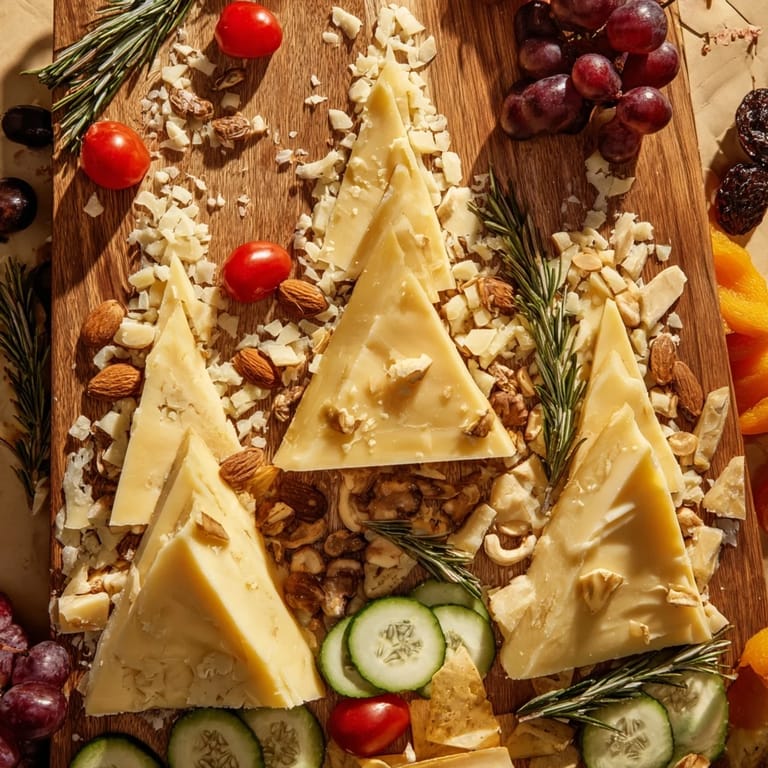
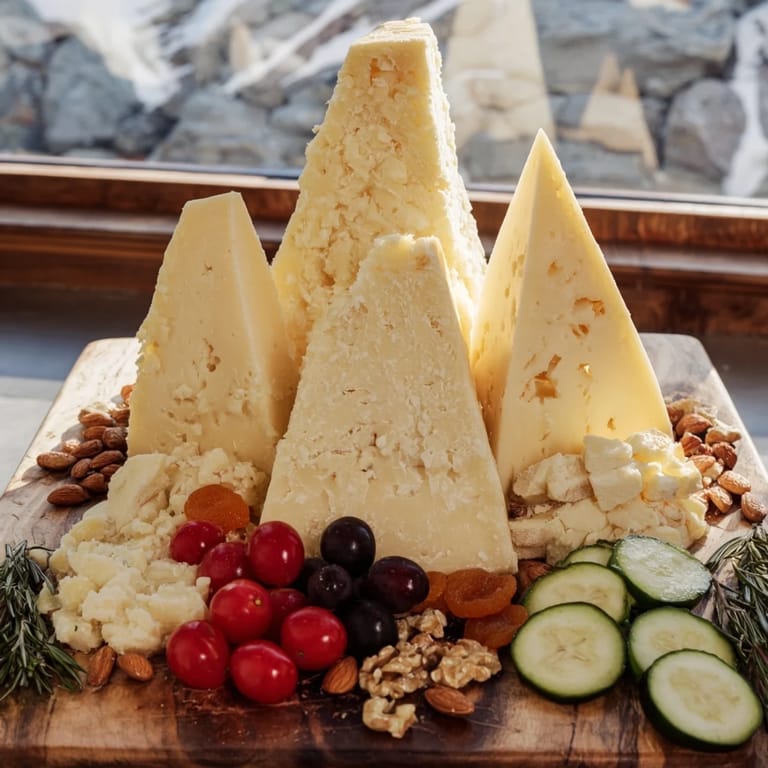
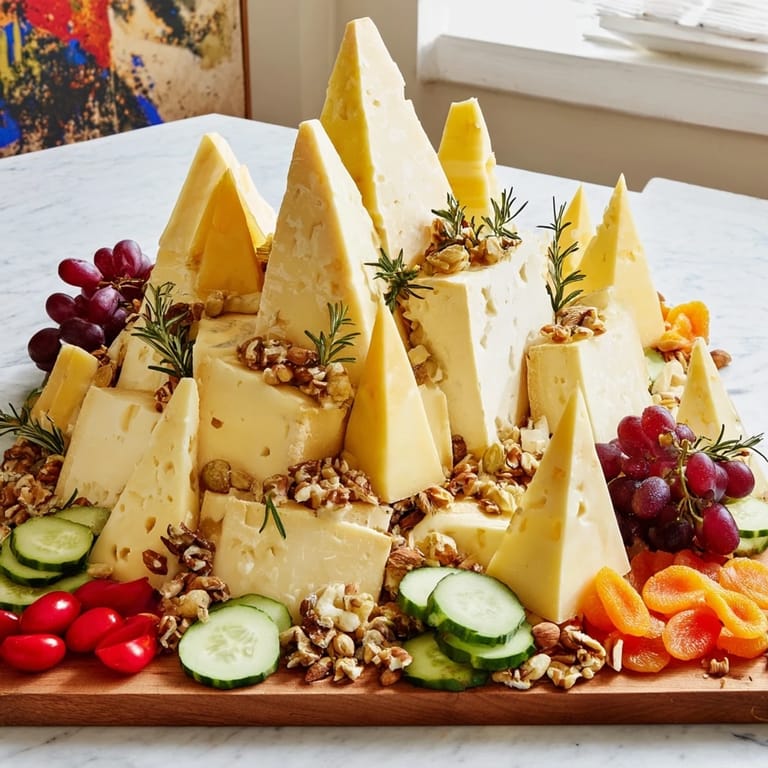
- Arrange those hard cheese chunks standing tall and slightly leaning. Think of them as rocky peaks competing for height. Manchego, Parm, and aged Cheddar should each claim their own territory, creating a skyline effect. Don't space them evenly—let them feel natural and dramatic.
- Add Your Hills:
- Now nestle the soft cheeses—your Brie and Gorgonzola—around the base of those mountains. They should look like they're gathered in the foothills, not hidden away. Let some tumble slightly, creating folds and shadows.
- Fill the Valleys:
- This is where it gets fun. Fill the lower spaces with your grapes, tomatoes, cucumber, apple, and apricots. Think about color distribution—you want red, green, and golden tones balanced across the landscape. Cluster grapes together, scatter tomatoes, create little apple fans. This isn't random; it's thoughtful but playful.
- Scatter the Boulders:
- Sprinkle almonds and walnuts around like stones that tumbled down a mountainside. Some can nestle between fruits, others can sit independently. This adds both visual texture and a place for people's eyes to rest between the cheese mountains.
- Create Your Paths:
- Arrange baguette slices and crackers along the edges and between groupings. These are the paths guests will travel as they build their combinations. Lean some slightly, prop others against cheese peaks. They should feel like invitations to explore.
- Add the Magic:
- Here's the moment it transforms: drizzle honey in two or three small pools on the board—not on the cheese necessarily, but nearby. Then tuck those rosemary sprigs throughout, like little green trees in your landscape. Step back. It's done.
- Serve with Intention:
- Bring it out and let people come to it. Don't try to explain it. Just watch their faces as they realize they get to explore, to build flavors, to make this edible landscape their own.
 Pin it
 What I love most about this board is that it changed how my friends and I talk about food. Instead of "pass the cheese," someone says, "Let's build something together." It became less about eating and more about creating, collaborating, and discovering. That shift—where food becomes an experience rather than consumption—that's when you know you've created something meaningful.
The Cheese Selection Philosophy
I used to think the key to a great cheese board was having as many varieties as possible. Then I learned that composition matters more than quantity. Hard cheeses bring structure and age-developed complexity. Soft cheeses bring indulgence and approachability. Together they tell a complete story. The aged Manchego and Parm are your anchors—they're the cheeses people trust immediately. The Cheddar adds familiarity. The Brie and Gorgonzola are your conversation starters. When someone tries Gorgonzola with walnut and honey for the first time, they taste three decades of tradition in one bite. That's the power of knowing your cheese.
Building Flavor Combinations
The beauty of this landscape approach is that it reveals unexpected pairings. Hard aged cheeses become richer when paired with the sharp astringency of grapes. Soft Brie becomes transcendent with a bit of apricot and honey. Gorgonzola, which some people find intimidating, suddenly feels approachable when you pair it with walnut's earthiness and honey's sweetness. I've watched guests navigate this board and discover their own favorite combinations—and those discoveries become the moments they remember. The landscape gives structure, but the combinations are theirs to discover.
Making This Landscape Yours
The beauty of this recipe is that it's a framework, not a prescription. Once you understand the principle—hard cheeses as mountains, soft cheeses as foothills, fruits and nuts filling the valleys, bread and crackers as paths—you can build with whatever you have. Maybe you love Gruyère instead of Manchego. Maybe you'd add prosciutto for your non-vegetarian version, draping it like ribbons between the peaks. Maybe you'd add edible flowers for an unexpected garden moment. Each time you build one of these landscapes, you're creating something that's both intentional and uniquely yours.
- Temperature matters: serve this at room temperature for maximum flavor, pulling it together just before guests arrive
- Balance your board by color and texture, creating visual rhythm that naturally guides where people look and reach
- Honey drizzled just before serving creates surprise moments—someone finds a little pool of sweetness and remembers this board forever
 Pin it
 This board is more than cheese and fruit—it's an invitation to slow down and explore together. It's the appetizer that becomes the whole point of the gathering.
Recipe FAQ
- → How do I achieve the sculptural look with cheeses?
Arrange tall, irregular chunks of firm cheeses vertically to mimic mountain peaks, while placing softer cheeses around their base to create smooth hills, achieving depth and dimension.
- → What fruits and vegetables complement this cheese arrangement?
Use halved red grapes, cherry tomatoes, cucumber rounds, thin apple slices, and dried apricots to add fresh, vibrant valleys and slopes with varied colors and textures.
- → How can I add texture and crunch to the platter?
Scatter roasted almonds and walnuts throughout the board to resemble natural boulders while adding satisfying crunch and nutty flavors.
- → What breads work best for this cheese display?
Thin baguette slices and an assortment of crackers arranged along the edges simulate paths and plateaus, providing crisp bases for tasting.
- → Any finishing touches to enhance flavors and presentation?
Drizzle honey in small pools or over select cheeses and tuck fresh rosemary sprigs into the board to add subtle sweetness and herbal aroma.