 Pin it
 The first time I made Thai green curry soup, I wasn't aiming for authenticity—I was desperate to recreate that perfect bowl I'd ordered from a cramped Bangkok-style restaurant tucked between a laundromat and a phone repair shop. The broth was impossibly silky, bright with basil, and just spicy enough to make your eyes water a little. I went home and threw together what I remembered: curry paste, coconut milk, whatever vegetables were lurking in my crisper drawer. It wasn't fancy, but something about that first spoonful—the way the heat built slowly, the way cilantro and lime cut through the richness—made me understand why people chase flavors across the world.
I made this for my roommate during a cold snap when she came home sick from work, and watching her face light up when that first warm spoonful hit—the way she closed her eyes and just breathed in the steam—reminded me that good food isn't about impressing people with technique. It's about knowing when someone needs something hot and alive and a little bit spicy to feel human again.
Ingredients
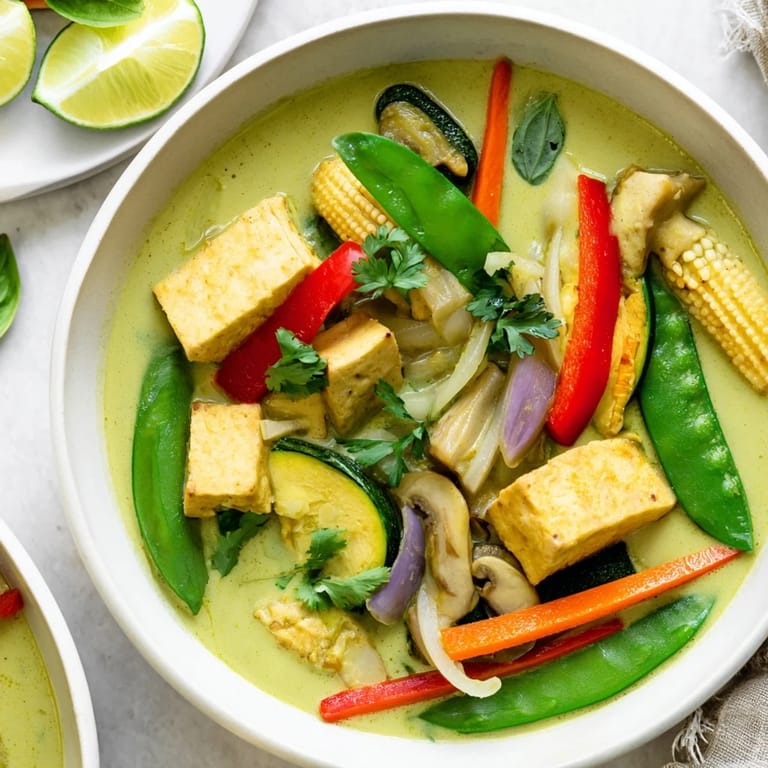
- Firm tofu or chicken breast: Tofu soaks up the curry beautifully and stays silky, while chicken gives you that familiar comfort—both work, so choose based on what you're craving.
- Green curry paste: This is your flavor shortcut, and honestly, store-bought is fine; don't feel pressured to make it from scratch unless you're already there.
- Coconut milk: The full-fat version is richer and more luxurious, but light works if you want something less heavy.
- Fish sauce: I know it smells funky in the jar, but trust it—just a tablespoon is enough to add depth without making the soup taste fishy.
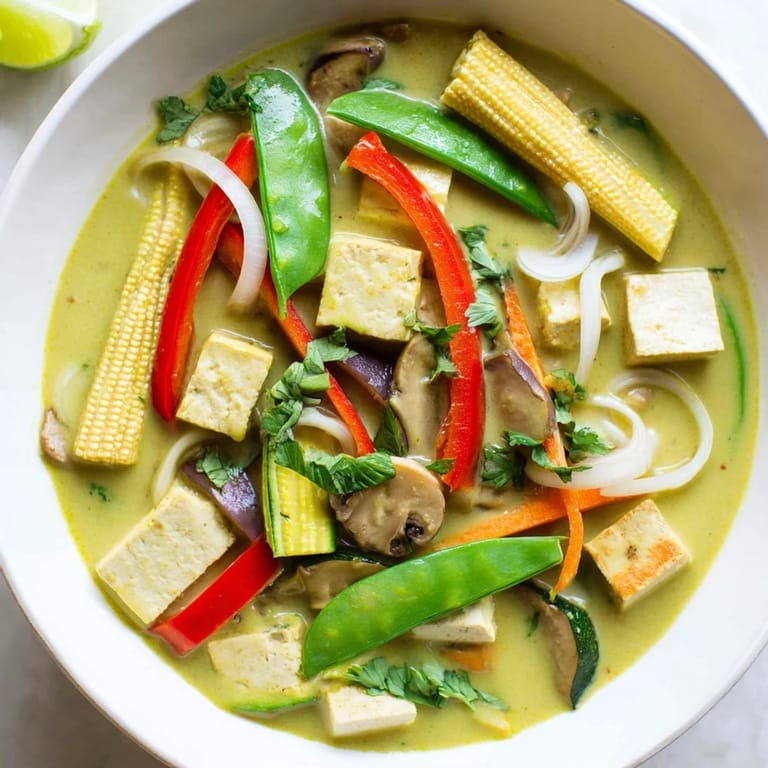
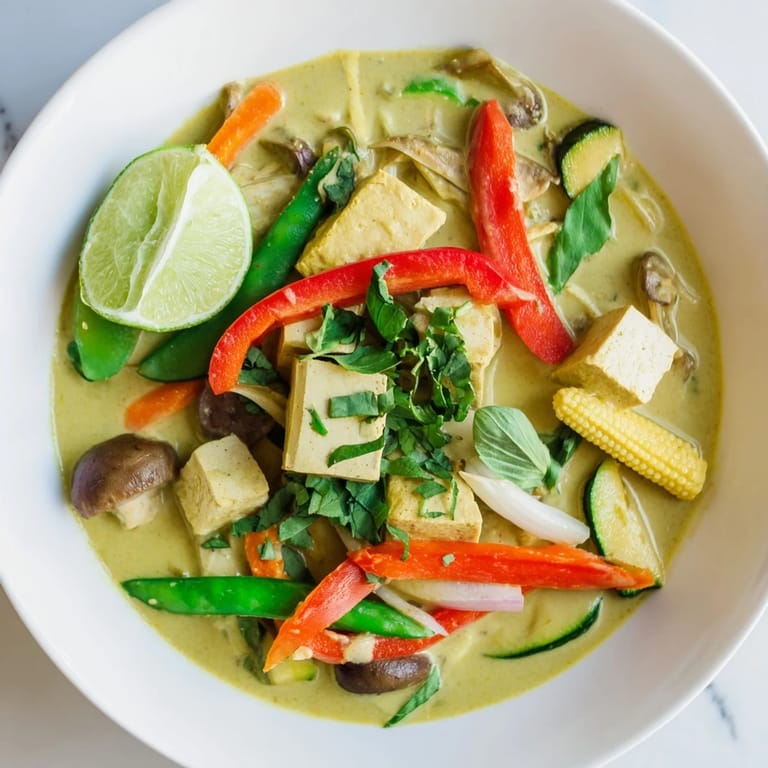
- Fresh vegetables: The red pepper and snap peas stay crisp-tender, while the mushrooms and zucchini soften and absorb the curry—use this to your advantage depending on your texture preference.
- Fresh cilantro and Thai basil: These aren't optional garnishes; they're the final note that makes everything sing together.
- Lime wedges: A squeeze of lime at the end brightens everything and cuts through the richness in a way nothing else can.
Tired of Takeout? 🥡
Get 10 meals you can make faster than delivery arrives. Seriously.
One email. No spam. Unsubscribe anytime.
Instructions
- Toast the paste:
- Heat oil in your pot and let the curry paste sit for a minute or two until it smells almost spicy-sweet—this wakes up the flavors instead of just dispersing them into the liquid.
- Build the base:
- Soften the onions, then add your protein, letting it start cooking before the liquid goes in so it has a chance to brown slightly and develop some texture.
- Simmer gently:
- Once coconut milk and broth go in, keep the heat medium so bubbles just break the surface—aggressive boiling breaks up tofu and toughens chicken.
- Time the vegetables:
- Add heartier vegetables first, then delicate ones like snap peas near the end so nothing gets mushy; you want each bite to have texture.
- Season as you go:
- Fish sauce and sugar balance the heat and richness—add them, taste, and adjust before serving rather than overcorrecting at the table.
 Pin it
 My friend asked me once why I always finish the soup with a squeeze of lime, and I realized I'd never really thought about it—I just knew that without it, something felt incomplete, like a song in a minor key. The lime doesn't make it taste like lime; it just makes every other flavor in the bowl more itself, more true somehow.
Choosing Your Protein
Tofu has this quiet elegance—it absorbs the broth like a sponge and stays pillowy even after simmering, so if you're looking for something that melts into the curry, this is it. Chicken gives you something more familiar and hearty, with a bit more texture, though you need to be careful not to overcook it or it becomes stringy. I find myself alternating depending on the season and what I'm in the mood for, but both are equally valid choices, and the soup tastes distinctly wonderful either way.
Adapting to What You Have
The vegetable list looks specific, but honestly, it's more of a suggestion than a rule. I've made this with broccoli and cauliflower when carrots weren't around, thrown in snow peas instead of snap peas, used whatever mushrooms showed up at the market. The soup always comes together because the coconut and curry paste are forgiving enough to carry almost any combination. The only thing I'd say is avoid super watery vegetables like cucumber or tomato, since they'll dilute the broth and make the whole thing thin and sad.
This soup tastes even better the next day, when the flavors have had time to get to know each other and the broth deepens into something even more complex. It keeps in the fridge for three or four days, though the vegetables do get softer each day—something to keep in mind if you're meal-prepping. If you're freezing it, do it without the basil and cilantro, then add those fresh when you reheat.
- Reheat gently on the stove over medium heat to keep the coconut milk from breaking.
- A fresh squeeze of lime and a handful of basil makes leftover soup taste almost like the first time again.
- Serve with jasmine rice or noodles if you want something more substantial, or keep it as a light soup course on its own.
 Pin it
 This soup has become one of those dishes I return to again and again, not because it's complicated or showy, but because it's exactly what I want when I want comfort that doesn't feel heavy, warmth that feels alive. That's the mark of a good recipe, I think—not the one you make once and photograph, but the one you make so often you stop thinking about the steps.
Recipe FAQ
- → What proteins work best in this green curry soup?
Firm tofu or boneless chicken breast are ideal, offering texture and flavor that absorb the curry well.
- → Can I adjust the spice level?
Yes, add more green curry paste or fresh sliced chili to increase heat according to your preference.
- → What vegetables are typically included?
Red bell pepper, zucchini, baby corn, snap peas, mushrooms, carrot, and onion provide a colorful, fresh mix.
- → Is it necessary to use fish sauce?
Fish sauce adds depth and umami, but soy sauce can be substituted for a vegetarian or vegan version.
- → How can I make it gluten-free?
Use gluten-free soy sauce or omit soy sauce entirely to maintain gluten-free standards.
- → What garnishes enhance the flavors?
Fresh cilantro, Thai basil leaves, lime wedges, and optional sliced red chili brighten and complement the dish.