 Pin it
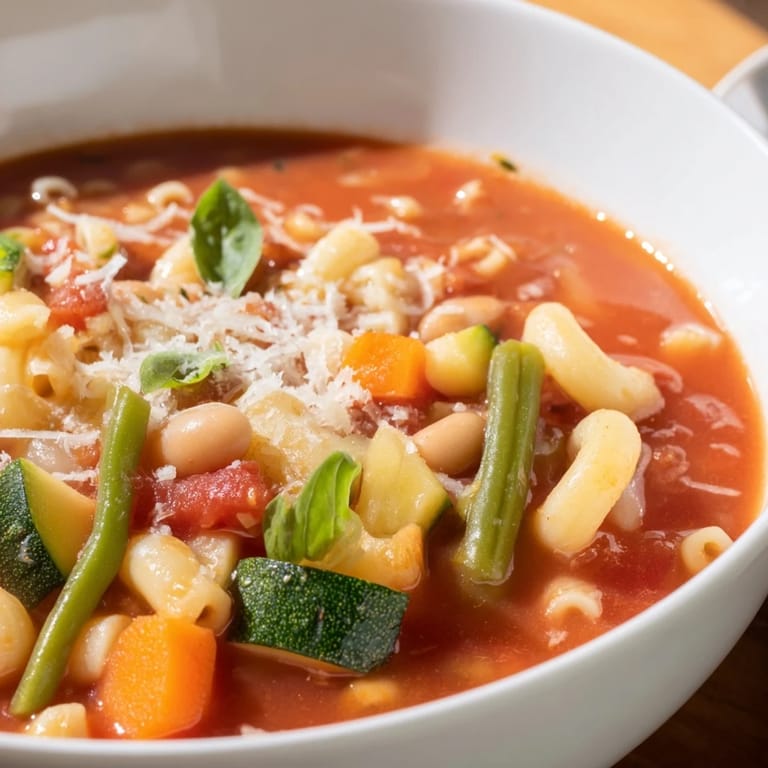
 There's something about the smell of sautéed onions, carrots, and celery hitting the kitchen that instantly feels like home, no matter what time of year it is. I discovered this tomato basil minestrone on a chilly afternoon when I had a handful of vegetables that needed using and absolutely no desire to overthink dinner. What started as a quick way to clear out the crisper drawer became the soup I find myself making on autopilot whenever the seasons shift, especially when someone needs comfort in a bowl. It's the kind of soup that tastes like it took hours but comes together in less than an hour, which never stops feeling like a small victory.
I made this for a friend who'd just moved into a new apartment with nothing but take-out containers in her kitchen, and watching her face light up when she realized homemade soup could be this straightforward was worth every chopped vegetable. She's made it seventeen times since then, which tells you everything about how deeply this recipe settles into your cooking rotation once you've made it once.
Ingredients
- Olive oil: The fat that carries the flavor from those first softer vegetables into everything else, so don't skip it or use something timid.
- Onion, carrots, and celery: This holy trinity is the flavor foundation, and yes, they really do matter more than you think.
- Garlic: Minced finely so it melts into the broth rather than leaving harsh chunks that feel aggressive.
- Zucchini and green beans: Fresh vegetables that keep things light and add texture against the softness of the beans.
- Diced and crushed tomatoes: Two cans because you want both the chunks and the smooth tomato essence throughout.
- Vegetable broth: The liquid backbone that should taste good enough to sip on its own, so pick a brand you actually like.
- Oregano, thyme, salt, and pepper: The seasoning blend that transforms tomato broth into something that tastes intentional and layered.
- Tomato paste: A concentrated burst of tomato depth that ties everything together.
- Small pasta: Ditalini or elbow works best because the shapes catch the broth and won't overpower the vegetables.
- Cannellini beans: They dissolve slightly at the edges while staying whole, adding body and protein without any fanfare.
- Fresh basil and parsley: These go in at the very end so they taste bright and alive, not cooked into obscurity.
- Parmesan cheese: Optional, but it's the whisper at the end that makes people say your soup tastes like a restaurant made it.
Tired of Takeout? 🥡
Get 10 meals you can make faster than delivery arrives. Seriously.
One email. No spam. Unsubscribe anytime.
Instructions
- Build your base:
- Heat the olive oil and add your diced onion, carrots, and celery, letting them soften for five minutes over medium heat. You'll know they're ready when the onion starts to turn translucent and the kitchen smells like the beginning of something good.
- Add the tender vegetables:
- Stir in the garlic, zucchini, and green beans, cooking for just three minutes so they soften but don't start to dissolve. The garlic should be fragrant but not brown.
- Marry the broth:
- Pour in both cans of tomatoes, the vegetable broth, tomato paste, and all your dried herbs and seasonings, stirring until the tomato paste dissolves completely. Bring everything to a boil, watching as the liquid deepens in color and the kitchen fills with tomato and herb steam.
- Let it simmer:
- Turn the heat down and let the pot bubble gently for fifteen minutes, uncovered, so the flavors have time to get to know each other. This is when you can step away and do something else, knowing the soup is doing its job.
- Add the pasta and beans:
- Stir in your pasta and drained cannellini beans, simmering for another ten to twelve minutes until the pasta is soft but not mushy. Taste as you go because this is when you'll know if you need more salt.
- Finish with fresh herbs:
- Pull the pot off the heat and stir in your chopped basil and parsley, letting them bloom in the residual heat. Taste again, adjust salt and pepper if needed, and you're done.
 Pin it
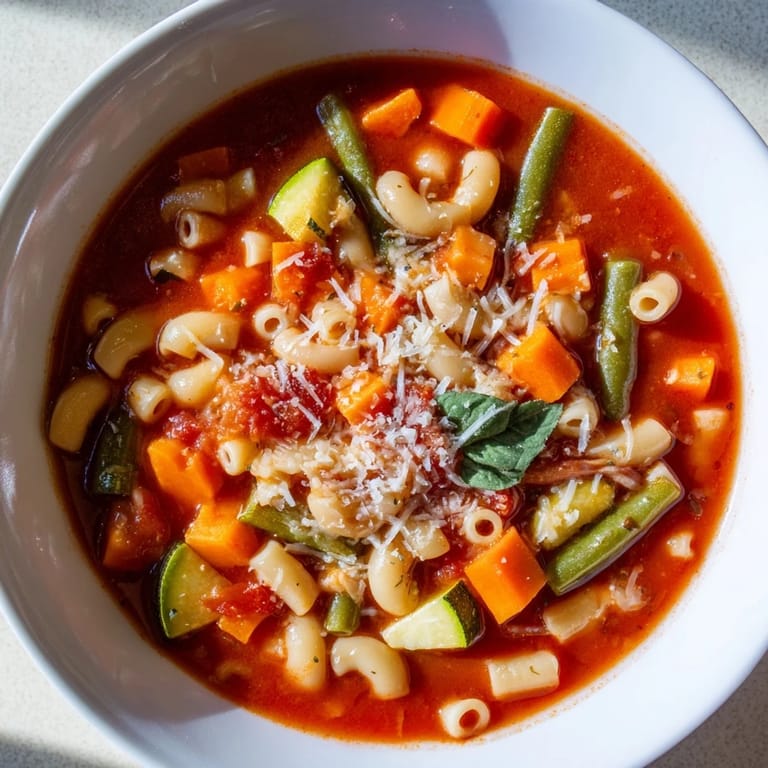
 This soup is at its absolute best on a day when you're not rushing, when you can pour a bowl and actually sit down with it instead of eating at your desk. There's something grounding about a spoon moving through vegetables and broth, something that feels like taking care of yourself in the quietest possible way.
The Flexibility Factor
One of the greatest gifts of this soup is that it doesn't demand perfection or specific vegetables. Running low on green beans? Use snap peas. Fresh spinach in the fridge? Throw a handful in at the end. This soup is forgiving in the way that proves home cooking doesn't need to be rigid to be delicious. I've made it with kale, with leftover roasted broccoli, with that random half-zucchini that's been taking up space. Each version tastes like itself while still tasting unmistakably like minestrone.
Serving and Storing
This soup loves being paired with something crusty to soak up the broth, and a hunk of good bread transforms it from meal into experience. The beauty of minestrone is that it stores beautifully in the refrigerator for three or four days, and it reheats without any fussing around. You can also freeze it, though I often find I make another batch before I remember the frozen one exists.
Variations Worth Trying
Once you've made this once or twice and it feels like yours, you can start playing with it in ways that feel natural. Some people add a parmesan rind to the broth for extra richness, or a pinch of balsamic vinegar at the end for subtle sweetness. Others swear by a splash of red wine or a handful of diced fennel. There's also the vegan route, which is just omitting the cheese and works beautifully because the soup is already so flavorful on its own.
- For a heartier version, add white beans or chickpeas alongside the cannellini beans.
- A slow simmer with the pasta on the stove while you're doing other things somehow makes it taste even better.
- Leftover soup freezes perfectly and actually tastes richer the second time around, as if the flavors needed time to settle.
 Pin it
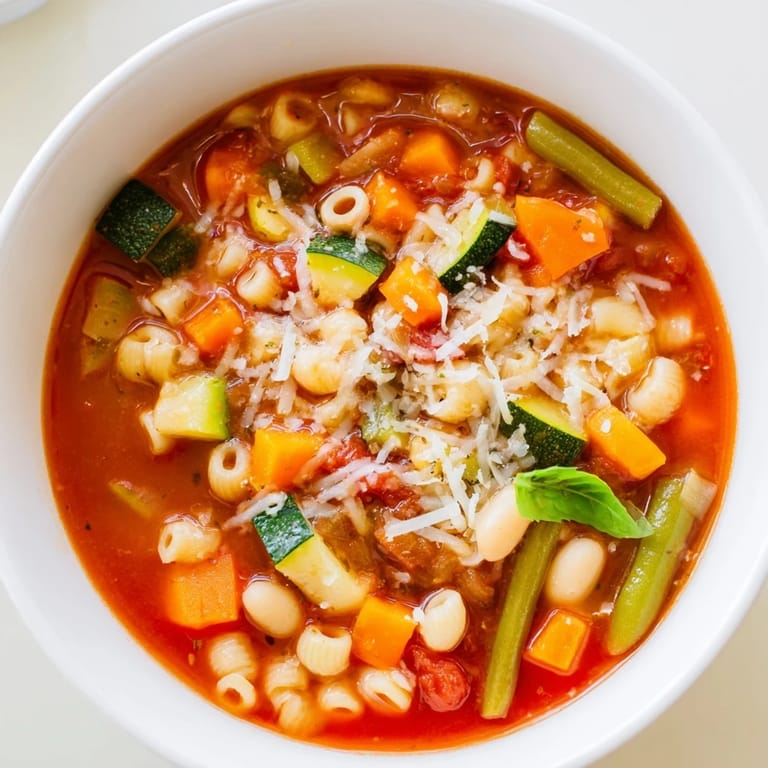
 This minestrone is the kind of recipe that grows more meaningful the more you make it, becoming less about following instructions and more about the rhythm of your own hands moving through the cooking. That's when you know a recipe has become truly yours.
Recipe FAQ
- → What pasta types work best in this dish?
Small-shaped pasta like ditalini or elbow macaroni works well, allowing even cooking and perfect texture.
- → Can I use fresh tomatoes instead of canned?
Yes, fresh diced tomatoes can be used but may require longer simmering to develop the rich broth flavor.
- → How do I make this dish vegan?
Skip the Parmesan cheese and ensure your pasta is egg-free to keep it fully plant-based.
- → Can I add other vegetables to the soup?
Absolutely! Spinach or kale added near the end boost nutrition and add vibrant greens to the dish.
- → Is it possible to prepare this ahead of time?
Yes, flavors deepen after resting. Refrigerate and reheat gently, adding extra liquid if needed.