 Pin it
 There's something magical about watching a grazing board come to life, and I discovered the waterfall effect completely by accident. I was arranging ingredients for a dinner party when my hand slipped, and a slice of prosciutto tumbled over the edge of the board—and instead of salvaging it, I thought, what if I leaned into the chaos? Within minutes, I'd transformed a traditional spread into something theatrical and alive, with cheeses cascading like a frozen waterfall and fruits scattered across the table like nature's own abundance spilling over.
I made this for my sister's engagement announcement, and the way everyone gathered around it told me something had shifted—they weren't just eating, they were participating in an experience. Someone laughed when they reached down to grab a walnut from the table, another person dared to stack crackers vertically like an edible tower, and suddenly the board became less about sustenance and more about connection and play.
Ingredients
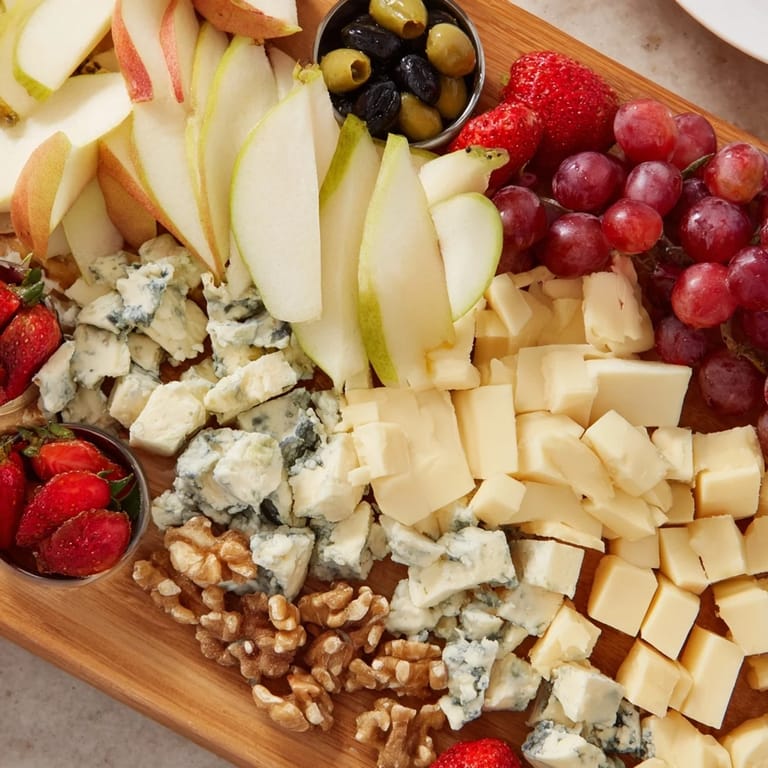
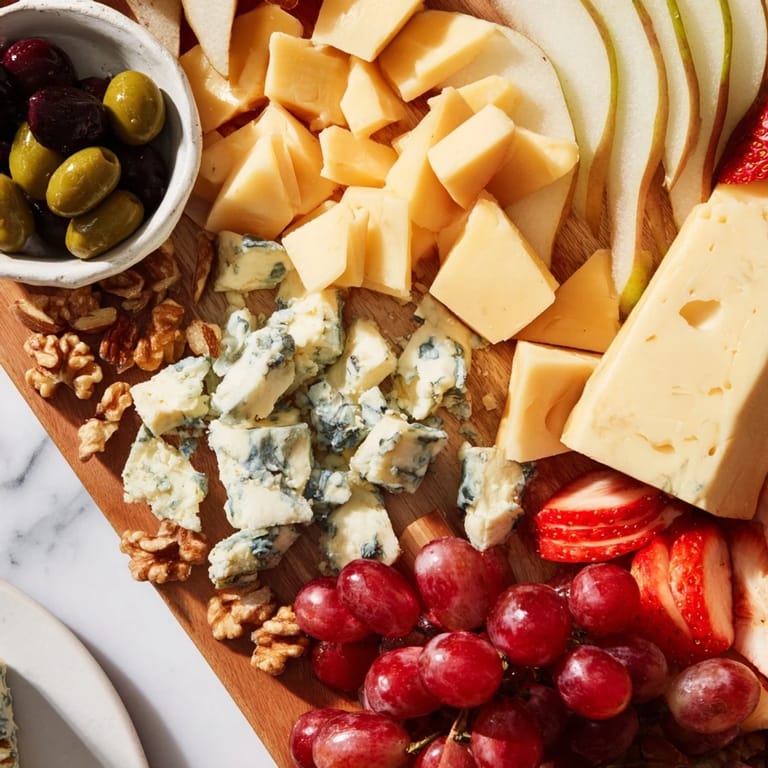
- Brie, sliced (150 g): The silky, approachable cheese that melts slightly at room temperature and pairs with literally everything—it's your anchor ingredient.
- Aged Cheddar, cubed (150 g): Adds a sharp, textured contrast that keeps things interesting across bites.
- Blue cheese, crumbled (100 g): I learned the hard way that a little blue cheese goes a long way, so don't be tempted to pile it higher than this.
- Goat cheese, sliced (100 g): Tangy and creamy, it becomes the unexpected favorite for most guests.
- Prosciutto (100 g): Drape it loosely rather than folding it tight, so it catches the light and looks elegant.
- Salami, sliced (100 g): The texture and color add visual depth to your cascading layers.
- Red grapes in small clusters (1 cup): Leave them in clusters rather than separating each grape—they're sturdier and look more abundant.
- Strawberries, halved (1 cup): Slice them no more than an hour before serving to avoid weeping.
- Blueberries (1/2 cup): These little orbs are perfect for filling gaps and catching light between other ingredients.
- Pear, thinly sliced (1): Slice just before assembly and toss lightly with lemon juice to prevent browning.
- Dried apricots (1/2 cup): Their jewel-like color becomes one of your board's visual anchors.
- Dried figs, halved (1/2 cup): Figs add an unexpected sophistication and their dark color contrasts beautifully with lighter elements.
- Almonds (1/3 cup): Toast them lightly if you want to deepen the flavor, or keep them raw for a delicate crunch.
- Walnuts (1/3 cup): The slightly bitter earthiness balances sweet dried fruits and rich cheeses.
- Baguette, sliced and toasted (1): Toast just enough to make it sturdy without making it inedible—you're going for crispy, not brittle.
- Assorted crackers (150 g): Choose shapes that vary so you can stack them creatively; some standing upright, some lying flat.
- Honey (1/4 cup): Place it in a small bowl so guests can drizzle it over cheese, and don't be surprised when it becomes the most-used item on your board.
- Fig jam (1/4 cup): Another small bowl situation—it's the sweet bridge between cheese and bread.
- Mixed olives (1/4 cup): Scatter them along the edge and onto the table for pops of color and brine.
- Fresh herbs—rosemary and thyme: Small sprigs add fragrance and visual interest, and people often eat them alongside other ingredients.
Tired of Takeout? 🥡
Get 10 meals you can make faster than delivery arrives. Seriously.
One email. No spam. Unsubscribe anytime.
Instructions
- Set your stage:
- Position your board near the table's edge with a clear drop-off zone, as if you're intentionally inviting everything to spill. This small act of intention changes the whole energy of the arrangement.
- Build the cheese waterfall:
- Arrange cheese slices and cubes in overlapping layers starting from the board's center and working toward the edge, letting several pieces extend past the boundary intentionally. The layering matters—stack them loosely so light plays between the pieces.
- Add the cured meats:
- Fold prosciutto gently so it drapes like fabric, positioning it to flow over and beside the cheese, toward the table's surface. Salami can be rolled or fanned out, whatever creates the most dynamic visual.
- Scatter the fresh fruit:
- Nestle grape clusters and strawberry halves throughout, making sure some tumble visibly over the edge as if gravity is gently coaxing them. The arrangement should feel abundant but not overcrowded at this stage.
- Tuck in the dried fruits and nuts:
- Distribute these along both the board and the table below, filling pockets and creating texture contrast. Think of this as seasoning the space rather than filling it.
- Position crackers and toasted bread:
- Place some vertically to lean dramatically, stack a few horizontally, and let several rest at angles as if they've started their descent. Variety in positioning is what creates the visual drama.
- Place the liquid components:
- Set small bowls of honey, jam, and olives on the board, with intentional drips or scattered elements leading down to the table. These finishing touches catch light and draw the eye downward, reinforcing the waterfall concept.
- Finish with fresh herbs:
- Tuck sprigs of rosemary and thyme into pockets throughout the arrangement for color, fragrance, and visual softness. They're the final touches that make it feel intentional rather than random.
- Serve with intention:
- Encourage guests to grab from both the board and the table below, reminding them there's no wrong way to approach it. This permission transforms the eating experience from passive to participatory.
 Pin it
 What surprised me most wasn't that people loved eating from this board, but that it became a permission structure—permission to eat with their hands, to reach across the table, to try combinations they might not have ordered at a restaurant. It transformed the meal from something served to something participated in, and that shift is everything when you're trying to bring people together.
Making It Your Own
The beauty of this board is that it's as much about your preferences as it is about the waterfall concept. I've made versions where I skipped certain cheeses to make room for fresh mozzarella and roasted peppers, and other times I doubled down on the dried fruits because a friend mentioned they were craving something sweet. The structure stays the same—the dramatic cascading arrangement—but the cast of characters changes based on who's coming and what feels right in the moment.
Timing and Preparation Strategy
The magic of this board is that it looks far more involved than it actually is—30 minutes is genuinely all the hands-on time you need. I learned to prep everything in separate bowls the morning of, then assemble in those final 30 minutes while I'm showering and changing, which means I can hand guests a stunning centerpiece and not look flustered or overworked. The real time investment is thinking about positioning and color flow, and once you've arranged a board or two, your eye develops and the process becomes almost meditative.
Dietary Adaptations and Variations
I've built vegan versions of this board that honestly rival the traditional ones, swapping in cashew cheese, marinated tofu strips, and doubling down on nuts and dried fruits for richness. The waterfall effect works the same way regardless—it's about visual drama and abundance, not specific ingredients. I've also made versions where I added dark chocolate squares tucked between cheeses, or candied nuts scattered throughout, and each time the board tells a slightly different story while maintaining its architectural integrity.
- For vegan adaptations, focus on texture variety through nuts, seeds, and plant-based cheeses that hold their shape.
- Consider the season—in fall, add roasted vegetables or candied pecans; in spring, fresh herbs become more prominent.
- If you're serving a crowd with mixed preferences, use the vegan ingredients strategically so they enhance rather than segregate the board.
 Pin it
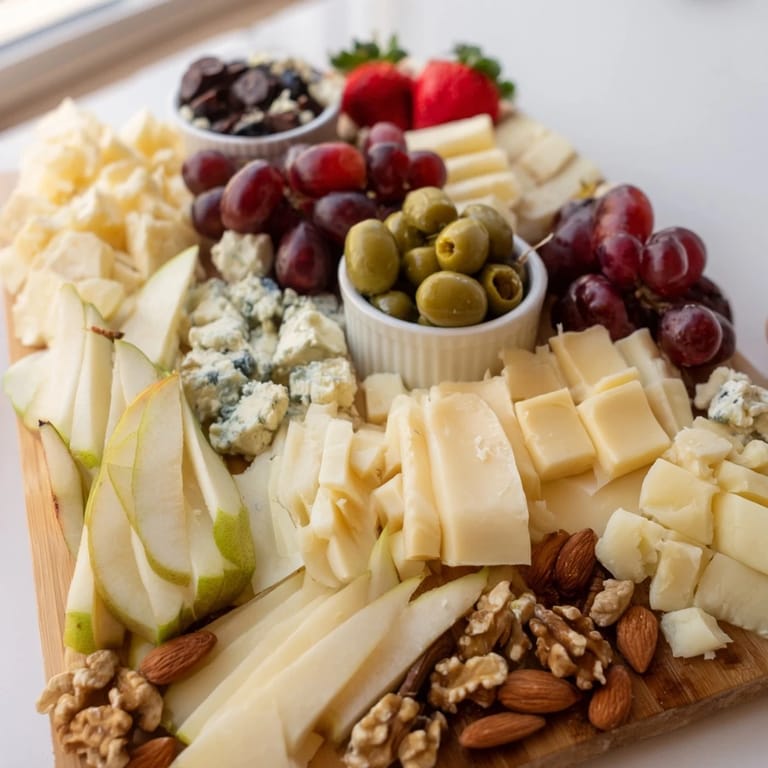
 This board isn't just about feeding people; it's about creating a moment where gathering and abundance feel like the same thing. Once you've built one, you'll find yourself reaching for this approach again and again.
Recipe FAQ
- → How do I achieve the cascading waterfall effect?
Arrange cheeses and accompaniments close to the board's edge, letting some pieces extend past the boundary. Add fruits and nuts spilling onto the table to enhance the cascade impression.
- → Can this board be adapted for vegans?
Yes, substitute plant-based cheeses and omit cured meats. Adding chocolate pieces or candied nuts adds sweetness for a vegan-friendly version.
- → What accompaniments pair well with this grazing board?
Honey, fig jam, olives, and fresh herbs like rosemary and thyme add flavorful and colorful accents to balance the board.
- → How should crackers and bread be arranged?
Slice and toast baguette pieces and place crackers vertically and horizontally in stacks or leaning positions to simulate falling elements.
- → What tools make assembling easier?
Use a large wooden or marble board, small bowls for dips, cheese knives for slicing, and serving tongs to arrange and serve the ingredients.
- → Any tips for easy cleanup after serving?
Place parchment or butcher paper under the table area to catch fallen ingredients and simplify cleanup.