 Pin it
 I discovered this arrangement one quiet afternoon while organizing my kitchen, almost by accident. There's something about the stillness of a long board that made me want to fill it with intention rather than chaos. I started placing ingredients—a cucumber here, a grape there—and suddenly I understood what the Japanese call ma, that meaningful emptiness. Two perfect halves facing each other across a void became a conversation between simplicity and balance. It felt less like plating and more like meditation on a board.
The first time I served this to friends, I watched them hesitate before touching it—that split second of respect before hunger wins. One person actually walked around the board three times, studying how the almonds mirrored the grapes on the opposite side. That's when I realized this wasn't just food; it was a small moment of slowness in a fast world, and they felt it too.
Ingredients
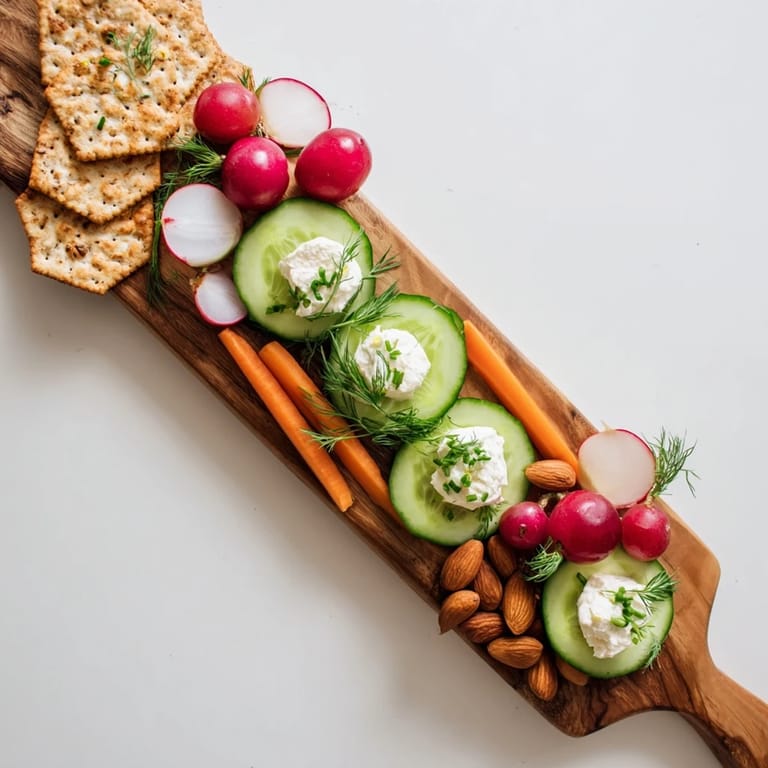
- Fresh cucumber: Waxy Persian cucumbers hold their shape better than English varieties, and slicing them on a slight bias catches light beautifully.
- Baby carrots: Look for ones with greens still attached if possible—the color contrast is worth hunting for.
- Radishes, halved: Their peppery bite and shocking pink color are what make people reach for them first, so pick firm ones without soft spots.
- Goat cheese: Warm it slightly between your palms to shape it into balls—it's forgiving and holds its form once it cools back down.
- Gluten-free crackers: Choose ones with interesting texture or a subtle flavor so they're not just edible architecture.
- Roasted almonds: The roasting is already done, but toasting them gently for a minute in a dry pan wakes up their nutty warmth.
- Seedless red grapes: Their sweetness is the quiet counterpoint to everything salty and earthy on the board.
- Fresh herbs: Chives offer a mild onion whisper, while dill brings an almost floral note—pick whichever speaks to your mood.
Tired of Takeout? 🥡
Get 10 meals you can make faster than delivery arrives. Seriously.
One email. No spam. Unsubscribe anytime.
Instructions
- Find your canvas:
- Choose a wooden or slate board at least 60 cm long and arrange it where light can play across the surface. A clean board becomes your stage, so take a moment to wipe it down and feel the cool surface under your hands.
- Build the first side:
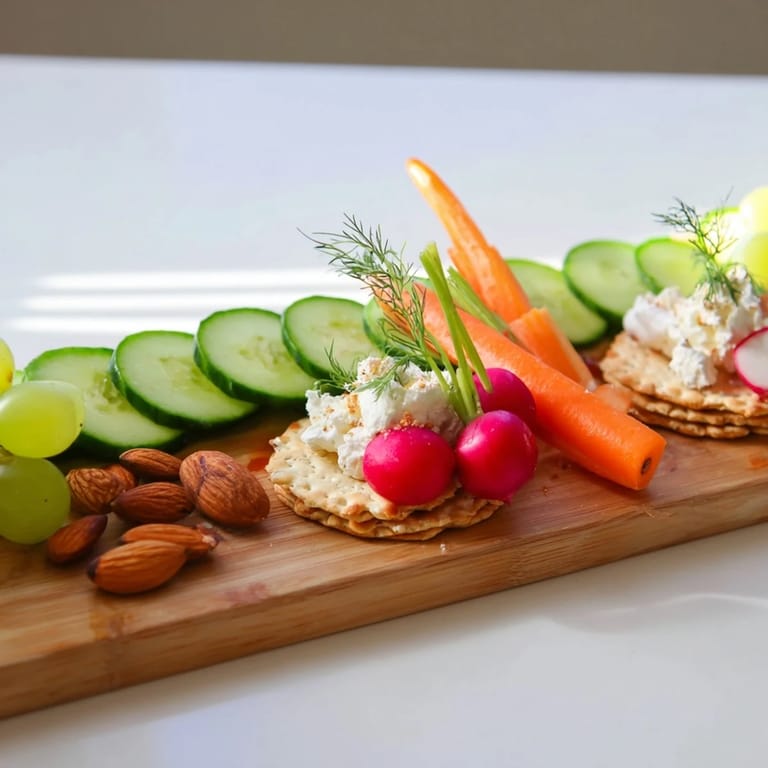
- Start at one end by laying down cucumber slices in a loose row—they're your foundation. Layer in the other vegetables and cheese nearby, nestling them so each ingredient feels deliberate rather than scattered, then distribute half your almonds and grapes in pockets throughout.
- Mirror with intention:
- Move to the opposite end and recreate that exact same arrangement using your remaining ingredients. Step back and adjust until the two piles feel like they're having a quiet conversation across the empty space between them.
- Add the finishing breath:
- Tuck sprigs of fresh herbs into both arrangements—not hidden, but placed where their color and scent announce themselves. The empty board between the two sides is as important as what's on it, so resist the urge to fill that space.
- Serve with reverence:
- Present the board as you would a piece of art, then invite people to eat slowly and notice how the flavors and textures speak to each other.
 Pin it
 Someone once told me they'd never really looked at a radish before this board. They sat there examining how light moved through the thin red layers, and I realized we'd created permission for them to slow down. That's the real recipe here—not the ingredients, but the pause they invite.
The Art of Empty Space
In traditional Japanese design, the concept of ma—the emptiness that defines form—is considered as important as the objects themselves. That central void on your board isn't laziness or an accident; it's the breathing room that makes the two sides feel intentional rather than just crowded. When you leave it empty, you're saying something about restraint and balance that full coverage could never achieve.
Pairing and Serving Moments
This platter works best as a prelude to something, not as the main event—it's the opening note of a meal, designed to slow people down before they're fed. A crisp white wine like Sauvignon Blanc cuts through the richness of the cheese and almonds while echoing the freshness of the vegetables. If you're serving this at a gathering, place the board on a low table where people can gather around it, because the real pleasure is in the looking as much as the eating.
Variations and Seasonal Thinking
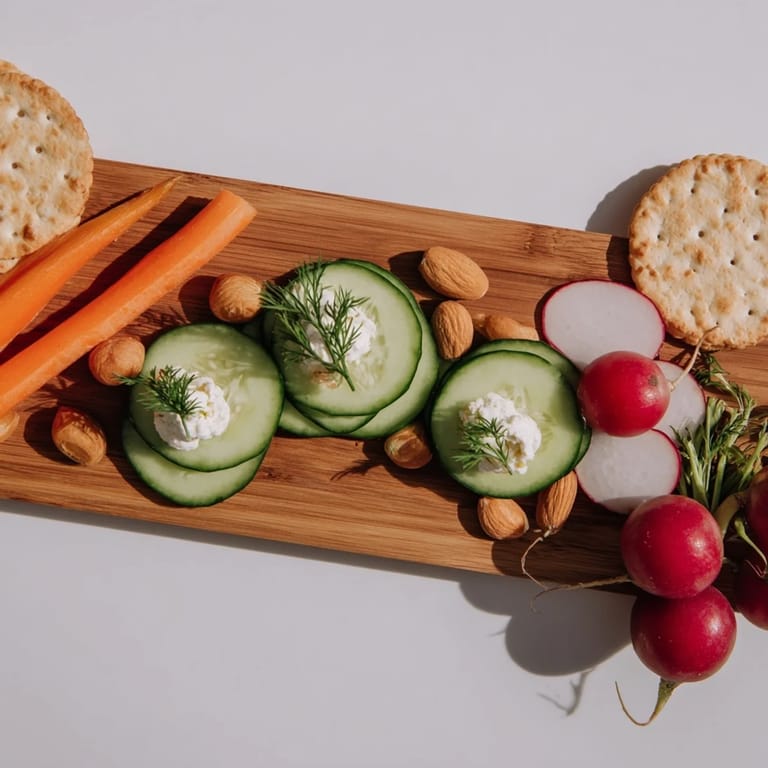
Winter calls for roasted beets instead of radishes, autumn asks for toasted walnuts in place of almonds, and spring begs for fresh peas and tender asparagus tips. The structure stays the same—perfect symmetry, meaningful emptiness, two sides in conversation—but the seasons rewrite the ingredients and you become a curator of what's at its peak. This is how a recipe stops being a fixed thing and becomes a practice, a way of paying attention to what the moment offers.
- For vegan versions, cashew cream shaped into balls mimics goat cheese perfectly while keeping the aesthetic intact.
- Try adding a small dish of fleur de sel and cracked pepper in the center space—guests can season as they like, and it adds another layer of intentionality.
- Always double-check that your crackers are truly gluten-free if that matters to your guests, because one overlooked label ruins the whole offering.
 Pin it
 This dish teaches you that not every meal needs to be loud or complicated to matter. Sometimes the most nourishing thing you can offer is the simple act of arrangement, the proof that someone took time to think about beauty and balance for you.
Recipe FAQ
- → How do I achieve the balanced presentation?
Arrange the ingredients at opposite ends of a long board in mirrored piles, leaving the center empty to emphasize symmetry and visual harmony.
- → Can I substitute the goat cheese for a vegan alternative?
Yes, plant-based cheese works well to maintain the creamy texture while keeping the presentation intact.
- → What kinds of nuts are suitable for this platter?
Roasted almonds are used here for their crunch and flavor, but other roasted nuts like walnuts or cashews can add variety.
- → Which fresh herbs complement this dish best?
Chives and dill are excellent choices as they add subtle aroma and enhance the freshness without overpowering other elements.
- → Is this platter gluten-free?
It is gluten-free when using certified gluten-free crackers—always check labels to ensure safety.
- → What drink pairs well with this arrangement?
A crisp white wine such as Sauvignon Blanc perfectly complements the freshness and light flavors of this platter.