 Pin it
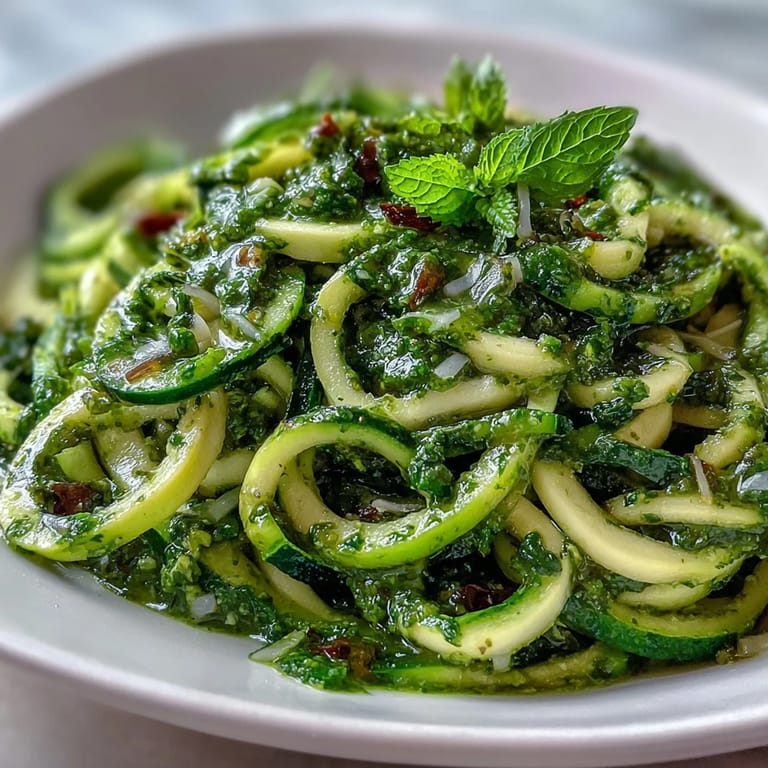
 Last summer, my neighbor handed me a spiralizer with a sheepish grin and said, "I bought this on a whim, but you'll actually use it." She was right, and that's when zucchini noodles stopped being a trendy thing I read about and became something I craved on hot afternoons. The first time I tossed them with homemade pesto, the smell of fresh basil hitting the warm zucchini felt like someone had bottled sunshine in my kitchen. It's become my go-to meal when I want something that tastes indulgent but leaves me feeling light, and it's fast enough for weeknight dinners when everything else feels too complicated.
I made this for my sister during her visit last spring, and she ate it so quietly I thought something was wrong until she asked for the recipe before dessert even arrived. That moment taught me that food doesn't need to be complicated to impress people, and sometimes the best meals are the ones that let the ingredients speak for themselves. Since then, it's become the dish I make when I want to show someone I care without spending hours in the kitchen.
Ingredients
- Fresh zucchinis: Use medium ones so the noodles aren't watery; oversized zucchini hold too much moisture and turn mushy when cooked, which I learned the expensive way.
- Fresh basil leaves, packed: This isn't the time to use dried herbs or whatever's been sitting in your spice cabinet for months, so splurge on a good bunch from the farmers market.
- Pine nuts: They toast slightly as you pulse them and add a buttery richness that makes the pesto feel luxurious, though walnuts are a budget-friendly swap.
- Extra-virgin olive oil: The quality matters here since there's nowhere for mediocre oil to hide when it's one of only five main ingredients.
- Parmesan cheese, grated: Please grate it yourself; pre-grated cheese has anti-caking agents that turn your pesto grainy instead of silky.
- Garlic clove: One is plenty because pesto builds flavor quickly, and you can always add another if you're feeling bold.
- Lemon juice: This brightens everything and keeps the pesto from feeling heavy, plus it prevents browning if you need to make it ahead.
Tired of Takeout? 🥡
Get 10 meals you can make faster than delivery arrives. Seriously.
One email. No spam. Unsubscribe anytime.
Instructions
- Build your pesto foundation:
- Combine basil, Parmesan, pine nuts, and garlic in a food processor and pulse until everything is roughly chopped but still has some texture. This usually takes 10-15 pulses, and you'll see the basil start to break down and release its fragrance.
- Emulsify with oil and lemon:
- With the processor running, drizzle in the olive oil slowly while watching the mixture transform into something silky and cohesive. Once it comes together, add the lemon juice and taste it, then season generously with salt and pepper.
- Spiralize your zucchini:
- Cut your zucchini into 4-inch lengths and run them through the spiralizer, or use a julienne peeler if you don't have one. Set the noodles aside on paper towels for a minute to let any excess moisture drip away.
- Heat and sauté gently:
- Warm olive oil in a large skillet over medium heat, then add the zucchini noodles with a pinch of salt and sauté for just 2-3 minutes, stirring gently with a spatula so they cook evenly without breaking apart. You want them tender but still with a slight firmness, not soft and sad.
- Marry the noodles and pesto:
- Remove the pan from heat and toss the warm zucchini noodles with your pesto, starting with half and adding more until it tastes right to you. The warmth of the noodles will help the pesto coat everything evenly.
- Plate and garnish:
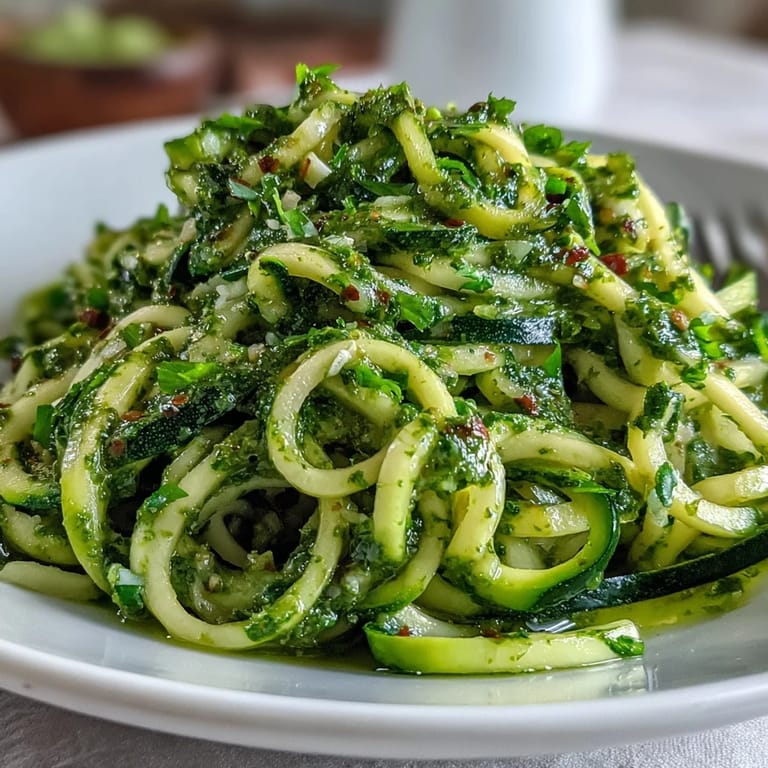
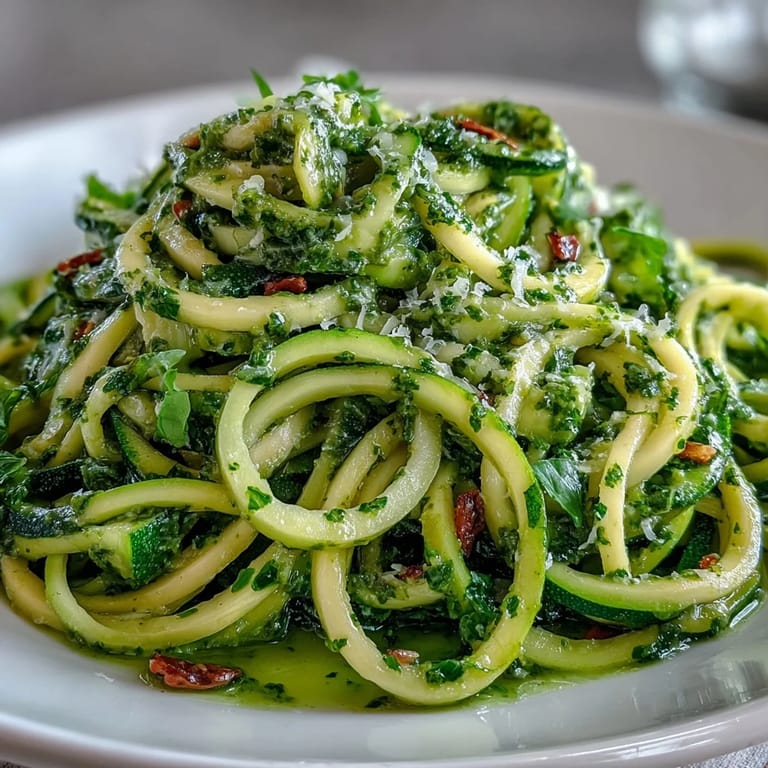
- Divide between plates and top with extra Parmesan, a few fresh basil leaves, and a pinch of red pepper flakes if you like heat. Serve immediately while the zucchini still has a little bite to it.
 Pin it
 There's something about watching someone taste this for the first time and see their eyes light up when they realize it's vegetables, not pasta. My friend Sarah actually paused mid-bite and said, "Wait, this is just zucchini?" like she'd discovered something revolutionary, and in that moment I understood why I keep making this dish—it proves that healthy eating doesn't mean sacrificing flavor or satisfaction.
Why This Works as a Weeknight Dinner
There's a reason this became my default meal when I'm tired but don't want to eat takeout. You can prep the pesto while the spiralizer does its work, and by the time you're thinking about cooking, everything's ready to come together in the skillet. The whole process feels more like assembling something that already exists than actually cooking, which is exactly what you need when your energy is low but your standards are still high.
The Pesto Philosophy
I used to think pesto was only for pasta, until I realized it's really just an emulsion of herbs and oil that tastes good with almost anything. The magic happens when you don't overthink it—the basil should be bright, the garlic should be present but not bullying everything else, and the olive oil should bind it all into something creamy without breaking. Once you understand that, you'll start adding pesto to roasted vegetables, grilled fish, scrambled eggs, and anything else that needs a wake-up call.
Variations and Flexibility
The beautiful thing about this dish is that it's a starting point, not a rigid rule. I've made it with walnuts when pine nuts were expensive, added a handful of spinach to the pesto for extra earthiness, and even thrown in roasted cherry tomatoes for acidity and sweetness. Some nights I'll stir in grilled chicken or crispy chickpeas for protein, and other times I'll keep it vegetarian because the pesto is rich enough to feel satisfying.
- Try adding sun-dried tomatoes or roasted red peppers to the pesto for sweetness and depth.
- For a creamier version, blend in a tablespoon of Greek yogurt or ricotta cheese.
- Experiment with other herbs like mint or arugula if you want to branch out from classic basil pesto.
 Pin it
 This dish reminds me that the best meals are often the simplest ones, and sometimes all you need is fresh ingredients and a couple minutes of attention. Make it tonight, and you'll understand why I keep recommending it to anyone who wants to eat well without feeling like they're dieting.
Recipe FAQ
- → How do I prevent zucchini noodles from becoming watery?
Sauté the noodles briefly over medium heat for just 2-3 minutes until tender but still firm. Avoid overcooking, which releases excess moisture. Serve immediately after tossing with pesto for the best texture.
- → Can I make the pesto ahead of time?
Yes, prepare the pesto up to 5 days in advance and store it in an airtight container in the refrigerator. The flavors actually develop and improve over time. Just give it a good stir before using.
- → What can I use instead of pine nuts?
Walnuts, cashews, or almonds work beautifully as more budget-friendly alternatives. For a nut-free version, try sunflower seeds or pumpkin seeds, which still provide creaminess and crunch.
- → Is this dish freezer-friendly?
Unfortunately, zucchini noodles don't freeze well due to their high water content. The pesto freezes perfectly though—portion it into ice cube trays or small containers for future use with fresh noodles.
- → How can I add more protein to this dish?
Stir in grilled chicken strips, sautéed shrimp, or white beans. A dollop of ricotta cheese or crumbling of goat cheese also boosts protein while complementing the pesto flavors beautifully.