 Pin it
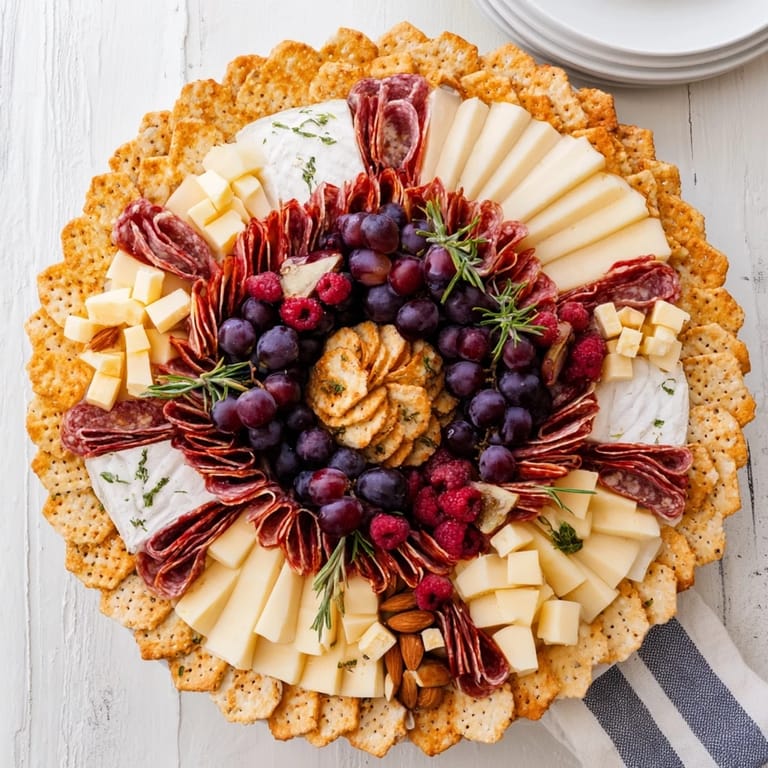
 I'll never forget the first time I created the Ouroboros Circle for a dinner party. My guests arrived expecting the usual cheese board, but when I unveiled this elegant ring of arranged delicacies, their faces lit up with genuine delight. There's something almost magical about serving food that tells a story through its presentation, a continuous loop of flavors that symbolizes abundance and the eternal nature of good gatherings. That night, I learned that sometimes the most memorable meals aren't about complexity, but about thoughtfulness and visual poetry on a plate.
I still remember my friend Sarah's birthday when I first attempted this presentation. She couldn't believe it was homemade, and neither could anyone else at the table. That's when I realized the true power of this recipe: it elevates you in the eyes of your guests, even though the technique is refreshingly simple. The circle became a symbol that night—we literally passed the platter around in a circle, each person breaking off a piece, and somehow the act felt ceremonial and celebratory.
Ingredients
- Brie, sliced (100 g): This is your creamy anchor, melting slightly at room temperature to create richness. I've learned to slice it just before serving so it stays pristine and doesn't oxidize.
- Aged cheddar, cubed (100 g): Sharp and complex, it grounds the board with depth. The cubes catch light beautifully, so don't shave them too small.
- Goat cheese, rolled into small balls (80 g): Tangy and elegant, these become little flavor bombs. Rolling them gently in your hands keeps them from crumbling.
- Prosciutto, thinly sliced (80 g): Optional, but it adds a salty, sophisticated note that makes guests pause and appreciate each bite.
- Salami, folded (80 g): Adds visual contrast and a different texture entirely. I fold mine into triangles for easier grabbing.
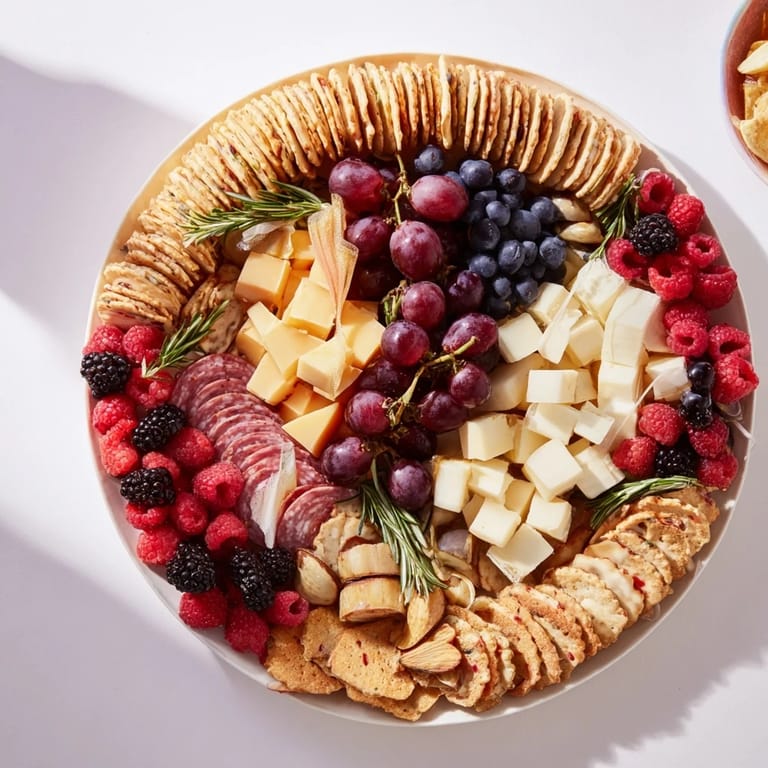
- Artisanal crackers, fanned (1 handful): The head of your serpent, these deserve to be the star. Choose ones with interesting shapes and slight curves.
- Baguette slices (6 small): These follow the curve of your circle, bridging gaps and adding structural flow to the arrangement.
- Red grapes in small clusters (1 cup): The tail of your circle, these should be at the perfect opposite point from your cracker head. Their natural cluster form is essential to the visual story.
- Mixed berries—blueberries, raspberries, blackberries (1 cup): These fill the gaps with jewel-like pops of color. I scatter them deliberately, not randomly, for visual impact.
- Sliced fig (optional): When I add figs, they become tiny focal points. Their deep purple interior catches every eye.
- Roasted almonds (1/3 cup): Adds crunch and earthiness. I prefer them scattered in small clusters for visual interest.
- Marcona almonds (1/3 cup): These are buttery and slightly sweeter than regular almonds, creating a sophisticated textural contrast.
- Honey (2 tbsp): Drizzled over the goat cheese, it creates an unexpected sweetness that surprises guests in the best way.
- Fresh rosemary sprigs (1 tbsp): These aren't just garnish; they perfume the entire platter with herbaceous promise.
Tired of Takeout? 🥡
Get 10 meals you can make faster than delivery arrives. Seriously.
One email. No spam. Unsubscribe anytime.
Instructions
- Choose Your Canvas:
- Start with a large round platter or wooden board. I always choose wood because it grounds the presentation with warmth and texture. Your circular surface is the foundation for the ouroboros—take a moment to visualize where your head and tail will meet.
- Create the Head:
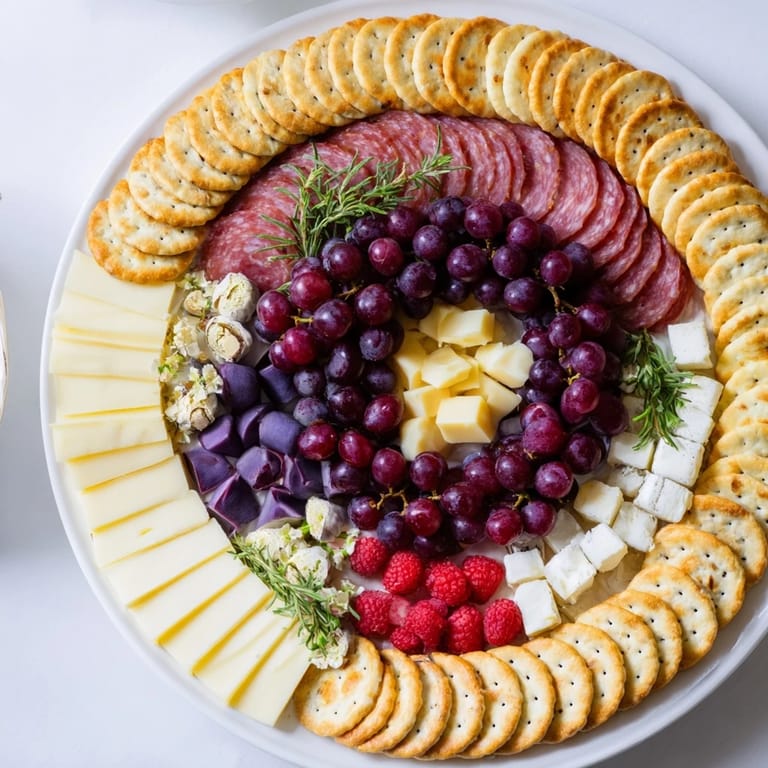
- Fan your artisanal crackers at one point of the circle, overlapping them slightly like scales. This moment matters; arrange them with intention, as if they're the noble head of a mythical creature.
- Build the Body:
- Work your way around the circle, alternating cheeses and meats in sections. Think of this like painting a portrait in sections. Brie here, aged cheddar there, a fold of prosciutto creating visual punctuation. Let your instincts guide the spacing.
- Follow the Curve:
- Nestle baguette slices into the spaces, following the circular rhythm. These are like vertebrae, holding the structure together while adding texture variation.
- Position the Tail:
- At the opposite end from your cracker head, arrange the red grape clusters. They should feel like a natural conclusion, clustering naturally just as the head begins.
- Fill the Spaces:
- This is where the artistry truly lives. Scatter mixed berries, fig slices, and nuts into the remaining gaps. I work slowly here, stepping back occasionally to ensure visual balance and that the circle feels intentional, not chaotic.
- Add the Golden Touch:
- Drizzle honey over the goat cheese balls—not too much, just enough to create a subtle gleam. Finish with fresh rosemary sprigs scattered across the platter. These green accents tie everything together.
- Close the Circle:
- Step back and admire. The head and tail should nearly touch, completing the ouroboros. Adjust any elements that feel out of place. This board is a living artwork.
- Serve with Reverence:
- Bring it to the table immediately. Watch your guests' faces as they take in the presentation. Invite them to break the circle together, creating a shared moment of indulgence.
 Pin it
 There was a moment at that birthday party when everyone fell silent, just looking at the platter. Then Sarah reached out, broke a cracker from the head, added a cube of cheddar and a grape, and closed her eyes as she tasted it. That's when I understood: this recipe isn't about individual ingredients. It's about creating a ritual, a moment where people slow down and appreciate the intentionality of a shared meal. The circle became a table conversation, a metaphor for continuity, and honestly, the most compliments I'd ever received on an appetizer.
The Story Behind the Ouroboros
The ouroboros is an ancient symbol found across cultures—a serpent eating its own tail, representing cycles, infinity, and the eternal return. When I first plated this concept as food, I was thinking about how a dinner party mirrors that symbol: guests arrive, the evening unfolds, the platter circulates, and by night's end, friendships are deepened, conversations are richer, and we all feel connected. Translating that philosophy into cheese and fruit felt like bringing mythology into the everyday kitchen. Now, every time I arrange this board, I'm creating not just a meal, but a moment infused with meaning.
Building Your Confidence
The first time you make this, you might overthink the arrangement. I did. But here's what I've learned: there's no wrong way to fill a circle with beautiful food. The more you trust your eye and let the natural colors and textures guide you, the more authentic the final presentation becomes. Your instincts are better than you think. Every ingredient already wants to shine; your job is simply to give it a place to do so.
Variations and Personal Touches
Once you've mastered the classic ouroboros, this recipe becomes your playground. In summer, I swap seasonal berries for apricots and nectarines. For vegan guests, plant-based cheeses work beautifully, and the board doesn't lose an ounce of elegance. I've added edible flowers on special occasions, dried apricots for depth, and even candied nuts for a surprising sweetness. The beauty of this format is that it's infinitely adaptable while maintaining its striking visual impact.
- Try smoked gouda instead of aged cheddar for a deeper, smokier profile that pairs beautifully with the honey.
- Add a small bowl of fig jam or whole grain mustard in the center for guests who want an extra flavor dimension.
- Pair seasonal adjustments with wine recommendations: Spanish Albariño with summer fruit variations, or a full-bodied Burgundy with autumn root vegetables if you venture into that territory.
 Pin it
 This recipe taught me that cooking isn't always about flavor alone—sometimes it's about creating a moment so beautiful that people remember it alongside the taste. The Ouroboros Circle is your permission to be a little theatrical, a little intentional, and a lot generous with how you present food to the people you care about.
Recipe FAQ
- → What types of cheeses work best for the platter?
A mix of soft brie, aged cheddar, and tangy goat cheese provides a balance of creamy, sharp, and mild flavors ideal for this arrangement.
- → Can I omit the meats for a vegetarian option?
Yes, simply skip the prosciutto and salami and increase the variety of cheeses and fruits to maintain flavor and texture contrast.
- → What fruits complement the platter's flavors?
Red grapes, mixed berries, and sliced figs add sweetness and freshness, enhancing the savory cheeses and nuts.
- → How should the platter be arranged for visual impact?
Arrange items in a continuous circular formation with fanned crackers as the head and grape clusters as the tail to symbolize an eternal cycle.
- → What nuts are recommended for this presentation?
Roasted almonds and marcona almonds provide a crunchy texture and rich flavor, complementing both cheeses and fruits.
- → How can I add extra flavor finishing touches?
Drizzling honey over goat cheese balls and garnishing with fresh rosemary sprigs adds aromatic sweetness and herbal notes.